
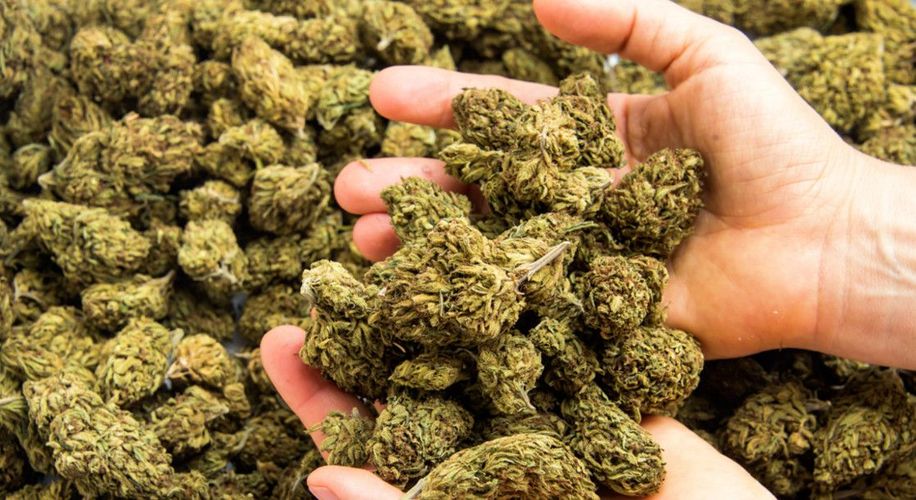
It might have been much to do about nothing.
Although the Town of Huntsville is listed as a municipality in favour of allowing recreational cannabis to be retailed in this community, the legal sale of pot will not likely happen here anytime soon.
Scott Ovell, the Town’s Economic Development Coordinator, provided an update to Huntsville’s Development Services Committee on January 16. He said that while in December Huntsville Council voted to opt into the licensing program, which would allow private retailers to sell cannabis in the community, the province has since announced that licenses will be issued on a phased-in basis.
According to the province, given the shortage of legal cannabis supply from federally licensed producers, only 25 licenses were issued in the first round to those who submitted an Expression of Interest (EOI) to the Alcohol and Gaming Commission of Ontario. But one of the stipulations for submitting an EOI was that the community where the store was being proposed had to have a population of at least 50,000 people. That means, so far, Huntsville is out.
Those who did receive a license during the first round of Ontario’s phased-in approach had to agree to be up and running by April 1, 2019. Anyone can submit an EOI, except federally licensed producers and their affiliates, or anyone associated with or part of the Alcohol and Gaming Commission of Ontario or the consultant overseeing the licensing process, KPMG.
Many municipalities signed on hoping to share in the revenue generated from the sale of the drug. Their deadline to opt in was January 22, 2019. They were told that if Ontario’s portion of the federal excise duty on recreational cannabis over the first two years of legalization exceeded $100 million, the province would provide 50 per cent of the surplus to municipalities that opted-in.
You can find a list of municipalities that opted in or out of the program here, and a list of the licenses that were granted by region at the bottom of this link.
Don’t miss out on Doppler! Sign up for our free newsletter here.
It was refreshing to read your view. I am 70 yrs young, originally from Huntsville. I was a light user of pot in my younger years. In my elder years a lady I was keeping company with and I decided we would skip having a glass of wine for diner and rather split a hash brownie for desert.
I was caught off guard with the potency of it! To use the jargon of the sixties “I was sh?t faced, the next morning”. The experience no longer qualified as a trip but would be better described as an escape.
Given the mismanaged state of our economy, it is a no brainer those looking for escape from high anxiety will welcome this. My comment here is not referencing any political party but refers to their fiscal conundrum of boomers retiring and a lack of decent employment for Canadians wanting the life their parents enjoyed. ,
Legal pot does provide a cash flow for a small group of people operating dispensaries and a much larger cut for a budding corporate structure handed an opportunity . The provincial and federal governments, enduring an increased level of unused labor and the increasing welfare level, have need for the billions that sales will yield -have tasted the forbidden fruit.
Already our news outlets have snippets of this or that person driving impaired on pot, so the social changes of this, now legal escape, are well underway.
Ken Bowd.
From the NIH (the prestigious National Institutes of Health in the U.S.) article, a quote from one of the researchers:
“It is important to alert the public that using marijuana in the teen years brings health, social, and academic risk,” said lead author and NIDA Director Dr. Nora D. Volkow. “Physicians in particular can play a role in conveying to families that early marijuana use can interfere with crucial social and developmental milestones and can impair cognitive development.”
At the risk of being shouted down by all those who are fond of smoking dope, I would cite new research that suggests it is not as safe as some would have you believe. There are a lot of reports on new research into the potential hazards (and the potential benefits) of marijuana use. Here are several:
https://www.sciencedaily.com/releases/2018/12/181217101747.htm
https://www.nih.gov/news-events/news-releases/nida-review-summarizes-research-marijuanas-negative-health-effects
Of special concern is the affect of marijuana use on the developing brains of teens.