
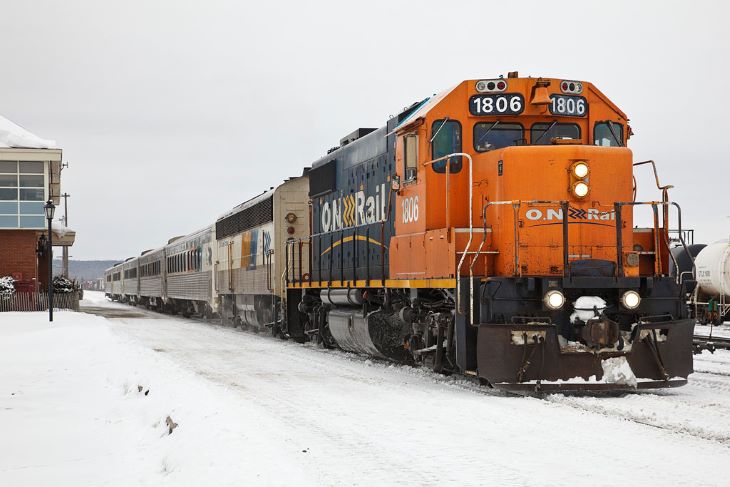
The Ontario government is purchasing three new train sets as part of its plan to bring back the northeastern passenger rail service. The $139.5 million investment marks a significant milestone in reinstating service between Timmins and Toronto, and unlocking the full economic potential of northern industries, resources and minerals, states a news release issued by the Province on December 14, 2022.
The detailed design will focus on a route that includes 16 stops: Toronto (Union Station), Langstaff, Gormley, Washago, Gravenhurst, Bracebridge, Huntsville, South River, North Bay, Temagami, Temiskaming Shores, Englehart, Kirkland Lake, Matheson, Timmins and Cochrane.
“This is a great next step for the future of rail transit in Northern Ontario. The return of the Northlander train will directly benefit communities in Parry Sound-Muskoka with four convenient stops, allowing people more options to get home, to work, to medical appointments and to experience the beauty of the North,” stated Graydon Smith, MPP for Parry Sound-Muskoka and Minister responsible for Natural Resources and Forestry.
It’s been ten years since the Northlander Passenger Train was abruptly discontinued under the Dalton McGuinty government in 2012.
“This is a significant step forward in bringing back the rail service that northerners deserve,” said Stan Cho, Associate Minister of Transportation. “The reinstated Northlander train will support our northern industries and resource sectors and provide a safe and reliable transportation option for Northern communities, especially in the winter months. This purchase demonstrates real progress, as we continue to take concrete steps to build a better transportation network for the north.”
The new rail cars will be built by Siemens Mobility Limited and will meet the latest EPA Tier 4 emission standards, making them one of the most environmentally friendly diesel locomotives on the market. The fully accessible fleet will include built-in wheelchair lifts, mobility aid storage spaces, galley-style food services, and fully accessible washrooms.
“People and businesses in Northern Ontario rely on a safe, convenient transportation network to get where they need to go and to keep our goods moving,” said Caroline Mulroney, Minister of Transportation. “The reinstatement of passenger rail service will ensure access to essential services like health care and education, while supporting economic prosperity and tourism in the region.”
The trainset interiors will also feature spacious seating and modern amenities, including Wi-Fi connectivity and passenger information systems with audio and visual announcements.
Once reinstated, northeastern passenger rail service will be offered from four to seven days a week, based on seasonal travel demands.
In April 2022 Ontario Northland Transportation Commission released the Updated Initial Business Case which included a preferred route from Toronto to Timmins with a rail connection to Cochrane. Cochrane will provide a connection to Polar Bear Express service to Moosonee. By 2041, annual ridership is currently estimated to be between approximately 40,000 and 60,000.
Don’t miss out on Doppler!
Sign up here to receive our email digest with links to our most recent stories.
Local news in your inbox so you don’t miss anything!
Click here to support local news
We are a small family of 4 living and working in both Toronto and Huntsville. We used to take the train but then the services stopped. Now we are forced to drive and it is horrible especailly in the winter months the roads are terribly dangerous. We are so excited for the train route to return!!
“service will be offered from four to seven days a week, based on seasonal travel demands”
How is this a: “reliable transportation option for Northern communities, especially in the winter months”? Another word stated was “convenient”. Four days a week? Seasonal travel demands?
I’m all for public transit and make an effort (which is required around here) to use it. These statements and grand announcements of large amounts of money being spent tend to obscure the bottom line question: will people use the train? I think the answer to why it was shut down, was no.
To succeed, it needs to actually be AVAILABLE, convenient, reliable and affordable.
“By 2041, annual ridership is currently estimated to be between approximately 40,000 and 60,000.”
Long-away, wide-ranging estimate. Is this a good number that gets people out of cars?
I’m hopeful, yet skeptical about the revived train service. The people designing it ought to keep in mind the personal vehicle is extremely serious competition so if you don’t bring an attractive alternative, the shiny new rail cars might be rolling empty.
Last we heard it was expected sometime in the mid-2020s
Hello, when do you expect the new service to begin?
Roger