
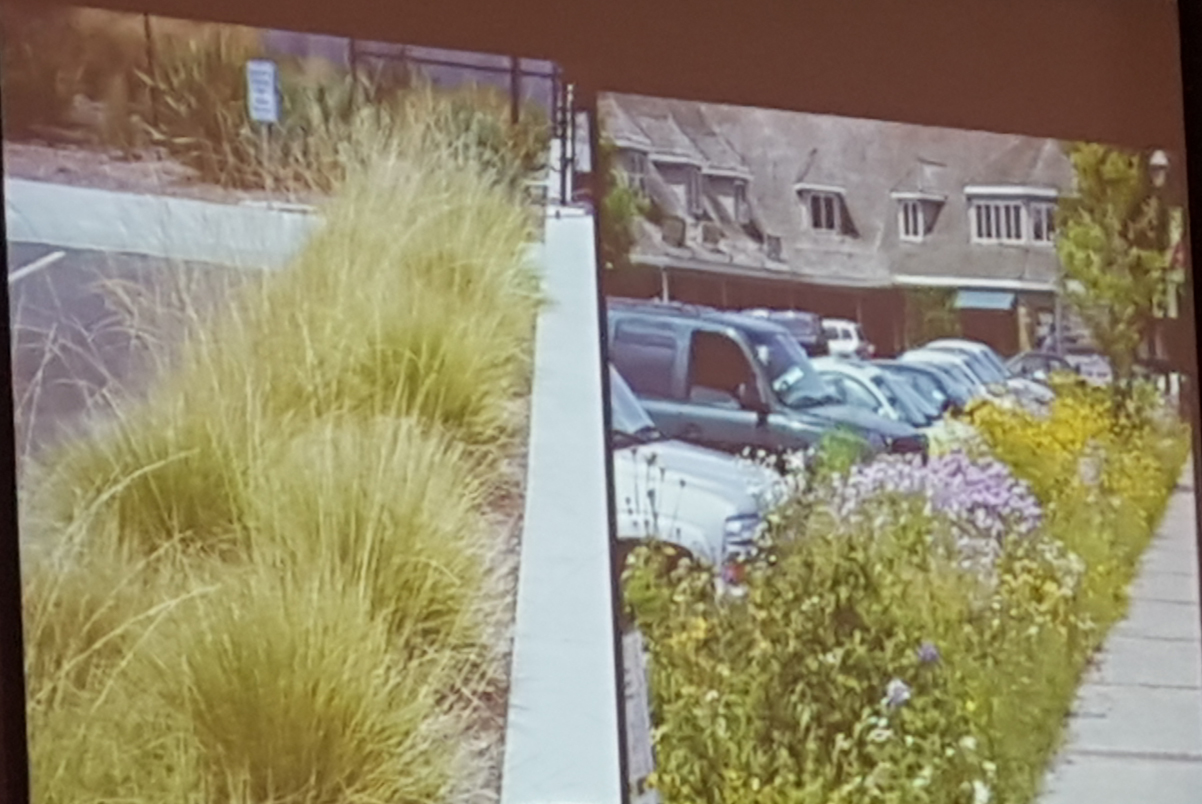
Main photo: Heather Van Duuren demonstrates the difference in landscaping techniques for things such as medians and walkways with this photo. On the right, native plant species were used which provide habitat for wildlife, rather than the ornamental shrubs used on the left, which require more upkeep and are not as environmentally friendly.
Local resident Heather Van Duuren was before Huntsville’s Planning Committee on November 15, impressing on its members the importance of using native plant species in landscaping.
“I have an affinity for wildlife and wild spaces and over the years my interest has always driven me to learn new things. I have come to believe that nature is in serious trouble. I wish to make a difference and have a positive impact on our community and the environment. I have come to discuss the value and importance of using native plants in our local landscapes to counteract the effects of habitat loss and introduced invasive species,” she told committee.
“In all areas over the globe, poorly planned property development has led to massive habitat loss for plants and animals alike. Next to habitat loss, over 50 per cent of the loss of native biodiversity has been attributed to introduced species,” she said, citing phragmites and purple loosestrife as examples. “Both of these plant species are wreaking havoc on local wetlands at an alarming rate, having devastating effects on the wildlife that rely on them for breeding grounds.”
Van Duuren told committee that as population rises and the development of housing increases, the amount of wild areas are shrinking.
“This is why landscapers and gardeners should include more native plants in their designs,” she said. Van Duuren showed committee some examples where native plant species had been incorporated into the landscape of new developments.
“By reintroducing indigenous plants to the local landscape we can aim to mitigate this damage. Plants are the base, the beginning of the food web, without them we can’t save threatened and endangered wildlife from extinction,” she said, adding that in her three decades on this planet she has personally seen “a drastic decline in nature, from what there is now.”
As humans, we are interconnected to the food web and without a healthy, intact ecosystem, we will be facing our own demise. Heather Van Duuren tells Huntsville’s Planning Committee
Committee saw photos of what Van Duuren has done in her own home, surrounded by meadows made up of different varieties of native grasses, shrubs and flowers.
She told committee that she also added a pond on her the property, which has attracted species such as toads, frogs and salamanders as well as predatory insects while birds, butterflies, bees and spiders have taken up residence in her meadow made up of native plant species.
“Soon, what was once bare dirt and silence became buzzing and tweeting sounds of the natural world. For me, this finally felt like home.”
Van Duuren said the amount of biodiversity on her small acreage has increased dramatically in the three years since she planted the native plants, “proving that even on a small scale, one person can make a big difference.”
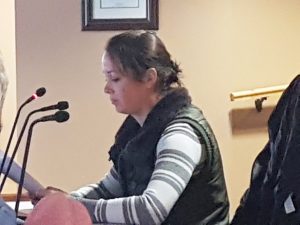
Heather Van Duuren speaks to Huntsville’s Planning Committee about the importance of native plant species.
She spoke of the devastating effects of irrigated turf grass. “Every square inch of lawn replaces diverse habitat for wildlife. The conventional idea of curb appeal is a lush mono-culture carpet of non-native plants that’s kept going with toxic chemicals, municipal water and fossil fuels.”
She urged committee to consider replacing such landscaping practices with low-maintenance landscape alternatives that are better for the environment and significantly more cost effective.
“Large corporations can dramatically reduce maintenance costs and public highways and parks can enhance our spectacular and diverse native landscape on a visual and ecological level,” she said. “Muskoka is already renowned for its natural beauty and I believe that the Town will benefit by moving towards a more environmentally friendly method of landscape design,” she said, adding that some businesses are already doing it. “Native plants look good. They look just as good as the exotic species everyone tends to buy at the garden centres but unlike exotics, they do not require fertilizers or pesticides. They are low maintenance, adaptable to our local climate, self-sustaining and help maintain bio-diversity.”
Committee members thanked her for her presentation. Planning Committee Chair Nancy Alcock said she agrees with Van Duuren and asked her to read the Town’s draft Official Plan (OP), especially as pertains to sustainability and climate change objectives, and provide input.
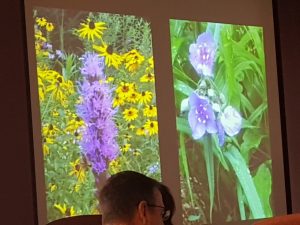
Native wild flowers photographed from Van Duuren’s garden.
Councillor Bob Stone said he loved the photos of wildflowers shown by Van Duuren and he’d like to see those around town, but asked about the seasonality of the flowers. Van Duuren said you can get wild flowers that will bloom from spring to late fall. Stone asked her about maintenance, and she indicated that for example in the meadow she had created at her home, she only mows it once a year, typically in the spring. “I love it,” said Stone.
“It’s a very sustainable way of landscaping,” added Van Duuren. “It’s good for us, good for wildlife.”
Councillor Jonathan Wiebe thanked Van Duuren for attending committee and told her he appreciates the message she is sending. “I’m hoping that message is disseminated loud and clear in the community because we all stand to gain from it.” He said they are small changes that would make a big difference. It was noted that municipal staff already plant native species and committee said the practice should be encouraged as a rule rather than an exception.
Huntsville Mayor Scott Aitchison joined the meeting during Van Duuren’s presentation and thanked her. He said he too uses native species and asked committee what might be the most effective tool to require that native species be planted as opposed to exotic ones. Alcock said wording in the draft OP could be firmed up. Manager of Planning Kirstin Maxwell also told those present that staff is in the process of reviewing and updating the municipality’s site plan guidelines for urban and shoreline residential development. The planting of native species is already a requirement of shoreline development but it is not a requirement in the urban area. She said that will be firmed up when the guidelines are updated.
Read Doppler’s earlier profile on Heather Van Duuren here.
Don’t miss out on Doppler! Sign up for our free newsletter here.
Well said, Heather! The term “whistle-blower” does not always have to be derogatory. We ignore your warning at our peril.