
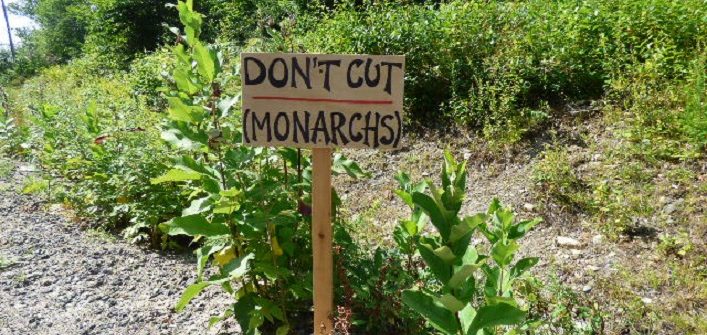
One anonymous Huntsville resident has been doing their part to help out the local population of Monarch butterflies.
There’s a good-sized patch of milkweed alongside Chub Lake Road and someone thoughtfully placed handmade signs there asking that the milkweed be left alone—Monarch larvae (or caterpillars) feed exclusively on milkweed.
Zelda Dwyer noticed the signs and when she heard Town crews go by, cutting back brush in the ditch, she thought, ‘oh no, the milkweed and the Monarchs!’ she told Doppler.
She needn’t have worried.
“Just wanted to report the employee went around the signs and the Monarch caterpillars are happily munching away on the milkweed,” Dwyer said.
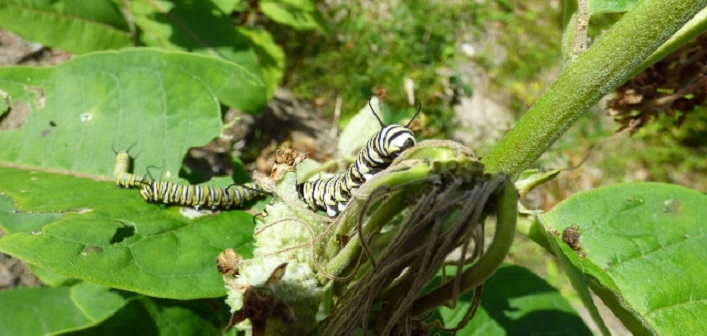
Monarch caterpillars are happily feasting on milkweed plants along Chub Lake Road (Photo: Zelda Dwyer)
Monarch butterflies aren’t just beautiful to look at. Like bees, they are important pollinators. And Monarchs have an impressive multi-generation migration that brings them from their overwintering grounds in Mexico to Canada and back each year. (Learn more about Monarch migration below.)
In Ontario, they are listed as a Species of Concern—not yet threatened or endangered but are at risk of becoming one or the other. The Ontario Ministry of the Environment, Conservation and Parks notes that “the largest threat to Ontario Monarchs is habitat loss and fragmentation at overwintering sites in central Mexico where forests are being logged and converted into agricultural fields and pastures. Widespread pesticide and herbicide use throughout the Monarch’s range [that includes Muskoka!]. may also limit recovery.”
So how can you help Monarchs thrive?
By helping to ensure Muskoka has plenty of Monarch-friendly habitat, you’re not just helping this fall’s generation of Monarchs return to Mexico which means you’ll be more likely to see them back and thriving next year, you’re also, by extension, helping other pollinators.
Here are some things you can do to make your property Monarch-friendly:
- Plant milkweed and if you see it in other locations, don’t disturb it. (You can collect seeds in the fall for planting the next spring, though.) Encourage others to do the same. Milkweed isn’t just for Monarchs—bees like their flowers. You’ll find tips for collecting and planting milkweed here.
- Plant a variety of native plants that flower at different times throughout the summer and fall to provide a source of nectar for butterflies. Some good choices for the Huntsville area are black-eyed Susan, Joe-pye weed, Echinacea (coneflower), yarrow, Buddleia (butterfly bush), lilac, blueberry, and Phlox. Herbs are a good source of nectar for butterflies, too, if you let them flower (and you get the benefit of delicious seasonings for your kitchen). Try dill, fennel, parsley, oregano, chives, lavender, sage, thyme and lemon balm. See more native plant suggestions here.
- Be sure to only use flowering plants that have not been treated with neonicotinoid pesticides—ask your garden centre to be sure.
- Place a few flat rocks in a sunny location in your garden where butterflies can sun themselves (they can’t fly if they are too cold). Include a saucer of fresh water for them to drink.
- Don’t use insecticides or pesticides in your garden. Pull those weeds by hand, and find natural, pollinator-friendly methods to control insect pests.
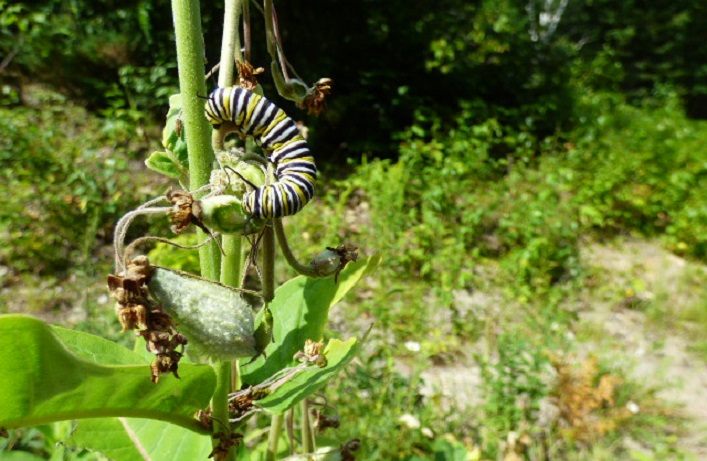
Monarch caterpillars feed exclusively on milkweed, making it important to leave the plants alone (Photo: Zelda Dwyer)
Monarch migration
Unlike their bee counterparts, which either hibernate or die off at the end of the season, every year a generation of Monarchs travels vast distances—up to 3,000 kilometres in total and up to 80 kilometres in a single day—to return to their overwintering grounds in Central Mexico.
What makes that journey even more remarkable is they’re travelling to a place they have never been before—these aren’t the same butterflies that arrived here in the spring. One generation leaves Mexico and the females lay eggs in the southern U.S. That next generation will make its way north. Most adult Monarch butterflies live for just four or five weeks, mating and laying eggs to create new generations throughout the summer. But the generation that emerges in the fall is a super-generation and can live for seven or eight months in order to make the long trek south and produce the butterflies that will fly north the following spring.
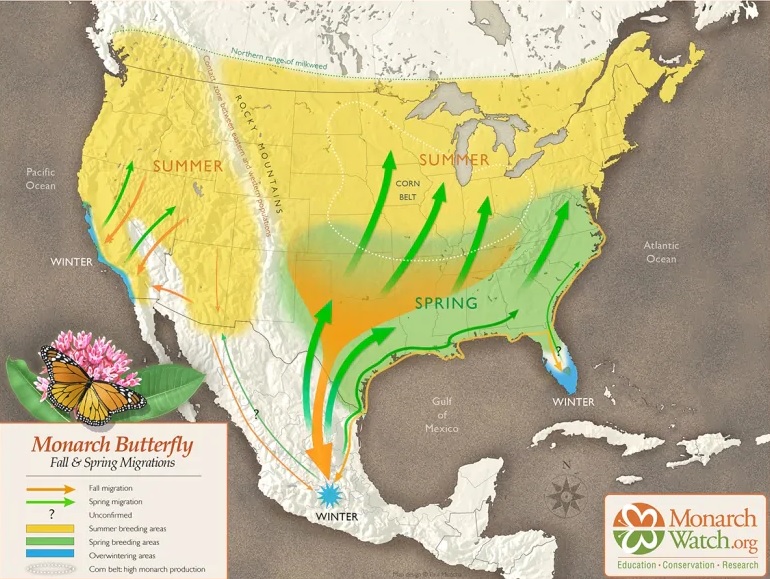
Monarchs migrate incredibly long distances (monarchwatch.org)
Although it seems like summer has barely begun, the Monarchs will begin their fall migration this month. Citizen scientists can help researchers track Monarchs by reporting sightings at Journey North.
Don’t miss out on Doppler!
Sign up here to receive our email digest with links to all of our stories. Local news in your inbox three times per week!
Good for the resident and the employee !!! THANK YOU VERY MUCH .
I’ve got lots of milkweed on my property, so it’s a good measure of the monarch population each year, and I watch it. The last few years up until 2019, the beautiful orange butterflies have been distressingly rare. This summer, there are lots of them, a great relief to see.
.
Most amazing monarch video ever (includes the fact that the population did actually increase 140% this year): https://www.youtube.com/watch?v=u7SSt0hqu6Y
She’s not anonymous to me! The two of us have been helping raise monarchs. She is quite seasoned at the task. This summer though she had to leave for school and thought that putting the signs up would be one way she could still be a part of helping the monarchs. I was ecstatic when I saw that the town trimmers heeded the the signs and left the milkweed plants alone. I sent her a message right away. She plans on posting more signs next year. Every little bit helps!