
A message from the District of Muskoka
As part of the District of Muskoka’s Waste Strategy, a reduction in no-charge weekly garbage bag limits at Waste Facilities starts the week of April 4, 2022.
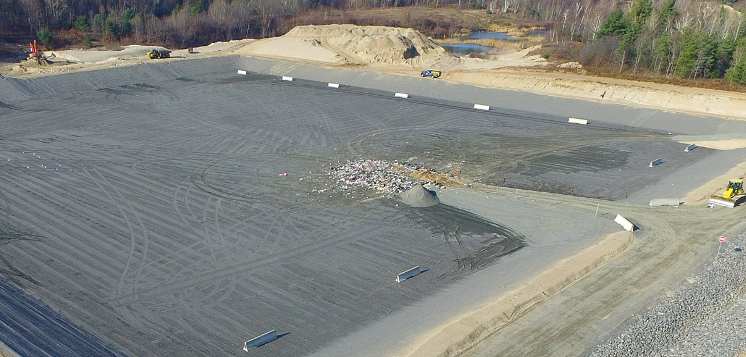
The changes were approved by District Council in December 2021 as part of the Waste Strategy and Roadmap to 60 Per Cent Diversion. Reducing garbage is critical to extend the life of Muskoka’s one remaining landfill and ensure a secure, long-term way to manage our garbage.
In 2020, the District landfilled over 32,000 tonnes (that’s over 70 million pounds) of garbage with the average person in Muskoka throwing out approximately 760 pounds of ‘stuff’ alone.
“Protecting the environment has always been a top priority for Muskoka and our residents,” said Fred Jahn, commissioner of engineering and public works. “Changes like this will encourage us to think differently about what we throw away. By using our blue box or green bin and increasing diversion, we can reduce garbage and greenhouse gas emissions and, most importantly, extend the lifespan of our only landfill.”
Changes at waste facilities starting April 4, 2022
As part of Muskoka’s Roadmap to 60 Per Cent, starting April 4, 2022 the weekly limit of no-charge household bagged garbage will be reduced to two bags from three bags.
Hours of operation remain normal, but seasonal hours for select waste facilities change in May.
More updates coming soon
During consultation on the District’s Waste Strategy, residents consistently relayed messages regarding the importance of caring for Muskoka’s environment and support for reducing garbage. Changes in the way we manage waste and divert materials from the Rosewarne Landfill—including food and organic waste—are in response and will bring long-lasting benefit to our community.
The District will have more information soon on timelines and program changes and will give you notice before they happen.
To find out what goes where, visit muskokarecycles.ca or download the free Muskoka Recycles mobile app and try the Waste Wizard. Watch for more tips, tools and resources coming soon.
Don’t miss out on Doppler!
Sign up here to receive our email digest with links to our most recent stories.
Local news in your inbox so you don’t miss anything!
Click here to support local news
I don’t have the answer, that’s for sure.
However, the focus here deals with household garbage. Maybe the big picture should be examined as well. I wonder what is being done to monitor and control what is put in construction bins, many many construction bins. Discarded items of every sort. Massive quantities destined for the landfill.
What kind of inspection is performed? Does a small fee paid compensate for this overloading of our landfills, So much emphasis is placed on construction, whether good or not. Applause for the enrichment of the economy and job creation, but genuine proactive care of the environment gets buried in all that trash. Maybe there needs to be drastic revamping of the approach to recycling at the landfills as well. Any item that could possibly be reused should be sorted and there for free pickup. Get back to the old motto of reduce, reuse, recycle. We are allowing the creation of mountains (of garbage) for the next generation to inherit. A sad society.
We have been recycling-reusing at Bondi resort since the mid 70’s.
No compost goes to landfill and we do our best to get our guests to recycle everything that can be so handled.
Still, a significant percentage of guests have problems.
Some, especially Americans, just don’t bother at all. Everything is Garbage to them. They are “on holiday” and simply couldn’t care less. Not much we can do here and still have a free country.
More often however the people are just confused by what and how to recycle. They may be used to it at home and they try but every municipality seems to do things differently and this is a big issue. It only takes a few cans of bottles in the paper to render the bin from recycled to trash.
I assume there must be associations of municipalities that discuss these things and have to wonder, if our system is so simple and seems to work, why are so many other municipalities doing it all differently? If things were more standardized across the whole Province, it would make the job easier.
Also, I constantly hear rumors that only a small part of the carefully recycled “stuff” we put in the bins in Muskoka actually “gets recycled”. These may just be rumors, but I hear, for example that only two types of plastic actually get recycled. The rest just sort of take a longer route to the landfill. I don’t know if this is true. If it is it is not good.
Another thing to always remember and as a landowner that suffers from several miles of District roadway crossing my land, is that reducing the bag limit at the dump will maybe cause some people to reduce their production. Others may just pay the extra fee, but some will simply dump it onto the side of the road or heave it into the bush. Then the ultimate insult is when I collect this trash that was donated to my land without permission and spend my time to collect and haul it to the local transfer site to try to make the area look like a “clean tourist mecca” that promotional efforts by local government put out, well then at the transfer site they want to charge me to get rid of this stuff. My efforts are viewed by the security staff as just a lie, to let me dump more of my stuff. It would be nice it they believed me and had a category for this type of garbage in their computer.
This is a pretty serious disincentive to try to clean up the area. Also, in spring, it always seems that someone in a big fat SUV comes along and scoops the beer cans just a few days before I get time to do a section of clean up so I don’t even get the few dollars for these and have to pay for my Horton’s brew all by myself too…. Sob! There should be a rule that if you pick up the beer cans you have to pick up everything else too but good luck with this idea.
The last thing to think on is still those beer cans. Ever wonder how individual beer cans get randomly spread along roadways? Think about this. If you can imagine a pickup truck loosing random cans from the box as the driver headed to the Beer store to return them you have a pretty vivid imagination. I suspect that each and every one of them, (and there are a lot of them) was drunk while driving. Maybe not the actual driver but who knows and of course, the evidence is best not left in the car so out the window it goes. This must be a pretty depressing thought to all those police who stand out in lousy weather doing RIDE checks and groups like MADD. There has been plenty of advertising to tell us not to do this.
But despite not being able to handle these types of issues, don’t forget that our political leaders are going to make our whole country “carbon neutral” and equip us all with “nearly free, electric cars” by about 2030 to 2050 at the latest. If you believer this will happen, I know a guy in Florida who has some lightly developed swamp land you can buy cheap, chase away the gators and you can sell homes. It’s all good.
PS, they said we’d all have fiber high speed by about 5 years ago too. A lot of us are still waiting…..I think the “fiber” that Bell is talking about is actually Cheerios as they have been promising this service for over 10 years now but nothing has appeared.
Our household produces 4 bags of garbage per month, that we take to the Sinclair transfer station. So the reduction from 3 to 2 bags a week will not affect us. However, I would estimate that 80% of the content of those bags is food waste that could be composted. Unless a composting program is put in place at all transfer stations, it would make the “Waste Strategy and Roadmap to 60 Per Cent Diversion” more difficult to attain. I did check on the districts website, and there is absolutely no information about upcoming composting options for the transfer stations that do not currently have it.
I use grocery bags for all our garbage about four a week and they go out in a garbage can. I think four grocery bags are less plastic then one big green garbage bag . I have no idea what will happen once all the stores stop using plastic bags.