
By Dave Wilkin and Tim Lutton
The recent Liberal government call for net-zero carbon dioxide (CO₂) emissions by 2050 sets a new high-water mark for unrealistic Canadian emissions targets. Most people have no idea what it would entail, as the government doesn’t say how they will reach it or at what cost. This is what prompted us to translate this latest goal into tangible costs that people can understand.
We often hear claims that shifting to a ‘new green economy’, including wind and solar power, will create millions of new jobs, growing Canada’s economy.
Let’s be clear: the energy transition implied here is not an investment in the traditional sense. Instead, it is a cost to replace the existing mature energy system that built the modern economies but releases CO₂ and is finite, with a new, low-carbon, more costly unproven system.
It is unlikely to create significant net-new jobs or significant new economic value, as it simply replaces what already exists. The transition jobs created will be mostly construction related, as most of the equipment and systems required are manufactured outside of Canada, especially if the focus remains wind or solar, not nuclear (or hydro) power. Most of the new permanent jobs (operational) will be public-sector utility jobs, replacing the private sector ones today, and won’t offset today’s 533,000 oil & gas supported jobs that would largely disappear.
Our table below shows the system capital costs, by power source, to replace about 90 per cent of Canadian carbon-based energy by 2050. Our analysis was inspired by a recent article in Forbes, where the author calculated reaching net–zero CO₂ emissions globally by 2050 would require building one 1000 MW nuclear power station every single day until 2050.

These are the new system costs only; excluded are these (collectively enormous) costs:
- $130 billion annual export revenue, $14 billion in tax revenue (2018) from oil and gas largely gone.
- All public/business costs and government subsidies for transport, furnaces, appliances, electrical upgrades necessary to switch to electric power.
- Carbon capture and storage costs to offset the remaining carbon energy emissions.
- CO₂ elimination from growing non-combustion sources (e.g. about 10 per cent of global CO₂ emission from concrete, steel, plastics manufacturing).
- Unknown costs to address power grid security, stability and unproven Gigawatt-scale battery storage (required for the wind and solar solutions). Global wind/solar power leader Germany (still 80 per cent carbon-energy economy) is already facing significant power grid stability and unexpected cost issues.
- Replacement of aging infrastructure (e.g. nuclear, hydro power stations, power grid).
- Transition-driven energy demand spikes, inflation, future technology cost and Power Capacity factor changes (wind, solar, nuclear).
We would need to build 2.3 large (e.g. 3500 MW Darlington-class) nuclear power stations every year for 30 years. If large (350 MW) wind or solar farms were used, that rises to a staggering 82 or 129 power stations respectively per year being required under a net-zero carbon dioxide (CO₂) emission scenario. For comparison, 0.57 GW of wind power was installed in 2018, less than two per cent of the annual power that would be required. In tangible terms, the costs equate to approximately between $6,000 to $14,000 every year for each Canadian household for 30 years. Stated in debt terms, that’s between 12 oer cent to 27 per cent of Canada’s total federal debt ($770 billion) added each year!
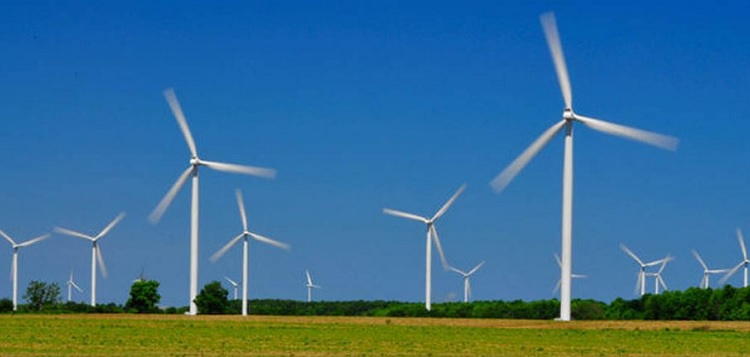
Now consider the physical areas required by the various power generation sources. The required massive solar and wind farms won’t be built in urban areas, nor in remote northern areas (it’s too expensive to build long massive high-voltage transmission lines). They will be built in rural areas closer to the population centres, just like the McGuinty/Wynne-era windfarms over the past 15 years. By 2050 if (medium-density) wind farms were used exclusively to provide the replacement energy to Southern Ontario, they would cover 120 per cent of its area! If all solar power is used, it’s about 11 per cent.
Clearly, as noted in our previous articles, all forms of energy will be required for the foreseeable future, meaning energy from oil and gas, hydro, nuclear, wind, and solar. The Trudeau Government should present the real costs, impacts and trade-offs implied to reach their aggressive target, so informed and realistic planning can finally begin. Keeping the public in the dark, or worse, leads nowhere. Fighting over a small carbon tax is the least of our challenges. Far tougher decisions and their related costs lie ahead.
Dave Wilkin, P. Eng. M. Eng. (electrical engineering) worked at IBM, Scotiabank, Ontario Hydro, and several consulting firms over 45 years. Tim Lutton, MBA, worked in the natural gas and LNG industry for 32 years; with Imperial Oil in Canada, and ExxonMobil in the USA, Australia and Qatar. Both are Huntsville residents.
Don’t miss out on Doppler!
Sign up here to receive our email digest with links to our most recent stories.
Local news in your inbox three times per week!
Paul, you claim I am saying “silly things”, yet my comment on carbon energy continuing growth to 2040 & beyond is not based on ‘my facts’, but rather on the most credible energy outlook sources publicly available. It turns out all these sources project carbon energy continuing to grow through their forecasted periods (2040 or 2050) for their reference/”stated policy” scenarios (oil included). You can’t be calling these sources silly too?:
1. The International Energy Agency https://www.iea.org/reports/world-energy-outlook-2019
2. The U.S. Energy Information Administration https://www.eia.gov/outlooks/ieo/pdf/ieo2019.pdf
3. The world’s 2 most credible and broadly referenced energy companies’ energy outlooks, PB and ExxonMobile https://www.bp.com/content/dam/bp/business-sites/en/global/corporate/pdfs/energy-economics/energy-outlook/bp-energy-outlook-2019.pdf
https://corporate.exxonmobil.com/-/media/Global/Files/outlook-for-energy/2019-Outlook-for-Energy_v4.pdf
Your statement that “absolutely every “credible” forecast shows a decline in fossil fuel usage by 2040′ is simply untrue.
As for your “credible” source, Blackrock, they are a giant investment fund (with a poor environmental track record), not an energy company or agency. Their announcement from a few weeks ago on refocusing their portfolio towards a more sustainable future, and dropping companies with more than 25% of their revenue from coal, is likely a public image makeover, as they were risking losing many investors due to heavy lobbing by environmental groups. No question there is great opportunity in green technology companies, given the fast growth rate and projections for the sector. But, note this quote from the attached link in the Forbes article: “In August 2019 Friends of the Earth named BlackRock as the largest investor in deforestation, and in 2018 it was the world’s most significant investor in new coal plants.” I wouldn’t trust any energy forecasts they put out, as they have both credibility issues and investment interests involved.
https://www.forbes.com/sites/davidrvetter/2020/01/14/can-blackrocks-big-green-makeover-satisfy-critics/#46bfd90bf6d1
Also, this opinion by oil industry vet:
https://oilprice.com/Energy/Energy-General/5-Reasons-Why-Big-Oil-Is-Here-To-Stay.html
Well Dave Again I have to agree with you on most points but not on the E.V. First I could never afford one on my pension and second I’m still not convinced that they will be much good up here in the near north. That being said I have never driven one or do i know anyone who has yet but I’m sure I’ll meet someone one of these days who has one. Every night when I watch the news and see the traffic down in Toronto all I think is if they were all electric cars and they were all plugged in when folks get home there will be black out’s all over the city and likely even up here . I can’t get my mind around the cost to build new transmission lines and new generating stations to even start charging all these cars and trucks makes me almost glad I wont be around to have to help pay for it all.. Thats it my two cents worth LOL going to be an expensive ride.
Kim: This isn’t just a curiosity because it is relevant now. The efforts were not financed only as you suggest by War Bonds. But by significantly increased taxes (largely on the rich). What follows is from “100 Years of Income Tax (Canada).
“The Second World War dramatically expanded the federal personal income tax with the most notable change being the introduction of high marginal tax rates. For example, the pre-Second World War marginal tax rate on taxable income between $1,000 and $2,000 in the dollars of the day was 4 per cent. By 1942, it had increased to 44 per cent. For taxable income between $10,000 and $15,000, it was 13.7 per cent before the war, but 69 per cent by 1942.”
To get a sense of this in today’s dollars multiply the pre war incomes by 16.5. So for example the last line in 2019 dollars would read ” For taxable income between $165,000 and $247,000, it was 13.7 per cent before the war and 69 per cent by 1942.
I do think the War crisis analogy is a good one. The sales job which needs to start now, is that taxes need to rise dramatically in this war effort.
Note: Oil comment meant to say oil and gas, not just oil. Oil demand is slowing recently, but it’s still growing.
There are many forecasts out there, many are hopeful thinking. BP’s base case has oil peaking around 2030. Their More Energy scenario has it rising beyond 2040, and including gas, beyond 2050. Unfortunately, current policy and actions by the biggest energy users (US, ASIA), suggest we remain on the wrong track.
That’s what needs to change.
It’s good to see the comments and engagement … that was our main goal. A few people have asked about solutions, as the focus of our article was not targeted there. Pulling from some of our previous articles, here are my top 3 big things that should help us get on a much better track:
1. Government leadership: National & Provincial (aligned) energy and emissions strategies with linked real plans. Include: clear articulation of size/scope of the challenge, achievable incremental targets, carbon energy sector importance/role, National/N.A. pipelines, energy export strategy/role, transformative energy system infrastructure investments (particularly national/N.A. power grids), how to pay for it all (that is fair and doesn’t do it all with more debt, burdening future generations); supportive & aligned foreign/trade policies (e.g. N.A. promotion, reduce buying from China and others with weak/no environmental stds., securing/protecting our exposed north), population and economic growth goals/impacts and trade-offs made clear; preparing for a warmer future.
2. Government & Business: Major new investments in R&D & technology. Address known barriers and Canadian strength opportunities. Top priories are: nuclear (in particular new smaller/cheaper reactors, fusion energy), energy storage (in particular hydrogen), carbon capture & reuse (transition mitigation), Smart Grids.
3. Individuals: Make your next auto purchase a plugable Hybrid/EV, if possible. Buy less ‘wants’, buy more Canadian/N.A. products, invest in energy saving upgrades (great returns in attic insulation, window treatments). If you heat with oil or wood, consider switching to cleaner gas/propane, or air/geothermal heat pumps (if affordable/practical for you).
Yes Dave I do agree with you that we will someday run out of affordable oil but I’m not sure how long that will be years ago they were saying we would run out completely by 2020 if I remember right and they predicted New York and a lot of the east sea board would be underwater by now. I have tried to find some stuff out about these electric cars but there isn’t much real facts about them one thing I would like to know is what do they do for heat in winter I remember the old air cooled Volkswagen beetles you almost froze in them in winter until they made a gas heater for them but it was not the best thing either. But I do think your right about all we can do is try and reduce or reuse as much as we can and hope our Govt’s get on the ball and come up with a plan that might work a tax is not the answer all that does is increase the cost of heating my home and driving my car the driving part I can regulate a bit but not heating.
As far as Canada goes if we stopped driving all the cars and trucks stopped heating our homes and went around naked about all we would accomplish is a drop in population because we would freeze to death. We have a neighbour to the south with ten times as many people so produce ten times or more carbon than we do not to mention China. My own thought is we are just plain overpopulated and every animal that overpopulates either starves themselves back into a sustainable amount or some disease wipes them out and I think this is about what is going to happen to the human population sooner or later we just can’t keep growing the population the way we are. I can hear it know we are much to mart to have this happen but in reality we are about as dumb as anything else or we wouldn’t be in the mess we think we are in.Just how many countries around the world right now that can’t produce enough food to feed themselves and this problem is getting worse every year.
Simple point Dave …..you are absolutely wrong about the decline of fossil fuel usage. Indeed absolutely every “credible” forecast shows a decline in fossil fuel usage by 2040……Again, please read all the major oil company forecasts ; please read Blackrock’s. There is a reason why the oil sands can’t get new investors (which is their big problem not being land locked). Even beyond the fact that it is incredibly dirty and cost inefficient source of energy, again every credible forecast shows a decline in demand for fossil fuels (in spite a rise in demand for energy) by 2040.
You need to stop saying these silly things as if they are fact. As always, you are welcome to have your own opinions (detailed though they be) but you can’t have your own facts.
Without resorting to any more technical data, it seems that generally a change of climate, even just a little bit, is going to hit our society pretty hard.
Science has developed some scenarios of what might be to come and despite there being a fairly large variability in the models, they all point to changes, none of which will prove beneficial to our society.
Would we not be better to start being more pro-active on this as soon as possible? The range of options decreases with time so the longer we wait the less likely we are going to be to find a workable solution to our climate change problems that we can afford and live with. If we wait too long (and there are those who say we have already done this!) then nothing we can do will avert disaster. Think, for a moment about what a small sea level increase, maybe 30 feet, would mean to our world’s major cities……. If you do this, you rapidly realize that things like Hurricane Sandy and a few fires, droughts and bad storms are nothing compared to what is to come.
Granted there are reasons other than increased Carbon Dioxide that could and probably have caused major climate change in the past millions or billions of years but we can’t do anything about these. The only one we can effectively do anything to mitigate now, today, is Carbon emissions. We know the scientific theory, we know what higher carbon levels will likely do and we know we can actually control these emissions with enough effort so why not start on a s serious plan to do this now, while we have the ability. If we wait much more it will likely and truly be “too late”.
Yes, we can do it Kim. But only if we are strongly enough modivated and are prepared to make the required sacrifices and trade-offs. And by we, I mean the big we… all the worlds nations. In Canada, this requires understanding the nature and size of the challenge. That was the primary purpose of this piece. Perhaps, to a small degree, we have accomplished that objective..
To add to this conundrum, the estimate to construct the Trans Mountain pipeline has now trebled from $7B to more than $20B. (As Mr. Holland has continually suggested, the Eagle Spirit route always had many advantages; especially environmentally and aboriginal appeasement. Personally, I’m still a big believer in carbon recapture as a source of fuel with almost zero carbon emissions. If it’s viable enough for a giant like Bill Gates to invest heavily in it, surely we relative Lilliputians could give it a chance. As usual, our Premier is out of step; cancelling the Hamilton LRT (which would be beneficial in the transition phase); as well as the 500K-tree-planting program (although the Feds have taken it over and increased it). One can only hope that Elon Musk will find a way to increase the payload of his electric trucks.
SMR’s would have to be the ultimate solution; although rare earths are scarce and consequently expensive. Making our buildings more energy-efficient would have to be closely monitored by inspectors vis-a-vis air exchange; as tightly sealed buildings without adequate air exchange are health hazards.
It’s all daunting. But we created this mess, and sustainability dictates that we leave the planet no worse than we found it. Unfortunately, that will no longer suffice: We have to leave it considerably BETTER.
Probably not this century Ray. For some things, there just are no viable alternatives on the horizon (like flying, large scale bulk transport, plastics, fertilizers, some heating etc). The goal is to use much less of it for things where there are viable alternatives. If we can replace them, there might just be enough of the (affordable) stuff left for the things that can’t be switched out, while lowering the real risks of environmental damage.
Here’s the thing many people don’t understand. Some say we will never run out of oil, or at least not this century. Probably true. There will always be some left somewhere. The challenge is at what cost to get it out. Conventional oil represents about 70% of oil production today, and it is in decline. Almost all the growth has come from new unconventional oil (like shale oil in the US, or oil sands in Canada). It is significantly more costly to extract, as the Canadian and US energy sector knows all too well. Shale oil will almost certainly fall into steep decline (in the US) within a decade. The only material conventional oil growth over the past decade came from off-shore deep drilling, which is not cheap either.
By almost any current (credible) forecast, demand for oil will continue to rise beyond 2040, all be it more slowly. This means much higher prices are coming. How much can the global economy withstand? That’s the trillion $ question. This is the much ignored big risk of not taking the transition more seriously now (beyond the climate change risks that dominate discussions today).
Here is a good source, if you have the time and want to read more about the oil big picture future. Enjoy! (it comes from Finland’s Geological Survey)
http://tupa.gtk.fi/raportti/arkisto/70_2019.pdf
Ellen, I have a grandson as well. There is hope, as some of my comments here and in our earlier articles point to. But, it will require far more investment and change than we have seen so far, by government, business and individuals.
A small carbon tax (that is mostly returned to the people in some way) is nowhere near sufficient. Shutting down Canadian oil and gas before viable alternatives are widely available solves nothing and would only result in needless, enormous damage and suffering for most Canadians.
We wrote this piece to try to get peoples attention, since the current governments and few in the media want to tell us the real story, so we can begin to properly address this huge challenge.
Is there really anyone out there that thinks we can get along without oil. If there is I think you should just sit down and think for a few hours about just what we use every day that is derived from oil. Then think about what the world was like before we had all this stuff and I wonder how many of you would like to go back to those times..
I have lived with no T.V. only one radio station no phone no electricity no central heating and no running water and I don’t want to go back to it. Not that it was that bad because we didn’t know anything else but young people today have no idea what it was like even in the city 70 or 80 years ago.
Paul, I don’t mind helping out where I can. Open debate and knowledge sharing is what we wanted to encourage.
So, to your questions. First, electric power generation and distribution can be relatively efficient. It depends a lot on the energy source, of course. For thermal-electric stations, like nuclear or gas plants, efficiency varies depending on when they were built, and technology used, including waste heat capture/reuse etc. The advantage of nuclear here is clear, a small amount of heat energy loss is less of an issue, as the energy created by fission is so large. For gas plants, the heat loss is a bigger deal, thus why many new plants being built now capture and reuse/re-purpose much of this latent heat. A very good thing.
As for the transmission/distribution losses, the electrical grid numbers I have seen are in the 10% -15% range (source to electric outlet). Sounds big, but compared to carbon energy distribution (including pipelines, rail/truck transport), which are in the 20% or more range, it is much better.
You are right, if renewable energy from wind or solar is to become viable at ‘grid-scale’, energy storage is a key. This is true for large solar or windfarm stations, or for more embedded sources, like in homes or businesses. The challenge now is the very high costs to store the massive amounts of energy necessary necessary to backfill the intermittent/low power capacity sources of wind and solar. Grid scale batteries are not yet viable. They can work well in certain cases, like for “peaker plants”, to smooth out electric load demand peaking, but not full base-load power station replacement.
There is some hope that energy storage in hydrogen may scale better than batteries. Current losses for converting electric power from wind/solar into hydrogen are in the 20% – 30% range, I think, and costs should come down with time and innovation. However, hydrogen requires a lot of new infrastructure to distribute and consume, and it’s more volatile than natural gas. There is some reuse potential in the newer gas and propane infrastructure, but so far, its limited & not proven on a broad scale.
Lastly, to the smart grid. This is absolutely critical for the future electric energy system. The larger the variability and imbedded (read distributed) the energy sources are in the system, the smarter the grid will have to be for everything to work properly. This includes 2-way energy flow (which the current grid was not designed to do). Without these changes and intelligence built it, the grid becomes unstable (this includes the electric frequency going off, which is real bad). This problem is precisely what Germany is now faced with, as the McKinsey report lays out in some detail. Their electric grid currently sits at about 30% wind and solar power, I recall, and without a smarter grid with much more capacity, and increased dependence on imports from neighbour countries (mostly France and Poland) to backup the variability of the domestic power generated, they risk significant grid failures in the future.
As to timing, that is hard to say. With much more investment than we see today, we can overcome many of these barriers, and get on a better track. It is likely going to take a few decades to get things working and scaling properly. The cost rough costs involved is what our article dealt with. It could be lower, or it could be higher. Depends on many things, obviously. Replacing an entire energy system is an enormously complex undertaking, but we have no choice long term.
Sorry for my longish answer, but I wanted to share with you what I understand on these important questions.
NET ZERO 2050
The IPCC first warned of the impending climate crisis 32 year ago in 1988. The number of deniers has declined every year, but we still have some in powerful positions. Every year we drag our feet makes solving the problem more difficult and costly. The new goal of net-zero emissions would be extremely difficult to meet with the full force of all world governments and probably impossible without it.
We in Canada cannot control the world. But we can and should do our part by setting an example and sharing our substantial expertise and resources with others. So how can we do this while maintaining a healthy domestic economy? As I outlined in a series of articles last fall, we should aggressively pursue the following measures to reduce the big 4 sources of emissions in Canada:
1. Electricity – Replace the coal-fired electricity generation in Alberta and Saskatchewan with natural gas immediately and commit to building and using Canadian developed Small Modular Nuclear Reactors in Alberta by 2025, when they should be available. Building these reactors would replace coal jobs by 2030 and declining oil jobs thereafter. (SMRs will be fail-safe, much more efficient, solve the nuclear waste problem, and be much cheaper and faster to build.) Alberta could export SMRs long after oil demand has declined.
2. Oil and Gas Production – Use the free heat from SMRs to replace Natural Gas heat for oil extraction and thus make Canada a zero-emission source for oil for as long as oil is needed. (That may seem to be counter-productive, but Canada is one of only six countries that can produce oil for another 50 years. Cutting off oil before it can be replaced will cause a global energy shortage on top of a global climate crisis. No government will turn off the light and heat)
3. Transportation – Accelerate the transition to electric cars and light trucks along with incentives for convenient charging stations. Most will be charged at night at home base when the power is cheaper and already available. The average vehicle goes 68 km per day and is parked the rest of the time. The range of EVs already exceeds that daily range and the range of comparable gas vehicles. The price of EVs is rapidly declining and the operating cost is 1/3rd of gas vehicles.
4. Building Heat – Change building codes and incentives to move towards ultra-low energy requirements and clean sources. Promote modern air-to-air heat pumps in urban areas and ground-to-air heat pumps in rural areas where there is space to accommodate the 500 feet of underground piping. Use the surplus heat from Energy from Waste facilities and Modular Reactors for district heating of industrial buildings.
Yes, these measures will cost a lot of money and may not get us to net-zero emissions, but they will go a long way and that is much better than doing nothing because the outlook seems futile. We also need to invest heavily in adopting to climate change. Shoring up areas vulnerable to rising sea levels, flooding, extreme weather and wildfires will provide a great many jobs.
I want to be perfectly clear now. Tim and I have taken the time and effort (for no personal benefit) to write a well thought out and researched series on our energy future, including our recommendations, to raise the public awareness, understanding and to stimulate discussion on what is arguably one of the largest challenges Canada faces in the decades ahead. The size of the challenge and therefore its costs needs to be properly understood if we are to get to meaningful/viable solutions. Most media and few politicians want to talk about the realities of what it’s going to take. Why? Likely because the numbers are huge. Before we published this piece, we looked hard again for solid studies and estimates on what its going to take and at what costs. Nothing is published that we could find for Canada. Part of the reason for this is likely that those (non-government) individuals who do are often dismissed, or worse, labeled fear mongers or climate deniers. This is far from the truth in our case. Shutting down discussion like this is not helpful.
As we called out in our last piece, titled ‘Canada’s Energy Future – A Path Forward’ (https://doppleronline.ca/huntsville/canadas-energy-future-a-path-forward-by-dave-wilkin-and-tim-lutton/), until we start putting serious long-term investment into building out a new, vastly expanded electric-based energy infrastructure, including far more generation from nuclear energy, little will change. While we are doing that, you can’t prematurely turn off the carbon energy taps, otherwise everything collapses. We also can’t save our way to a zero-carbon energy future, with 80% of all Canadian energy consumed still carbon based.
That said, the clock on a hard reality is ticking away, as cheap oil and gas is in its final decades, as we illustrated in our series. If we haven’t made significant progress in a new low carbon energy system by 2050, the energy security risks and costs grow exponentially. Carbon energy insecure Europe, of all places, understands this best.
It would be interesting if you would figure out the costs of NOT making these changes. How many floods, severe storms, wild fires, droughts, extreme heat and cold events and even plagues would we be able to manage as “life” goes on as “normal”?
I would like to see you put a positive spin on what is required – so I can begin to hope that my little granddaughter might have a safe and healthy environment in the future.
Dear Dave, You manipulate the three Fs very well,Facts ,Figures and Fear can boggle and paralyze societies into inaction! If we believe our scientists about the state of our oceans, biodiversity, rising temperatures, increased extreme weather events etc then we don’t have time to contemplate our bank accounts ,or our navels , before we take action and eliminate our dependence on oil.
I like the analogy of the second world war when Hitler was marching across Europe we didn’t say ‘Oh Crap’ we can’t afford to fight him , to stop him, We just did it. We converted our manufacturing and country to match his might. We printed money, raised money through war bonds etc . and we did what had to be done. Dave we can do it again, we know how to do it, and who knows , my grandchildren Anaya and Brecken might inherit a cleaner world to live in!!! Sincerely Kim deLagran.
Dave: Perhaps not here, but I think that given your skill set, I would be interested in your take on a specific element of the transition from fossil fuel energy to renewal electrical energy.
I (obviously) have no expertise in electrical systems. But it is safe (I think) to say that electricity generation/transmission is terribly inefficient. There is tremendous waste.
It seems to me that the “disruptive” technology that is most probable is the ability to store electrical energy. That and smart grids would seem to be technology that would be a game changer in reducing energy use.
How close are they? What kind of energy savings per capita would we be looking at?
I honestly am not as shocked by the costs as you may be because I have different view of future economies. These are not exactly, easily funded but the cost of carbon needs to be repriced, as well as excessive consumerism. These changes as well as new GDP, will make the transition eminently doable.
I appreciate everyone’s great explanations of how it’s looking as though we can’t meet net zero by 2050. Now, instead of just showing off how smart and how much expertise you have, how about you all sit down together and figure out what we CAN do to fix the mess we’ve all made of the climate before the climate figures it out for us by wiping the “slate” (planet) clean and starting over (again).
Dave As a completely uneducated old man I have to say your numbers are likely low once or if they ever try to get to zero carbon emissions frankly I dont think it’s going to do anything at all as far as global warming is concerned. This old world has been getting warmer for at least 10.000 years no doubt we are helping it along but not do to carbon emissions we have enough trees to take care of that . It’s just a plain matter of the amount of heat we produce now compared to 50 years ago. We have paved over millions of acres of wet land and farm land and built homes by the millions and every one produces a little more heat not to mention the big box stores that open a 5 foot door every time someone come close just think of the heat that escapes each time. Just the thoughts of an old man that will not be around to see what happens but am betting Canada will be tropical again before we get into another ice age.
Dave…..In general, I stand by my comments. You have mired yourselves in completely unknowable details but based upon faulty assumptions.
But let me be the first to admit that I can not know about your engineering details, I will assume that they are correct.
However I can tell you that your forecasting assumptions on which you base your detailed work are not at all probable.
In general it is pointless to do this kind detailed work on Canada only. As you will know the smaller the unit of analyses the greater the future variability.
But more specifically, you have used very recent GDP growth and population/energy use growth and projected it forward. This is your big (and mission critical) mistake. As you may now it is the policy of the Government of Canada to increase the population of Canada to 100 million in the next 80 years. With a birth rate of under 2, this can only mean net immigration of over 65 million over the next 80 years. (As an aside this may seem shocking to some but as we are seeing even today the pressure of emigration from the economically unsustainable equatorial regions will only intensify).
The point being is you have projected forward data and circumstances that “we know” has no bearing on the longer term.
The best we can do is make projections for the global community. Within those projections there will be shifting (especially between smaller countries). It is impossible to be as specific as you have been about Canada who will be actively attracting significant numbers of immigrants and their accompanying GDP.
The net result is that given the significant flaws in your modelling you have created a scenario that has no reason to be believed as accurate (vis a vis large multinational studies by companies with a vested interest in accuracy only such as BP Oil; Blackrock).
And you have created sense of fear and foreboding. And you have dressed them in an array of details that sounds like science but are most improbable.
I will be the first to admit that I could not replicate at home the work of literally hundreds of thousand of “professionals”. And I think that you need to admit the same.
One more point Paul, you seem to suggest that by using 2019$ cost comparisons relative to GDP and current gov debt is wrong. Please note that the average Cdn. real GDP growth per capita over the past decade was been only 0.6%. We did not include energy infrastructure build cost inflation, and we clearly called this out, which has average well over 3 % over the past decade. So, our analysis is more than a fair comparison.
Further to my previous comment, and to help those who may be skeptical that the numbers in this article are based on sound engineering and math, here is how the nuclear power stations number and associated costs were calculated, for those really interested/technical:
2018 total carbon energy consumed in Canada (as per BP 2018 data) is 230 MTOE (Mega Ton of Oil Equivalent). Lower this amount by removing 65% of oil and gas upstream production energy no longer required (for domestic consumption), which is ~15 MTOE, and then remove 15 MTOE for the remaining air and ship transport that is impossible to switch to electric, leaving ~200 MTOE. Reduce this by .5% per year from energy demand reductions (through improved efficiencies etc.), as described in my earlier comment, for 30 years leaves 170 MTOE to replace. Adjust this amount by a (generous) overall 25% efficiency gained through the electrical system over the carbon energy system it is replacing, then offset this by a 20% power generation buffer (rough average required for Ontario’s power generation sources), to maintain stability and availability targets. That leaves a net of 163 MTOE electric energy equivalent per year to replace by 2050.
That converts to 1893 TWh of electrical energy. For a 90% nuclear station with average Power capacity factor (actually somewhat high by historical standards for CANDU stations), translates into 240,164 MW, or 240 GW of generation capacity necessary by 2050. Divide that by 3500 MW (3.5 GW) Darlington-class power station, mean a total of 69 stations are required. Divide that by 30 years means 2.3 built per year. To convert that to cost per station, average capital build cost per KW of nuclear station power is around $6,800 (2019$), so a 3500 MW Darlington class station new build comes in at ~$23 Billion Cdn. Thus, annual total station capital build cost is $54B. (Please also note: my brother is a physicist & retired senior scientist who worked on CANDU reactors at AECL for 35 years, I gained good insight into nuclear power from him, and he should be acknowledged as helping me on this.)
The cost to build out a grid to carry all this new electric energy is more complex, so I won’t give all the details. Just be aware the total Canadian grid (transmission, distribution, management and control) would need to increase by over 300% by 2050. That puts the new grid at about 45% the size of the current US electric grid, who’s replacement cost is estimate by various credible sources (e.g. MIT) at between 2 to 3 Trillion US$, (excluding power generation). Thus, add per year, another ~$40B Cdn to build out the grid to control, integrate and deliver all the electric energy. Please let me know if you see any errors here…
Boy, where to begin Paul. The data we built this simple model on is all publicly available. The calculations are not that hard to run. Yes, most of the carbon energy in use today will need to be replace with electrical energy. That number is 163 MTOE, with our assumptions about future demand and conversion efficiencies, included. From there, its simple engineering and straight forward math to translate that into electrical power generation required, using the various Power Factors for the sources selected. (Yes, that accounts for realities like wind has about a 27% factor average in Canada, solar is less than 20%, while nuclear is around 90%).
Regarding your GDP comment, we are focused on Canada, not the world. We know that Pielke didn’t consider energy demand changes. But we did, if you had bothered to read the model notes.
We left Canada’s real GDP growth per capita and population growth constant, (avg last 10 yrs is .6% and 1.1% annual increases), yet still allowed for a .5% per year energy demand reduction. This is a likely a best case scenario for energy consumption reductions. You should know that compares to an average annual energy consumption increase of .7% over the past 10 years for Canada. Even green leader Sweden had a .3% annual demand increase over past 10 years. The US was about .2% annual increase. Even Germany, with all its energy efficiency focus only managed a .3% annual decrease in demand. The EU over the past 5 years only managed a 0.07% annual reduction in energy demand. So yes, we actually took energy demand change into account, very generously I might add.
Look at the some other country comparisons as well. There have been some recent ones in the US, where a similar analysis was done on getting to low or zero carbon. Those costs ranged between 30 and 80 T US$. Even MIT has published some recent studies on the costs to expand/replace carbon in the US electric power grid (not remove all the 85% carbon energy in the US) that we have referenced previously that supports the high costs involved. There have been similar studies done in other countries too. Notably, checkout the Mckinsey study for Germany we referenced in this article. Their numbers indicate to reach Germany’s goals (not complete carbon neutral either) work out in the 6 T Euro range, based on 2019 $. So yes, our rough estimates are in the right ball park.
“Erroneously and purposefully created a ridiculously dire projection” you say? Please don’ accuse us of “absurd scar mongering”. It’s just not true.
Why don’t you publish your future energy numbers & costs, with your modeling assumptions used, as we have done, and then lets compare. Both Tim and I are knowledgeable in the energy field. I have a masters in electrical engineering from UofT (including power systems studies), and have worked at Ontario Hydro in the past. Tim has an MBA from Queens and has worked in the oil and gas energy business his whole career. So, we welcome a serious, but respectful discussion on Canada’s energy future, based on real facts, sound engineering and real math..
You don’t need to wait EVs are already superior to gas cars and cost a small fraction to fuel. Fortunately the purchase price of EVs is also rapidly falling.
This is perhaps the most flawed analysis, that I have seen yet. You may as well be climate change deniers.
Your fundamental assumption is that “everything stays the same” we simply replace existing assets. But I direct you to various industry reports such as BP 2019 (oil company): Blackrock 2019(financial markets) etc where there are analyses of the whole picture using more than your home spreadseet.
Basically your error is that world GDP doubles by 2040 without a proportionate increase in population. So this is all new money devoted for new assets.
Further by 2040, 25% of world transportation will voluntarily (without public money) be electric.(BP), Increased demand will be covered by nuclear; solar and wind (again new assets with new money)
Lastly as you will know but failed to report, the Pielke article on which you base your work clearly states that he has assumed no reduction in “energy consumption and benefit” worldwide. Conversely all nation states and private proponents of net zero, target an actual reduction in energy demand and benefit. As such, you have created a straw man and set to knock him down.
The bottom line is that you have erroneously and purposefully created a ridiculously dire projection of life pursuing net zero. But is both absurd and scar mongering..
Wow what an explanation of the cost it will be away to much for the average person to bare. I’m sure no scientist or even all that well educated but it’s my understanding that trees and other vegetation use carbon up and clean the air. Now in this country we have no shortage of trees there was an article about that that I read where it said only and 10% of the trees we have would use up all the carbon we produce a year so if this is true why are we worrying about driving our cars and trucks. Frankly I don’t think electric vehicles will ever be as good as gas one’s and will likely cost more to charge than gas cost’s us now. I can’t even imagine how the world will get along without oil even if it’s just to produce plastic because most everything is made from oil in one form or another.