
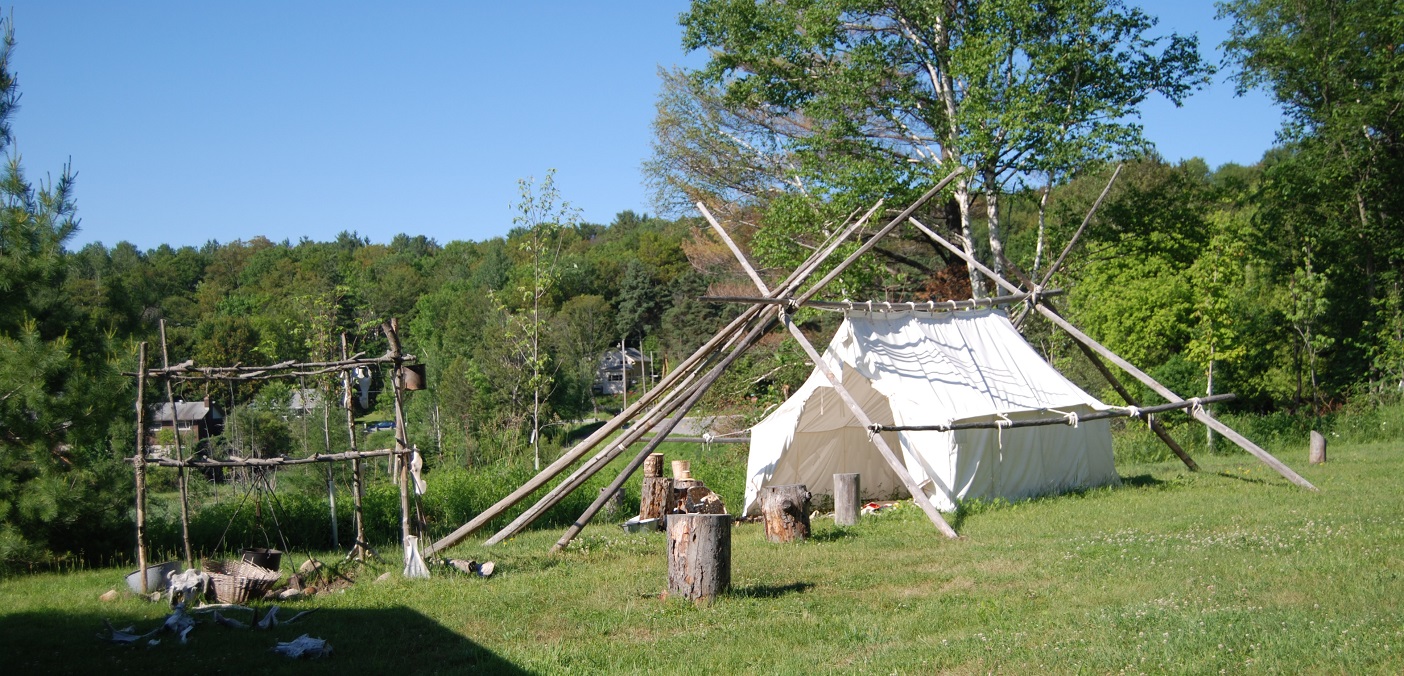
Long before Huntsville became a town, First Nations peoples called its lands and surrounding areas home.
To recognize this traditional indigenous territory at public gatherings, the Town of Huntsville has developed a Land Acknowledgement Statement in conjunction with the Chippewas of Rama First Nation, Culture and Research Department (CARD).
Town of Huntsville Manager of Arts Culture and Heritage, Teri Souter, told Huntsville’s General Committee at its November 29 meeting that she receives about six requests per year for wording to be used at public events that acknowledges traditional territories. A request by the Muskoka Community Foundation spurred the creation of a formal statement.
“It’s an opportunity for us to, within the Truth and Reconciliation Commission recommendations, provide wording approved by local First Nations for traditional land acknowledgement should people wish to use them,” said Souter. “It should provide some awareness. A lot of people want to do it but maybe don’t know how to do it or they don’t know what words to use.”
The full Traditional Land Acknowledgement Statement 2017 is several paragraphs long but doesn’t need to be used in its entirety, noted Souter. “People can choose which parts to include as appropriate to their situation.” Use of the statement is encouraged at public gatherings, but not mandatory.
The full text of the Muskoka-wide Land Acknowledgement Statement is below (or download a PDF copy here). At events in the Huntsville area, organizers are asked to name the Anishinaabe — Ojibway, the Chippewa — and the Algonquin peoples. The Treaty is the Williams Treaty.
We will begin this event (Name the Event) by acknowledging that we are meeting on land that has been inhabited by Indigenous peoples from the beginning.
As settlers, we are grateful for the opportunity to meet here and we thank all the generations of people who have taken care of this land – for thousands of years.
Long before today, as we gather here, there have been Indigenous Peoples who have been the stewards of this place.
In particular, we acknowledge the traditional territory of the Anishnaabeg, specifically the Ojibway, Chippewa and Odawa peoples. This territory is covered by the Williams Treaty (of 1923) and the J. Collins land purchase (of 1785).
We recognize and deeply appreciate their historic connection to this place. We also recognize the contributions First Nations, Métis, Inuit and other Indigenous peoples have made, both in shaping and strengthening this community in particular, and our province and country as a whole.
As settlers, this recognition of the contributions and historic importance of Indigenous people must also be clearly and overtly connected to our collective commitment to make the promise and challenge of Truth and Reconciliation real in our communities.
Information on Treaties in Ontario is available here.
Don’t miss out on Doppler! Sign up for our free newsletter here.
A lot of universities are doing the same thing. A great step forward and hopefully it will only be followed up by actionable items.
I have a comment about al this stuff, “No Comment”.