
One of the hardest parts about writing an opinion column is that once your general vibe and politics become known, you stop reaching the skeptics.
People who regularly read this column—the ones who used to mention it in yoga class or stop me on the street to talk about the latest piece—people who feel strongly about social justice, Indigenous sovereignty, environmentalism, anti-fascism, BLM, women’s lib, these people I can count on. Thank you, in advance, for reading.
But here’s the thing.
I’ve been watching the comments sections from afar for a while. Comment sections are a great indicator of where we are as a society. Are the comments generally informative, supportive, in good faith? Seeking to build connection and common ground? Or are they a devolving mess of cruelty, ad hominem and other argumentative fallacies?
Let me tell you, I have never seen such a black hole as we have now when it comes to social media. People seem to feel absurdly comfortable calling each other names, inventing the other person’s argument so it’s easier to defeat, and just general bad form.
I’m a bit of a stickler for a fair fight, so I hate to see this happen. But division is more lucrative than unity—it keeps you coming back to the websites. And whatever terrible things happen in the next few years, of which I fear there will be plenty, money will only serve to worsen the situation. The well of capitalism has been well and truly salted. But that death grip will be something, and in this case it’s on the internet itself.
I try to avoid echo chambers, and I don’t want to write to one, either. I love that the people reading this may not agree with everything, or even most, of what I say—but they still back my message of community and kindness. Whatever the politics, unless you have kindness and community as your foundation and you practise it, they will fail.
Sometimes, they will fail spectacularly, as we watch, rapt and horrified, from our vantage point.
So how do we reach the unreachables?
I watched The Social Dilemma as everyone with social media should have to do as part of the terms and conditions no one reads.
Though I wasn’t shocked at the revelations regarding the strategic corporate intention to sow discord, the sheer scale and spread of this problem is what makes it feel insurmountable.
But it can’t be—we can’t leave our now-primary methods of communication to tech bros who learned ‘the humanities’ from porn and think they’re oppressed because they’re too obnoxious to date. Those are not the hands in which I want my private information.
That said, the concern that I’ve learned in the past few years is the algorithm with an appetite for extremism. YouTube is the epitome of the saying, ‘there’s no such thing as bad press’. On YouTube, the algorithm autoplays the next-closest video to the one you watched, without going politically left. Only right wing, only more conservative, more inflammatory. The algorithm never offers you neutral, never offers something a little tamer or less out there.
Say you start your day watching my feminist videos—if you let the app autoplay the next videos, by the end of the day you’ll be downloading QAnon info dumps and wondering if it’s okay to buy a MAGA hat if it’s made in China.
I’m kidding, mostly. But that algorithm is bad news. It supplies you with confirmation bias—you only see what you and your friends already care about. Your thoughts and ideas are not considered extreme, your circles mostly agree with your politics. It’s very easy to think everyone sees the world the way you do.
If that’s true for you and me, then it’s also true in far-right, radicalizing circles. The tech world is far from neutral. Technology is all about the hands it’s placed in. And anger equals engagement, which equals dollars. The algorithm, and the smartie-pantses behind it, doesn’t care about your social media experience. Only that the experience continues. Whatever it takes to draw you back, and they learned that fear works better than contentedness when it comes to user retention.
After all, users who are content use social media as a tool or not at all. Those are not the targeted demographic.
With all this stacked against us, with so many deliberate, disorienting barriers, how can we possibly reach each other? How can I hear you, through all this noise? How can you hear me?
How do we burst past the artificial barriers that crappy algorithms and money-minded megalomaniacs stack in front of us? How can we start to build bridges when all forms of media are throwing grenades at the footings?
How do we reach the unreachables?
Corporations, right-wing organizations, and Silicon Valley all know how. The Trump win and near-win were, in part, so shocking because we missed the escalation. Echo chambers, so you’re less exposed to anyone who would vote differently than you. But a big part of the win was the strategy of Republican voters. Cohesively, a huge number agreed not to talk politics with friends or family, and not tell pollsters how they voted.
This collective strategy is something the right has always relied on, and something the left sorely lacks. We have no united front and in fact usually spent our limited energies fighting each other to be the Most Perfectest Leftist instead of fighting a common enemy, of which there are many and growing.
But if I’m in my echo chamber, you’re in yours, and the ones who don’t normally read She Speaks are in another, how can we understand each other? If I’m being told lies about you, and you’re being told lies about me, how can we get to the truth without talking to each other?
Calls for unity are, themselves, a tricky business. I’m certainly not telling Black people to ‘unite’ with racists, Indigenous people to seek togetherness with settlers, or abuse victims to forgive abusers or anything so callous. Understanding is always preferable to assumption or projection.
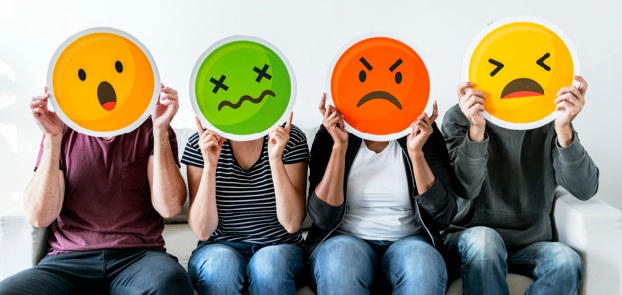
But I do have a bit of a call to action. The next comment section you see that makes you upset—frustrated or annoyed or enraged—feel that feeling, deeply. Make space for it, because it’s real and wants to be felt.
And then channel it, purely, into responding in a way that brings you closer to seeing the world you want to see. Anger is a great emotion, because it’s so translatable. You choose what you do with it. Do you give it away? Do you hoard it? Or do you transform it into action, and change the world?
It’s up to us.
It’s up to us.
It’s up to us.
Don’t miss out on Doppler!
Sign up here to receive our email digest with links to our most recent stories.
Local news in your inbox three times per week!
Click here to support local news

Kathleen May (Photo: Kai Rannik)
Kathleen May is a writer, speaker, and activist. Her column, She Speaks, has appeared in the Huntsville Doppler since 2018. Her work in our community includes co-founding the long-running Huntsville Women’s Group, volunteering with Muskoka Parry Sound Sexual Assault Services, and her role as a front-line counsellor at the women’s shelter. Kathleen is a 2018 Woman of Distinction for Social Activism and Community Development. She was longlisted for the 2020 CBC Short Story Prize, short-listed for the 2019 CBC Nonfiction Prize, and received the Best Author award for her 2018 submission at the Muskoka Novel Marathon, a fundraiser for literacy services. When she isn’t writing, she’s designing a tiny house which she intends to be the impetus for a sustainable women’s land co-operative in Muskoka.
I, for one, often dislike Ms. May’s somewhat entitled attitudes but, at the same time, agree with almost all of her main points. This column, concerning the internet and social media, raises an extremely important issue. Recently, there was other commentary on the same issue in Doppler and responses to that. The Social Dilemma is an excellent starter to explain why social media are the way they are and how they work but does not explore at all the effects. Social media are on the edge of destroying civilization. I do not think that this is an alarmist or extreme view – I believe it is absolutely true and, if anything, understated. As Ms. May wrote, Trump almost won a second term and a second Trip term could very easily have destroyed the free world (live in the US 6 months a year and things here are an incredible messs). The entire Trump phenomenon is almost entirely enabled by social media. The incredibly nonsensical world of “influencers” is a serious problem and only possible because of the social media.
I do not have solutions; they will be incredibly difficult to find. Whatever it takes, whatever restrictions on speech or freedoms are imposed, these things absolutely must be implemented and accepted, as we have accepted many restrictions on our liberties when the common good is endangered. The first step is to have everyone recognize this huge threat. Of course, the best way to do this in this era is via social media and that, unfortunately, will not happen.
Thank you Kathleen May for just being here, and giving us some, sometimes disturbing, things to think about.
This latest epistle is excellent, and captures the quandary in which we find ourselves.
Social media has completely altered our landscape. We’re stuck with all the platforms, and yes, the algorithms are running the Titanic. We saw the iceberg with the abortive coup at the US Capitol. The States will be years recovering from that “putsch”.
Thanks for your inspiration and insight. We may not always agree, but we can always agree to differ…civilly.❤️
Mr. Whillans; some great comments and thoughts, you have me thinking more.
Perhaps looking at politeness/non-politeness once again assumes a binary view of communication.
Is it one or the other? Or both? Our feelings/outrage for injustice and inequality might be useful and productive if each of us decides how we can best act.
At the risk of being obvious and sounding trite …
What strategies could we use? Some could write, some could peacefully protest, some could influence political will by running for office, some could speak, some could seek donors to non-profit movements, some could hold kitchen table discussions, with what groups might we associate – do you get my drift? Mobilizing people to care and support in whatever ways they can, some may just be able to provide others with the encouragement to continue – are all efforts to address inequality. We can also listen to dissenting voices, as long as they are not yelling in our faces and carrying weapons. With the escalation of anger, people don’t hear, see, they are not in “thinking” mode – they are at different degrees of being consumed by and in their anger.
Who are we communicating with? How are they hearing our message? Well, they will hear it through the filters of their own mental, physical health, and their own experiences – hence the challenges of having a real conversation. Your thoughtful comments are appreciated.
PS one person I would love to know more about is Stacey Abrams in Georgia and her work to encourage voters to take advantage of their voting franchise.
There is a problem with labeling oneself as either “left” or “right”, because it leaves no room for independent analysis of a particular situation or issue. As soon as you are “left” you dismiss anything a person who leans “right” has to say, and if you lean “right” you dismiss anything someone says who is “left”. If asked, I would say, I am mostly financially conservative, but socially liberal. During this pandemic, I believe Canadian politicians have done quite well given the unusual situation. I have noticed though that LIberals won’t give Ford credit for anything, and the same goes for Conservatives about Trudeau. This is ridiculous, to be so locked into one ideology.
Sometimes I am at loss (or more accurately simply conflicted). I grew up in a time of great “rudeness”. My teenage years saw me attending many civil rights protests. I marched on many occasions protesting the Vietnam war. Two observations that have distilled over the subsequent 50 years are:
1. These were not polite and respectful events; and
2. Change would not have occurred without number 1
My sense is that for both “injustices”, dialog was was not actually dialog at all. Powers that be were patronizing and condescending. Just as they are now for indigenous justice or social justice and race relations.
Upon reflection, I look back and think that we made the easiest of progress. But today we still seek genuine equality (it was easier to de-segregate a lunch counter). We are still seeking governments that won’t lie to us (i.e. pandemic management) or ignore us (Huntsville spends $3 M on a “streetscape” but does nothing to address affordable housing …indeed won’t even publicly address this).
So this is where my conflict arises……..Where has 40 or 50 years of politeness taken us. Income inequality grows daily. Social and racial justice have absolute stalled (look at who is paying the price for this Panademic….no we are not all in this together). health care for the less affluent is has been declining for the past 15 years).
And most audacious of all, is to have “leaders” such as the MPP, the editor of this publication etc tell the most disenfranchised simply to be polite….there is no need for anger.
This is all simply a recipe for a new wave of “violence in the streets”
Truly, at 68, I no longer want to be angry and rude, its all so tiring…..but is there any other way to effect change
Last night The Agenda on TVO had author Ron Deibert who has written a book on this very topic called “Reset: Reclaiming the Internet for Civil Dociety”. Very interesting , touching on this very topic Kathleen has coveted in this article.
Thank you Kathleen. How to reach the unreachables? I don’t think it’s possible. A closed, bored mind is like a steel trap- nothing goes in, nothing leaves until an event opens it up, sometimes, purely by happenstance. What will it take? I also see the negative, demeaning comments that appear, often even on Doppler’s FB page and they make me sad. I think that they play to the lowest common denominator, not helping anyone’s spirit, not even their own. Very angry but impotent. I agree that anger, when harnessed effectively and mindfully can change many things in positive ways. There’s nothing wrong with any emotion after all..it’s what we do with it. My hope is that eyes are opened and we try to make better choices. Free that mind in that steel trap!
Thank you Kathleen for this thoughtful piece. And thank-you Doppler for providing the platform. Perhaps I should be embarrassed to admit this but I am not familiar with “the social dilemma” so will be watching it tonight. I feel fortunate that I “tuned into” Doppler today to see your “call to action” and I look forward to learning more. I will contribute to the Doppler today, keep up the good work!
Good revelations, Kathleen; we want easy, black/white answers too often. Communication reduced to a binary transaction within the confines of a small TV screen and small bite-sized pieces (as if spoon-feeding a toddler).
Communication takes effort, public, civil discourse takes more. I find it easier to read opposite points of view if I don’t have to clear away stereotypical rhetoric. For me, I Must take long breaks away from the social media “news” for my good health.
Once again, I mention that chestnut of a film from 1976, “Network”, a still relevant perspective on media motivations, in my opinion. For example, the TV network (Faye Dunaway, William Holden) continues to allow a show host (Peter Finch) to continue working, even though he has been recently fired and is having a mental breakdown for all to see, because the TV ratings are great. Does this sound familiar?
Thanks Kathleen.