
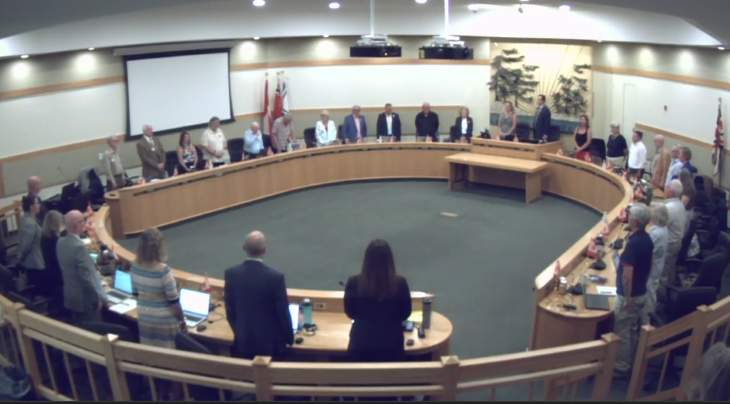
The District of Muskoka has approved a new Community Safety and Well-being Plan (CSWB) 2026-2030, setting the course for a collaborative effort to address some of the region’s most pressing social challenges over the next four years.
Approved by District Council today, the plan directs staff to work alongside a legislated Community Safety and Well-being Advisory Committee to carry out strategies focused on housing and homelessness, youth mental health, improving access to services, and strengthening the use of shared data to better identify community needs.
The updated plan is required under Ontario’s Community Safety and Policing Act and replaces Muskoka’s first community safety plan, submitted to the province in 2022. Rather than concentrating on emergency response, the framework emphasizes preventing crises before they occur through coordinated action among governments, health care providers, schools, police and community organizations.
“The majority of investments, time and resources should be spent on developing and enhancing social development, prevention and risk intervention strategies,” a consultant’s report notes, adding that proactive approaches are more sustainable than relying on emergency response after problems have escalated.
Four priorities identified
The refreshed plan identifies four strategic priorities based on community consultation, local data, engagement with more than 25 service providers across 17 organizations, and feedback from 425 residents.
Housing affordability and homelessness emerged as the community’s top concern, followed by mental health and addiction, access to services and supports, and the need for better coordinated data to guide planning.
The housing strategy focuses on strengthening pathways into stable housing before homelessness becomes chronic. Among the actions approved are exploring a Homelessness Management Information System, expanding Muskoka’s Coordinated Access System, identifying opportunities for additional stabilization supports for people with complex needs, and strengthening outreach for people experiencing unsheltered homelessness. The District will lead the work alongside homelessness service providers, landlords and outreach organizations.
The plan’s mental health strategy takes a different approach than previous initiatives by concentrating specifically on infants, children and youth. District staff and partner organizations will establish a Muskoka Infant, Child and Youth Governance and Planning Table to coordinate services while continuing work toward developing a mobile Youth Hub in partnership with Canadian Mental Health Association Muskoka Parry Sound. The goal is to connect young people and families with supports earlier, before challenges become crises.
Recognizing that many residents struggle to find the right services, the access strategy aims to create easier pathways to support. Planned actions include working with community organizations to establish trusted locations where residents can receive information and referrals, increasing awareness of 211 services, exploring shared staffing models among agencies, and supporting community conversations that reduce stigma surrounding poverty, housing and mental health.
The fourth strategy focuses on improving how community partners collect, share and interpret information. The report notes that data is often gathered differently across organizations, making it difficult to identify trends and respond early. By developing shared indicators and regular reporting, partners hope to better anticipate emerging issues and coordinate services more effectively.
Built on community feedback
The development of the plan included a review of existing local strategies and consultation with organizations including Canadian Mental Health Association Muskoka Parry Sound, Muskoka Algonquin Health Care, Community Living Huntsville, Manna Food Bank, Mind-Aid, YWCA Muskoka, the Huntsville and Bracebridge OPP detachments, school boards, Simcoe Muskoka Family Connexions and several District departments.
Survey respondents identified housing affordability and homelessness as the biggest factor affecting community well-being, selected by 75 per cent of respondents. Mental health and addiction followed at 61 per cent, income instability and food insecurity at 59 per cent, and access to health, social and community services at 53 per cent.
The report also found that a majority of residents either did not know or were unsure where to go for help with housing, mental health or basic needs, while awareness of Ontario’s 211 navigation service remained low.
Implementation begins this year
Following council approval, the plan will be submitted to the Ministry of the Solicitor General and posted on the District’s website. A Community Safety and Well-being Advisory Committee will begin meeting quarterly later this year to oversee implementation, while District staff will provide annual updates to council and a more comprehensive progress report in late 2027, outlining achievements, challenges, and any recommended changes to priorities.
The report states there are no immediate financial implications associated with the plan. If funding is needed to support future initiatives, requests will be considered through the District’s annual budget process.
While commenting on the plan, Councillor Don Smith spoke of the resources that have gone into housing and emphasized the importance of mental health. He said the action plan associated with mental health “to me seems very thin” when compared to other investments the District has made, like housing.
“We have certainly moved on the other strategies, particularly on the housing one, but this one I’m not so sure about. This one I don’t feel comfortable that we have done what we talked about around the table over the past four years,” he said, adding that in his opinion it is something that needs addressing.
The consultant said mental health organizations are at the table, and additional mental health-related work will come through that collaboration.
Councillor Peter Koetsier applauded the proactive approach to community issues that could become costlier if not addressed, “because we’ve helped people address things as they’re… budding as opposed to become in full bloom, and I think that’s a fantastic approach.”
Koetsier questioned why only two OPP detachments and one health organization were included. “I’m very concerned that the western flank of the District will once again not be served by these efforts,” said Koetsier. He also expressed concern that since the initiative is mandated by the province, money will need to be spent on it. “Is this downloading in disguise? Are we taking responsibilities that should be the provincial responsibilities and saying, ‘municipalities, you found voids. You municipality go and fill them.”
Staff said attempts were made to keep the committee nimble, but that doesn’t mean consultation won’t take place with organizations that are not on the committee. District Chair Jeff Lehman also spoke of funding and said the District continues its advocacy work for a unified response and resources to address social issues.
Councillor Brenda Rhodes said the coordination of data, where there have been gaps in the past, will be very helpful.
Councillor Guy Burry expressed concerns regarding financial resources. “Many of these things are heart-string issues, and I get it, but it would be really helpful to understand what we’re obligated to do as the District Municipality of Muskoka and what we are choosing to do because we have spent the last nickel fifteen or sixteen times already, and I’m afraid. I am really afraid,” he said.
Staff said that the District is obligated to have a plan. Post the plan on the District website, create an advisory committee, have the committee track and monitor progress, and make the minutes of those meetings available to the public. And essentially, work with existing resources in a more coordinated way.
Lehman also emphasized the cost savings of addressing issues before they become crises.
Don’t miss out on Doppler!
Sign up here to receive our email digest with links to our most recent stories.
Local news in your inbox so you don’t miss anything!
Click here to support local news
0 Comments