
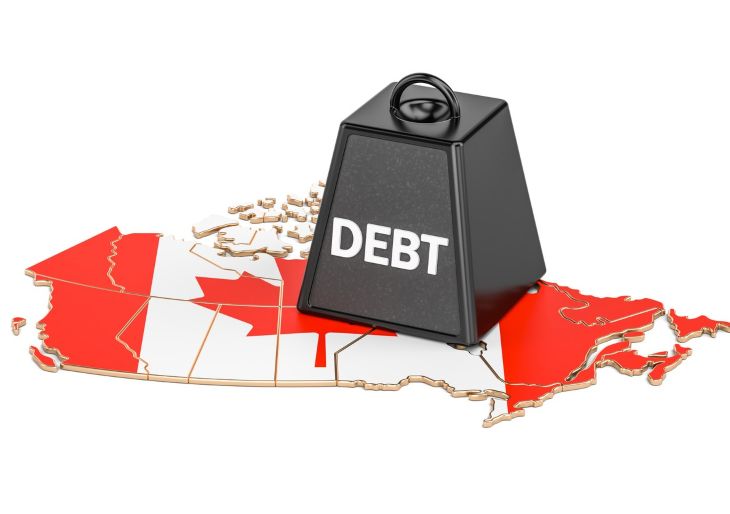
I sometimes wonder about that. With almost unmanageable public debt at the federal and Ontario levels, and significantly increased spending at all levels of government, including municipal, do we really care?
With apologies to soccer fans, of whom there are many in Canada, I began thinking about this again with the launch of the FIFA World Cup games in Toronto this week.
Soccer has become a national sport in Canada. Both my grandson and granddaughter have played it, as have hundreds, if not thousands, of kids in Muskoka. And in Toronto, 43,002 spectators paid between $900.00 and $2,391.00 to watch the game in person, a ticket price that few ordinary Canadians could afford.
So, to be clear, my concern is not about the importance of soccer to many Canadians. I fully understand and support that. Rather, the concern is whether or not Canada can afford to host World Cup games at a time when the future of Canada’s economy is seriously challenged.
Canada’s Parliamentary Budget Officer has reported that the World Cup games will cost taxpayers in this country about $1 billion. Noel Jarvis, Ontario Director of the Canadian Taxpayers Association, says, “It’s a bad idea to shell out a billion dollars for a few World Cup games when our governments are in deep debt and every day taxpayers are struggling with rising prices.”
Clearly, there are some benefits for Canada in hosting World Cup games. They increase tourism, create short-term jobs, promote soccer in Canada, and generate international media exposure.
It should be noted, though, that the majority of any economic benefits arising from the World Cup games will be concentrated in Toronto and Vancouver. Yet tens of millions of Canadians outside those two cities will be paying their full share of the $1 billion debt incurred by these games.
According to an article in the Toronto Star, Claire Fan, a senior economist at the Royal Bank of Canada (RBC), is quoted as saying, “FIFA related job growth, regardless of size, will likely be temporary and part time so, (The World Cup) is not a sustainable source of job growth.” She also said that these positions could fade as early as July or August.
Considering the costs related to the World Cup games, the Bank of Montreal (BMO) predicts that Canada’s Gross Domestic Product (GDP) will grow by 0.1 percentage points.
“That’s very, very small.” BMO’s senior economist, Shelly Kaushick, told the Toronto Star. “So, it’s not going to necessarily change the picture in Canada. The fact is that there’s all these bigger headwinds right now to the economy, specifically, the energy price shock, and of course all the trade uncertainty that we are still dealing with.”
To be fair, it was former leaders, Prime Minister Justin Trudeau, Ontario Premier Kathleen Wynne and Toronto Mayor John Tory who applied to bring the 2026 FIFA World Cup games to Ontario. Prime Minister Mark Carney, Premier Doug Ford and Mayor Olivia Chow should not be made to hold the bag for this, nor can they now be blamed for making the best of it.
But even when Canada’s bid for the FIFA World Cup was initiated, there were serious signs of economic strain in Canada. Discretionary spending then was as much of an issue as it is today.
What now makes the FIFA World Cup games in Canada more than just a one-off expenditure is the fiscal context in which they are being held. It should be a clarion call that these games, however popular, however beneficial, are unaffordable and therefore, in the long run, not beneficial to Canadians.
So, let’s look at that fiscal background. Canada currently has a debt of $1.3 trillion, not billion, trillion. Add to that the projected federal deficit of $55.3 billion for 2026.
Then we have Ontario’s debt, at about $485 billion, with a projected 2026 deficit of $13.5 billion on top of that.
During the last four years, federal spending has increased by 27%. Ontario spending over the past four years has increased by about the same. Roughly, that represents a quarter more federal and provincial spending in just four years.
Municipal councils are not allowed to have deficits, but they don’t get off the hook when it comes to increased spending. During the past four years, the District Municipality of Muskoka has raised their operating spending by 26%.
Over the past four years, the Town of Huntsville has increased their staffing costs by 42%. They have also spent $4 million from the Town’s reserve accounts. Together with additional revenue they received, such as dividend payments from Lakeland Holdings, they were able to keep the four-year cumulative tax rate to about 25% even though their actual overall new spending was significantly higher, likely closer to 10% in each of the four years of their term.
Given combined spending increases and debt at all three levels of government, there are, in my view, and in the view of many economists, serious questions to be addressed related to the health of Canada’s economy now, and perhaps more importantly in the not-too-distant future.
There are those who will say that, given our current fiscal situation, a billion-dollar deficit to have the World Cup games in Canada is just a drop in the bucket. That may be true. The reality, however, is that there is also a hole in that bucket, and it is getting much bigger to the point of causing serious damage to our economy.
To me, the World Cup games in Canada, with its billion-dollar deficit, are just the tip of the iceberg, a wakeup call that increased spending, especially discretionary spending, has gone way above its limits and is a sign that we can’t afford taxpayer-funded luxuries for the foreseeable future.
Sadly, though, I wonder how many people in Canada give a damn. Certainly, one does not see that much about it in the media or in public forums. Perhaps more than a trillion-dollar debt is impossible to comprehend and that living life in the moment is more important.
So, do we have our fun at public expense? Or do we say loudly and clearly that enough is enough?
A tough question to ask, but a necessary one.
Hugh Mackenzie

Hugh Mackenzie has held elected office as a trustee on the Muskoka Board of Education, a Huntsville councillor, a District councillor, and mayor of Huntsville. He has also served as chairman of the District of Muskoka and as chief of staff to the former Premier of Ontario, Frank Miller.
Hugh has also served on a number of provincial, federal and local boards, including chair of the Ontario Health Disciplines Board, vice-chair of the Ontario Family Health Network, vice-chair of the Ontario Election Finance Commission, and board member of Roy Thomson Hall, the National Theatre School of Canada, and the Anglican Church of Canada. Locally, he has served as president of the Huntsville Rotary Club, chair of Huntsville District Memorial Hospital, chair of the Huntsville Hospital Foundation, president of Huntsville Festival of the Arts, and board member of Community Living Huntsville.
In business, Hugh Mackenzie has a background in radio and newspaper publishing. He was also a founding partner and CEO of Enterprise Canada, a national public affairs and strategic communications firm established in 1986.
Currently, Hugh is president of C3 Digital Media Inc., the parent company of Doppler Online, and he enjoys writing commentary for Huntsville Doppler.
Don’t miss out on Doppler!
Sign up here to receive our email digest with links to our most recent stories.
Local news in your inbox so you don’t miss anything!
Click here to support local news
Well said Dale Hajas!
Hello Hugh,
It has always puzzled me to watch cities/countries wrack up debt willy-nilly with no end in sight. I have never been a student of economics….. I simply live by the rule that I don’t buy things I can not pay for outright. Hence, I carry no debt. My dad conducted himself the same way and I managed to avoid the net consumerism places for all to become ensnared in.
My question is: where does it end? The States is now well over a trillion dollars in debt and I see nothing stopping it from ballooning forever.
Thank you for you time and perspectives.
Take good care,
Edie Hentcy
$1.23 Trillion! Holy overdraft, Batman! How could we have ended up in this mess? Well let’s just ask the Bat Computer and see if it can give us an idea…. was it the Riddler or Joker that did it?
“Prime Minister Justin Trudeau’s government has doubled Canada’s federal debt, increasing it from $616 billion in 2015 to roughly $1.23 trillion by the start of his latter tenure, with some estimates approaching over $1.4 trillion as debt-to-GDP ratios shifted.Tracking this dramatic fiscal expansion reveals a few specific details:Overall Increase: It took nearly a century and 23 previous Prime Ministers for Canada’s federal debt to reach $616 billion. Under the Trudeau administration, this accumulated total has effectively doubled.Per-Person Debt: Studies show per-person federal debt has increased by over 35%, amounting to an increase of roughly $14,127 per Canadian.Interest & Servicing: The sheer volume of borrowing and elevated interest rates mean servicing this debt now costs the country over $50 billion annually, exceeding federal GST revenues and health transfer budgets.”
If we think this is bad, just wait until 2040 when Prime Minister Xavier Trudeau takes over, and really outdoes his old man and grandfather.
Today’s article by Paul Krugman, an award-winning PH D economist in the US, much like our Mark Carney, says the robber barons of today (eg Larry Ellison and Mark Zucherberg) are far worse than the robber barons of the famous gilded age of John D Rockefeller (oil) and Andrew Carnegy (steel).
But I doubt that any country can afford the exorbitant costs of FIFA when you consider the costs of paying to train, transport, and house the teams, and spectators. It is supposed to bring world together, but does it?
Canada’s national debt is at $60,521 per capita or 86% of our annual GDP per capita of $70,000 at purchasing power parity (PPP). The US national debt is $114,136 per capita or 120% of their annual GDP per capita of $94,430 at PPP.. And yet Trump staged a UFC fight for his 80th birthday party that was no doubt paid for by taxpayers at $60 million. And it is reported that Trump has enriched himself by $4.5 billion during his presidency; far more than any other president.
Our situation could certainly be better, but it could also be worse.
This is a longer response than I usually write, but Hugh’s article raises a question that deserves more than a quick answer.
Hugh raises a concern that I suspect many Muskokans share. At a time when property taxes, housing costs, groceries, insurance premiums, and municipal budgets all seem to be moving in one direction, it is reasonable to ask whether governments are spending wisely and whether we are accumulating obligations that future generations will have to carry. Debt matters. Every dollar borrowed eventually has to be accounted for. In that sense, Hugh is asking an important question.
What caught my attention, however, wasn’t the debt numbers themselves. It was the assumption that spending is the central risk facing Canada. The more I read, the less certain I became that this is the risk we should be focusing on most.
One thing political engagement has taught me is that there is often a gap between the daily debate and the information available to the public. Most Canadians encounter politics through headlines, clips, and commentary. Yet government strategies, economic reports, international agreements, policy documents, and parliamentary reports are available to anyone willing to read them. They don’t tell us what to think, but they often reveal what problems governments believe they are trying to solve and how they intend to approach them.
What becomes clear very quickly is that government decisions rarely exist in isolation. A housing announcement may be connected to labour shortages. An infrastructure project may be tied to trade access. What can look like a stand-alone expense is often part of a larger effort to solve a broader problem. Governments don’t always get it right. They never have. Public money deserves scrutiny, projects can be poorly managed, and priorities can be misplaced. Fiscal discipline still matters.
But I increasingly find myself asking a second question alongside Hugh’s: what is the cost of not investing?
Anyone who owns a home, cottage, farm, or business in Muskoka understands the principle. Some expenses can be postponed, but they cannot be avoided. Roofs eventually need replacing. Roads eventually need rebuilding. Septic systems eventually need upgrading. Maintenance deferred today often becomes a larger and more expensive problem tomorrow. I wonder if Canada may be facing a similar challenge.
For years we postponed housing construction. We underinvested in electricity infrastructure. We delayed defence modernization. We became heavily dependent on a single export market. We watched productivity growth stagnate. None of those challenges appeared overnight. The costs of those decisions did not disappear. They accumulated. We see versions of this in Muskoka as well. Communities across the region are trying to address housing shortages, infrastructure pressures, physician recruitment, transportation needs, and the demands of a growing population. None of those challenges are solved by wishing they were cheaper. They require planning, investment, and a willingness to think beyond the next budget cycle.
This is where the conversation changes for me. The debate is often framed as spending versus restraint. But that may be too simple. The more important distinction may be between consumption and investment. A family taking on debt for a vacation is making a very different decision than a family taking on debt to purchase a home, start a business, or invest in their children’s future. Nations face similar choices.
The deeper I get into the source material, the more I notice the same concerns surfacing in different places. Economists talk about productivity. Business leaders talk about competitiveness and supply chains. Governments talk about energy security and trade diversification. Different people, different perspectives, but often the same underlying challenge: preparing for a world that is becoming less predictable and more competitive.
Debt still matters. What has changed is how I think about the discussion. The more I look beneath the daily political argument, the less convinced I am that debt is the only number we should be measuring. We should also be asking whether our investments are creating the capacity needed for future prosperity. Are we building housing? Expanding infrastructure? Improving productivity? Strengthening trade relationships? Modernizing critical systems? Leaving future generations with assets as well as liabilities?
For me, that is the stewardship question. Most of us can see what action costs. The cost of waiting often doesn’t become clear until much later. Hugh is right to ask whether Canadians care about debt. We should. But I think the larger question is whether we care enough about the future to make the investments necessary to remain prosperous, resilient, and sovereign in a rapidly changing world.
The more I read beneath the headlines, the less interested I become in the daily political argument and the more interested I become in the larger direction of the country. Reading the documents doesn’t make the problems disappear. If anything, it makes the trade-offs easier to see. It also reminds me that many of the issues we debate every day are connected to larger changes already taking place around us.
I’m still concerned about debt. I think most Canadians are. But stewardship is about more than controlling costs. It’s also about making sure future generations inherit the capacity to meet the challenges ahead. In a political environment that often rewards outrage over understanding, that perspective lets me breathe.
Government debt fundamentally differs from personal debt in its lifespan, revenue-generating power, and repayment methods. While individuals have finite lifetimes and limited income, governments have perpetual lifespans, can increase revenue through taxation, and can issue their own currency. (I know that you know that Hugh but many people don’t.)
I’m not suggesting that debt is harmless. Canada ranks fourth in total indebtedness among 34 OECD countries. And yes, high debt levels create economic vulnerabilities and require billions of dollars in interest payments. Part of what determines ‘good’ debt from ‘bad’ debt is the ability to service our indebtedness and we can. Debt can also finance vital infrastructure and public investments that strengthen the economy over the long term.
The bottom line is that debt is a tool. If borrowed money generates economic growth that outpaces the cost of borrowing, the debt is manageable. If debt accumulates without improving productivity, particularly in a period of rising interest rates, it can restrict a government’s future spending power.
At this moment, I believe that the former is true and if it’s on even slightly shaky ground, then we should be glad that Mark Carney has his economist’s eye on it.
One just need to look what happened in Greece 6 years ago when no one would lend them money to finance their national debt. Benefits of all types were cut and people were very upset. The upsetedness did not make people or other counties lend money to Greece. If we do not stop overspending, we can expect similar here.