
By Hugh Holland
Canada committed to net-zero emissions by 2050, joining 65 other countries and the European Union that made that pledge at the UN’s 2019 Climate Action Summit. That means that every ton of CO2 we emit must be matched by a ton that we remove from the atmosphere by capture and storage (CCS), converting CO2 into new fuel and high-strength materials, and planting vegetation. That does not mean zero emissions. It does mean the less we emit, the less we must remove.
The World Meteorological Organization first warned of an impending climate crisis 32 years ago in 1988. The number of deniers has declined every year, but some people just don’t want to hear the truth and some leaders, who must know better, are willing to lie to get elected. Every year we drag our feet makes solving the problem more difficult and costly. The goal of net-zero emissions by 2050 would be very difficult to meet with the full support of most governments and is likely impossible without full support.
In the early 1900s, oil was considered a miracle because cities were being buried in horse manure. But oil has always been a global commodity because the availability of oil was very uneven. 30 countries had a lot of oil, but 150 countries had little or none. In 2019 for example, 15 countries supplied most of the world’s oil. But by 2070 only 6 countries will have oil left and it is unlikely that hundreds of uses of oil can be replaced by 2070. So DOMESTIC demand for Canada’s oil will be replaced by EXPORT demand.

Global oil demand and supply (Hugh Holland)
We in Canada cannot control the world. But as a relatively wealthy developed nation, we can and should do our part by setting a positive example, while sharing our abundant resources and expertise with others. (Average per capita income in Canada is $47,622 US vs world average of $10,298.)
Or should we just let others in energy-short countries starve and freeze in the dark so we can achieve our own country’s emissions goals? If not, how can we achieve our emissions goals while sharing our abundant resources with others that will need them in declining quantities for some time to come?
We can aggressively reduce the Big-4 sources of emissions in Canada, aggressively deploy measures to remove emissions from the atmosphere, and build the necessary infrastructure to enable us to share our abundant resources in the safest manner possible. These measures will benefit all Canadians.
1. Electricity Production (10 per cent) – Replace the coal-fired electricity generation in Alberta and Saskatchewan with natural gas immediately (with some help from wind and solar where they make sense), and commit now to manufacturing and using Canadian-developed Small Modular Nuclear Reactors (SMRs) in Alberta by the late 2020s. Manufacturing these reactors in Alberta would replace lost coal and oil jobs and use Saskatchewan uranium. (SMRs will be fail-safe, much more efficient, solve the nuclear waste problem, and will be much cheaper and faster to build than current reactors.) Alberta could export SMRs long after demand for coal and oil is diminished.
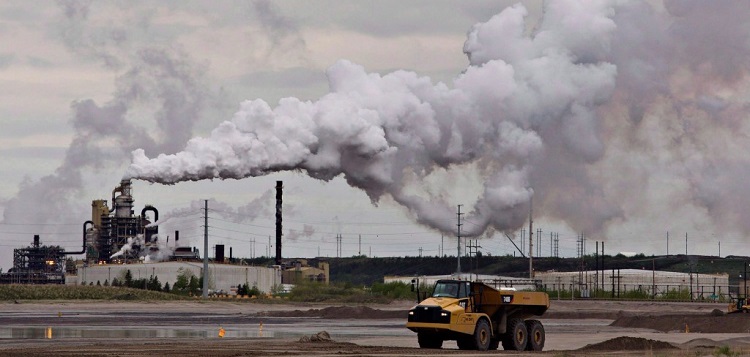
2. Oil and Gas Production (27 per cent) – Use the free and clean heat from SMRs to replace Natural Gas heat for oil extraction and thus make Canada a zero-emission source for oil production for as long as oil is needed. Canada is one of only six countries that can produce oil beyond 2050. As shown below, if the rate of decrease in fossil fuel use exceeds the rate of increase in clean energy use, we will experience a global energy shortage, as shown in the HATCHED area, on top of a global climate crisis. And no government can survive turning off the supply of food, heat, and light.

Transition to clean energy cost comparison (Hugh Holland)
3. Transportation – (24 per cent) Accelerate the transition to electric cars and light trucks along with convenient charging stations. Most EVs will be charged at night at home base when the electricity is cheaper and is already available. (We currently open the hydro dams to reduce output at night.) The average vehicle goes 68 km per day and is parked for more than 20 hours. The range of EVs already exceeds that daily range and exceeds the range of comparable gas vehicles. The price of EVs is rapidly declining and the operating cost is 1/3rd of gas-powered vehicles.
4. Building Heat (12 per cent) – Change building codes and incentives to move towards ultra-low energy use and clean sources. Promote modern air-to-air heat pumps in urban areas (for both heating and cooling) and ground-to-air heat pumps in rural areas where there is space to accommodate the 500 feet of underground piping per home. Instead of wasting the heat produced by Energy from Waste facilities and Modular Reactors, use that heat for district heating of industrial buildings and processes.
The situation is difficult but certainly not hopeless. But success will take all of us, individuals, government and industry working together.
Wind and solar energy can help where they make sense, but successful and rapid deployment of emerging Small Modular Nuclear Reactors is the key for Canada and the world to achieve net-zero emissions while maintaining a healthy economy during the transition to clean energy. The Liberals have already approved several steps in the development of these reactors by Terrestrial Energy of Oakville, Ontario, and the US Department of Energy is helping to fund that development. With Stephen Harper recently joining the Board of Terrestrial Energy, there is an opportunity for Liberals ands Conservatives to work together to overcome the irrational fear that plagued earlier types of nuclear reactors.
Yes, these measures will cost a lot of money and may not get us to net-zero emissions by 2050, but they will go a long way. That is much better than giving up and doing nothing because we think Canada’s emissions don’t matter, or the outlook is futile. We must also invest heavily in adapting to climate change as well as preventing it. Shoring up areas vulnerable to rising sea levels, flooding, extreme weather and wildfires will also cost a lot of money but will provide a lot of jobs and tax revenue.
Hugh Holland is a retired engineering and manufacturing executive now living in Huntsville, Ontario.
References
6 ways to re-use CO₂ as a resource instead of a pollutant
Carbon Engineering – Absorbing carbon from the atmosphere to make new liquid fuel
Alberta’s Capital Power is working to convert carbon emissions into useful products
Don’t miss out on Doppler!
Sign up here to receive our email digest with links to our most recent stories.
Local news in your inbox three times per week!
I just had a thing on facebook where they are using plastic water bottles and plastic bags to build roads with I think they mix the recycled plastic with asphalt and it lasts a lot longer. There is a lot we should be doing with used plastic I’m not sure the grocery bag thing is the best Idea we use them for kitchen catchers they are not as heavy as the kitchen catchers you buy and they degrade a lot faster.
Well stated and presented, Hugh. SMNRs will be our best chance at replacing fossil fuels. Clearly we can’t do all of it alone as individuals though, but we can each do something to help.Even small things like reducing the amount of plastic waste we produce will help clean up the mess we”ve all had a share in making. As Mr. Vowels noted, we can’t do everything by ourselves, so anything we do in the right detection is better than ignoring the situation or blatantly going in the opposite direction.
The Old World succeeded in overcoming the ignorance of filth vs cleanliness and we all live much longer healthier lives now. Surely using paper straws & coffee cups with paper lids, cloth grocery bags, alerting our grocery stores that we no longer want coconuts wrapped in plastic, nor produce packed in non recyclable black foam & plastic is not beyond the average persons financial ability!
…. And we really should look into doing a much better job (as a country) of actually recycling our waste instead of shipping it off continent… Maybe this should be on our political radar as well.
Great article, Hugh.
Excellent well researched article Hugh.
It can be accomplished if / when we elect people with political will to do what has to be done.
Thank you
Mike McIntosh
Sprucedale
Well Hugh you talk about a lot of things that can be done except for one thing where is the money for all this coming from. I would love to have a nuclear generator to power my home or a ground source heat pump but no way I can afford either on a basic old age pension. Besides I just remodeled an old house new windows doors and siding new propane furnace and on demand water heater and all new appliances thats about all i can do for the environment unless I win a lottery. But I don’t believe anything we do is going to make much difference to global warming because in my eyes that is nature and nothing we do will stop it maybe slow it but i don’t think so. I’m old enough to remember the 1940s and winter was much harder back then so i notice the change. Now that being said it sure would be nice to have some fresh air to breath again so lets do what we can to fight pollution and not just from burning fossil fuel lets get rid of all the chemicals that we spray around our homes cars body’s and everywhere else we think smells bad. One other thing with global warming and that is no one ever talks about all the heat that we produce now compared to 50 or 60 years ago all we talk about is burning fossil fuel.