
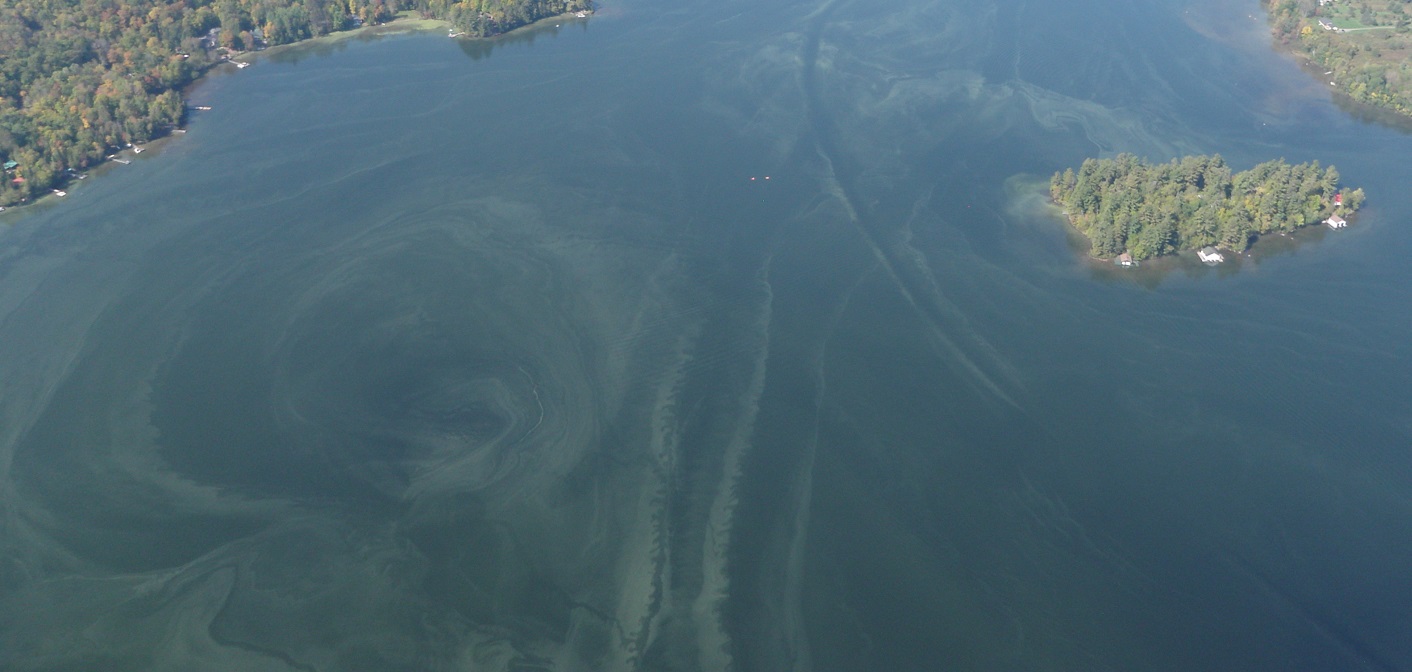
Aerial photos taken this weekend by Doppler reader Brian Tapley show that the blue-green algae bloom in Peninsula Lake has not abated.
In an email exchange with Ontario’s Ministry of Environment and Climate Change, Donette Stoll, Senior Regional Communications Advisor for the Central Region, said that Ministry staff have collected water samples for analysis but have not yet categorized the severity of the bloom, adding that blue-green algae (or cyanobacteria) blooms typically form as a result of high levels of phosphorus and nitrogen in the water, the water temperature, and the weather.
Sewage treatment plants are typically not a contributor to blue-green algae blooms – they must comply with effluent limits for nutrients that are protective of aquatic life and not sufficient to contribute to or sustain blue-green algae blooms, said Stoll.
Human activity, however, can create the physical and chemical conditions for cyanobacteria to thrive. Agricultural, urban and stormwater runoff and leaching from septic systems, for example, can elevate the levels of nutrients in water bodies which can promote algae growth. Residents and businesses can help limit blooms by using phosphate-free cleaning products, reducing fertilizer use, keeping natural vegetation along shorelines, and maintaining septic systems.
Blooms can last anywhere from a few days to weeks. “Typically blooms fade due to changes in the physical and chemical conditions,” said Stoll. “Changes in temperature, nutrient levels, water stagnation and weather patterns can all contribute to changes in bloom conditions. Toxins may persist in the water for days after the bloom is no longer visible.”
Although this particular bloom has not yet released toxins, “the cyanobacteria in the bloom may ‘turn on’ the production of toxins based on changes in the environment, including a change in the phosphorous and nitrogen levels in the water body,” said Stoll.
Aerial photos, week of September 11, courtesy of Brian Tapley
-

- Algae bloom in Peninsula Lake’s Wolf Bay during the week of September 11 (Photo Brian Tapley)
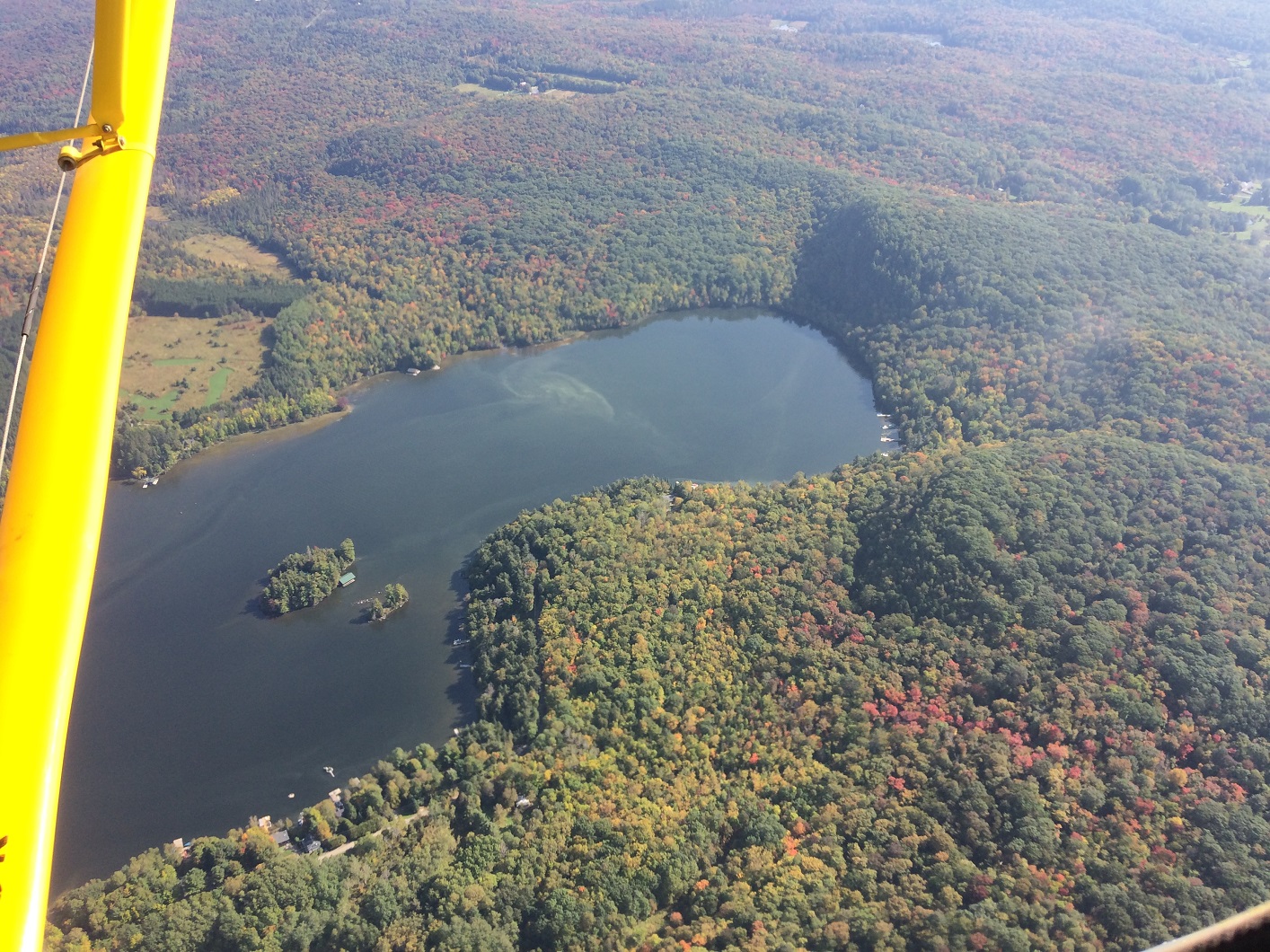
-
- Algae bloom in Peninsula Lake near Deerhurst Resort in the week of September 11 (Photo: Brian Tapley)
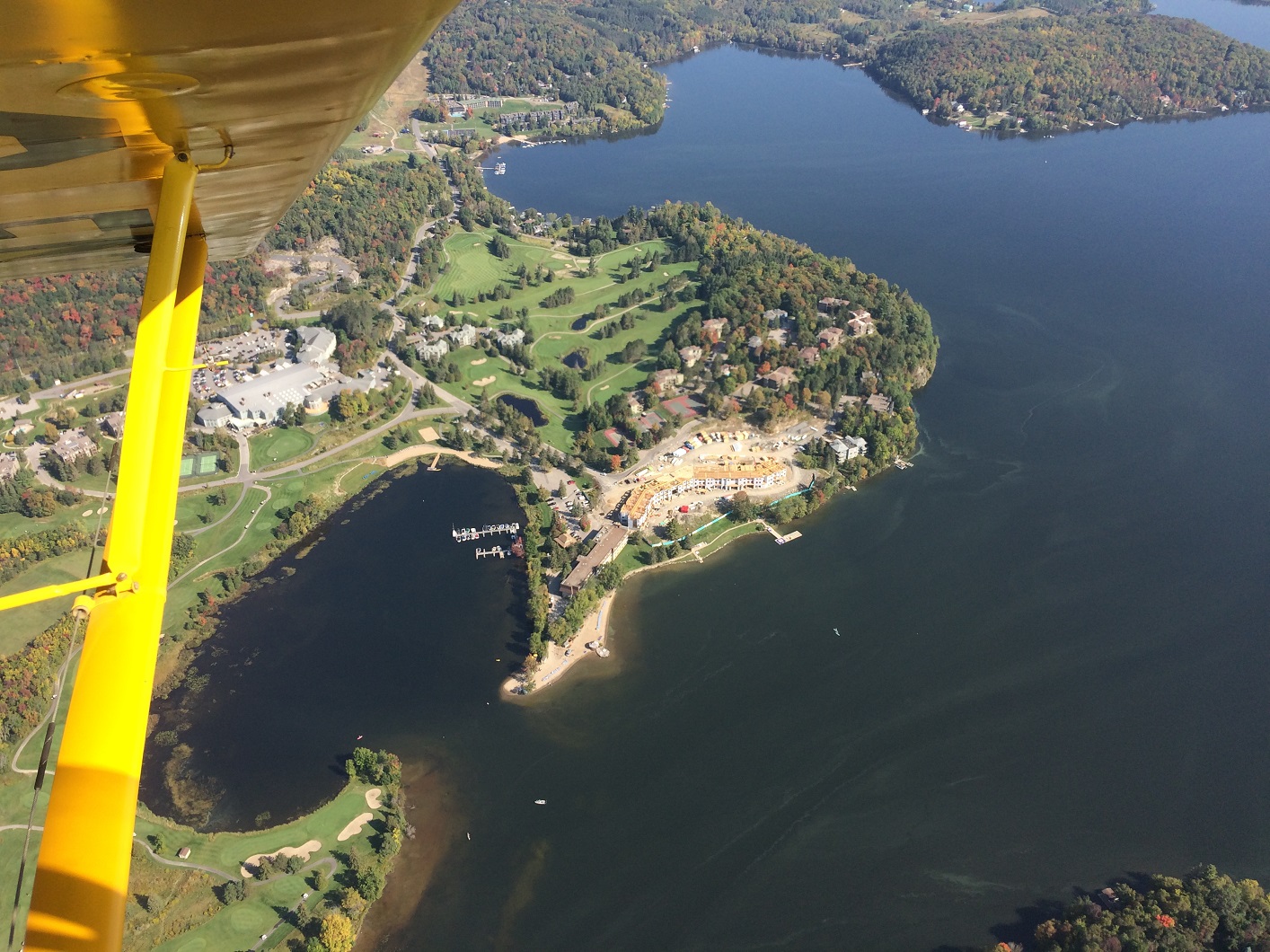
Aerial photos, September 22, courtesy of Brian Tapley
-
- September 22 Algae bloom near Deerhurst Resort on Peninsula Lake (Photo: Brain Tapley)

-
- September 22 Algae bloom near Deerhurst Resort on Peninsula Lake (Photo: Brain Tapley)
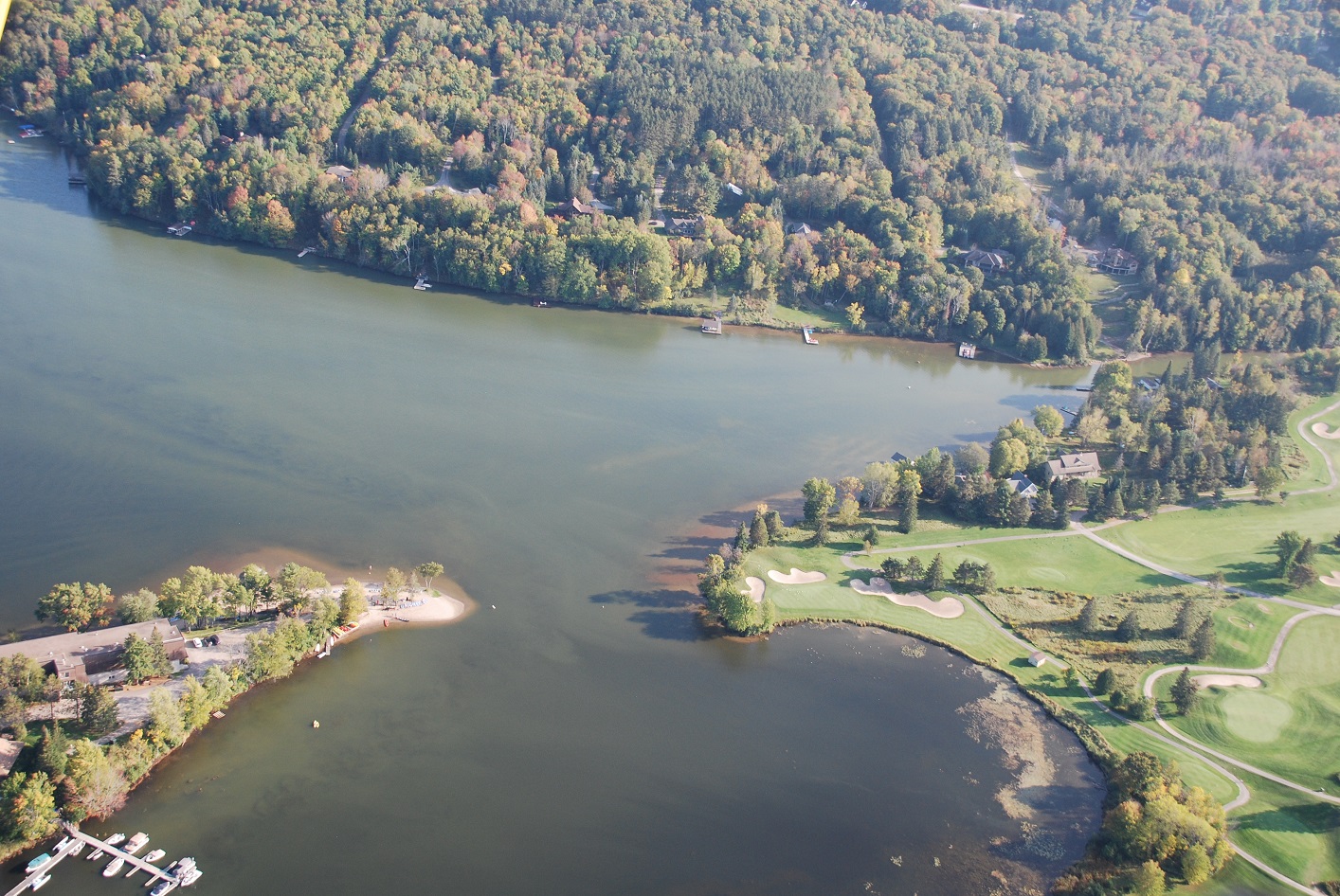
-
- September 22 Algae bloom near Deerhurst Resort on Peninsula Lake (Photo: Brain Tapley)
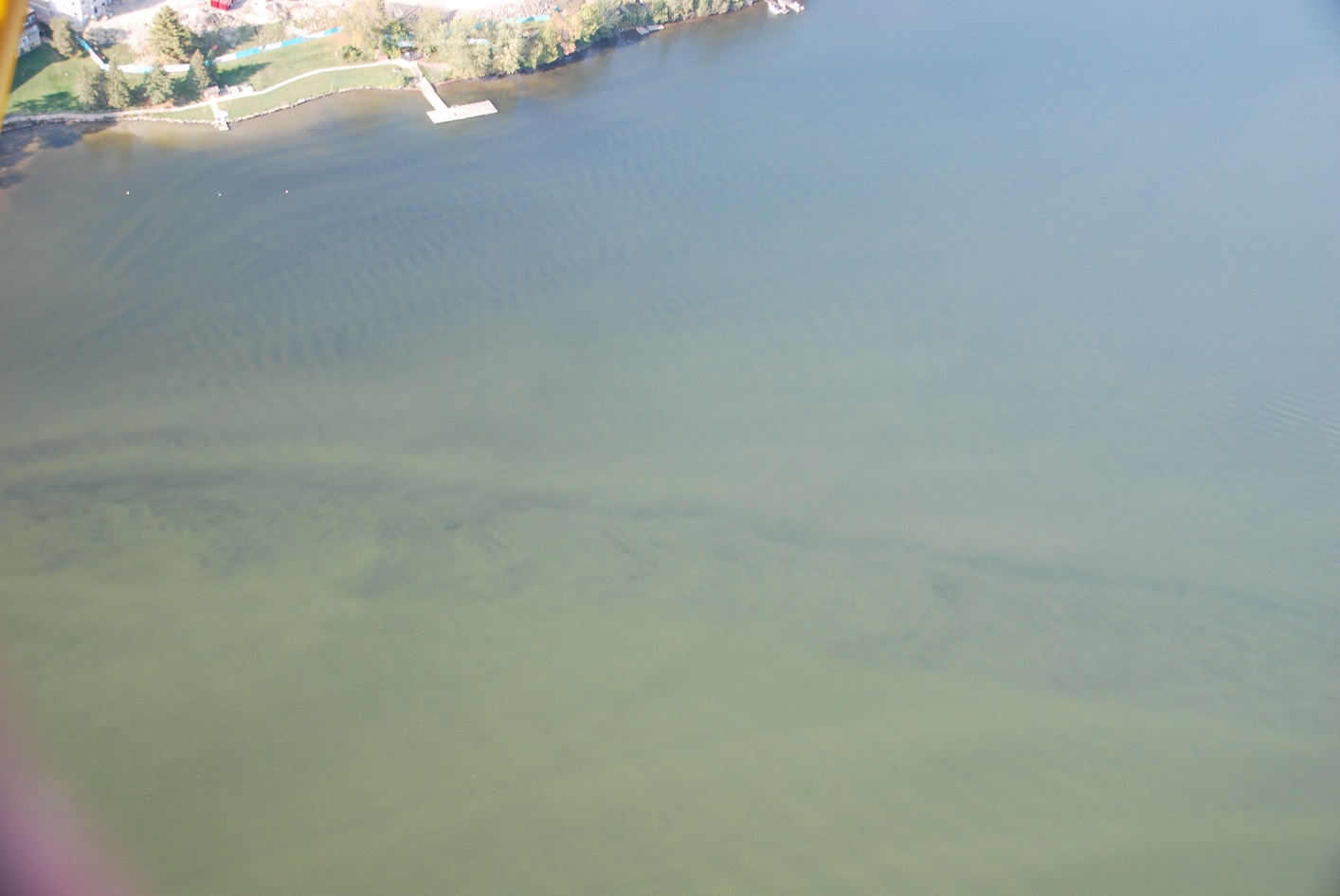
-
- September 22 Algae bloom on Peninsula Lake, looking toward North Portage (Photo: Brain Tapley)

-
- Looking from Fairy Lake to the canal on September 22 (Photo: Brian Tapley)

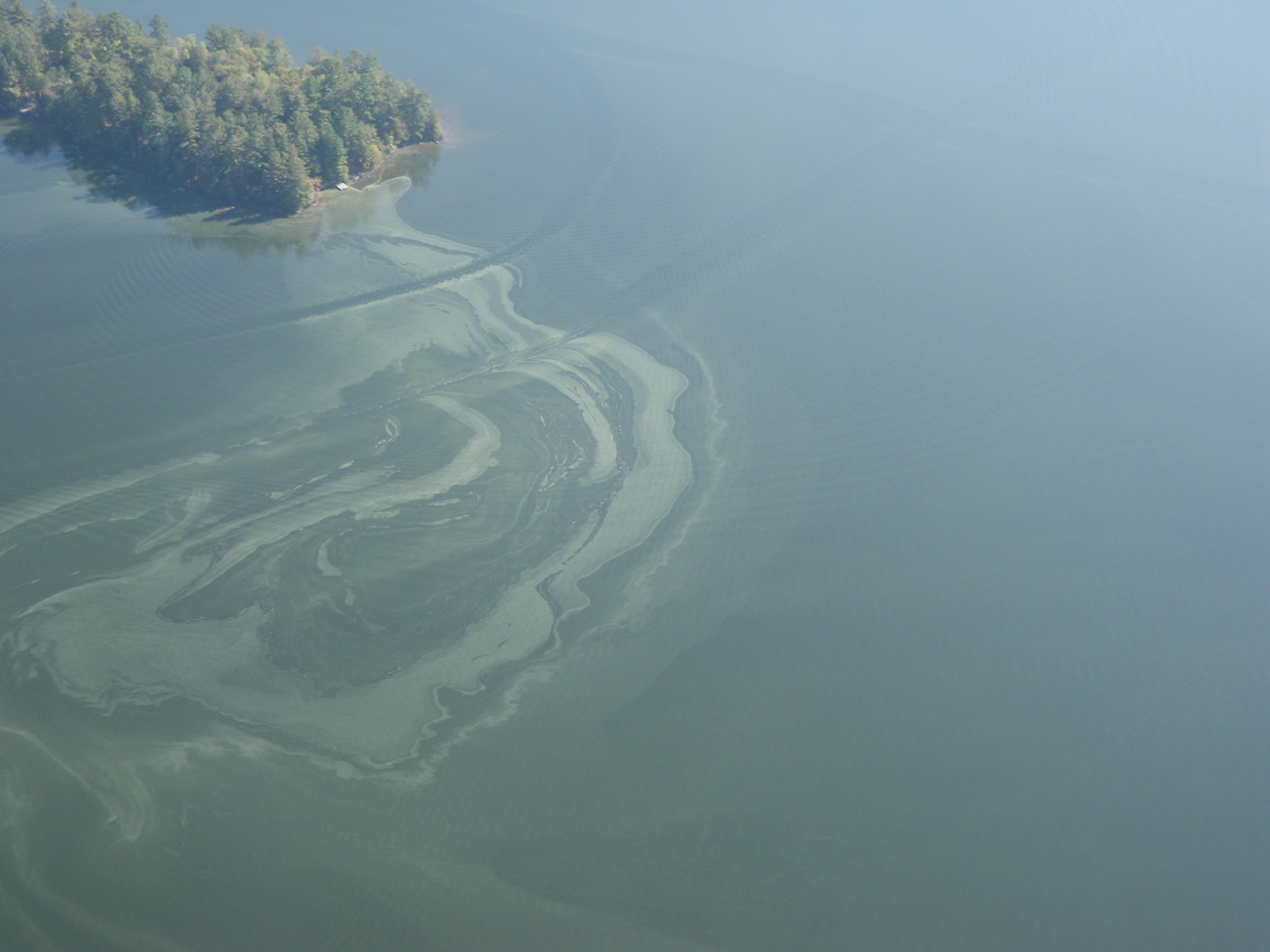
Aerial photos, September 24, courtesy of Brian Tapley
-
- Peninsula Lake on September 24. Hills Island is in the foreground, Deerhurst Resort and the canal are at top left (Photo: Brian Tapley)

-

- Blue-green algae bloom on Peninsula Lake, September 24, 2017 (Photo: Brian Tapley)
The Simcoe Muskoka District Health Unit issued an advisory last week recommending that residents avoid using the water in Pen Lake for drinking or food preparation, including breast milk substitute (infant formula), and to avoid swimming in areas where algae is visible.
Stoll said that the Ministry has no information that suggests that fish tissue would be affected long-term due to periodic algal blooms in the area. However, because microcystins – the toxins produced by cyanobacteria – can accumulate in fish tissue, particularly in the viscera or internal organs, anglers should be cautious about consuming fish caught in areas where major blue-green algae blooms occur and not eat the viscera.
The Ministry will continue to collect samples and monitor the bloom and the presence of related toxins, said Stoll, and will provide that information to the health unit so they can assess the risk to people and animals. Ultimately, the local health unit is responsible for determining when the water is considered safe for swimming or consumption.
In future, if you see a blue-green algae bloom, avoid using the water and call the Ministry of the Environment and Climate Change Spills Action Centre at 1-800-268-6060.
Here are some simple steps you can take to help prevent the growth of blue-green algae:
- use phosphate-free detergents, personal care and household cleaning products
- avoid using fertilizers on lawns, especially fertilizers that contain phosphorus
- maintain a natural shoreline on lake and riverfront properties
- reduce agricultural runoff by planting or maintaining vegetation along waterways and minimizing fertilizer use
- check septic systems to ensure they do not leak into the water source.
Learn more about blue-green algae here.
Don’t miss out on Doppler! Sign up for our free newsletter here.
Definitely should!
I’d be happy to help control the goose population on Pen Lake if they would allow us to hunt there.
Further to my comment from last week; here’s the most recent study of the effect on fluoride on humans, a program enforced and encouraged by our Health Unit. It’s long past time to end this practice world-wide; thankfully we have ended it in Huntsville. Let’s hope they do the right thing regarding the algae in our lakes. https://www.facebook.com/FluorideActionNetwork/videos/1660577290672038/
I agree we have a serious Canada Goose problem on the lake. The amount of raw feces entering the lake can’t be ignored. Would the ministry consider a culling?
do you think it has anything to do with all the geese poo ,too?