
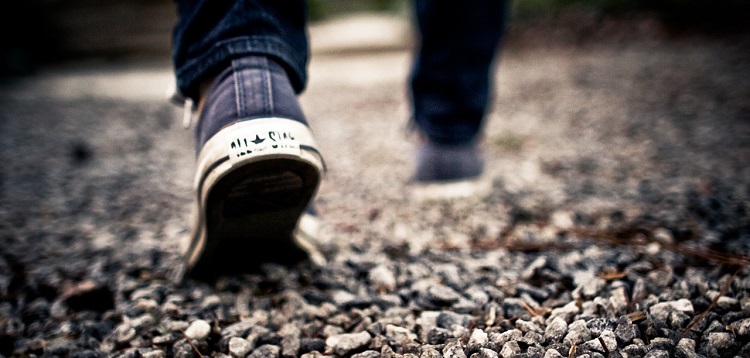
It sounds like a simple question, and maybe you already know the answer if you’ve been tracking your steps. But if you haven’t been, do you know how far you have to walk or be active in other activities to hit that optimal number? And why is 10,000 the magic number anyhow?
It reportedly goes back to 1965 and a Japanese device called the Manpo-kei or “10,000 steps meter”—a marketing tool, in other words. Ten thousand steps has been the benchmark ever since, but recent studies suggest that even 7,500 steps per day yields health benefits.
The easiest way to track your steps is with a watch or other device that records them for you. If you don’t have one, you can now borrow a FitBit from the Lake of Bays Library—their branches in Dwight and Baysville each have two for loan thanks to a donation by SportChek Huntsville.
It won’t just measure your steps—you can monitor your heart rate, activity level, and sleep patterns too.
Library patrons in the District of Muskoka have reciprocal borrowing privileges at other libraries in the region—so if you have a Huntsville Public Library card, you can borrow items from Lake of Bays.
Call the library at 705-635-3319 (Dwight) or 705-767-2361 (Baysville) for details.
And here’s the answer to that earlier question: depending on your stride, you’d have to walk six to eight kilometres per day to reach 10,000 steps. Even a sedentary person makes about 2,000 steps per day. Just 8,000 more to go!
Don’t miss out on Doppler!
Sign up here to receive our email digest with links to our most recent stories.
Local news in your inbox three times per week!
Click here to support local news
0 Comments