
By Hugh Holland
The following data should prompt some sobering questions about global spending priorities.
| Military $US | % GDP | Aid & Devel. $ | % GDP | Climate Disaster $ | % GDP | |
| World | 2,240 B | 2.24% | 494.0 B | .57% | 220 B | 0.22% |
| NATO | 1,260 B | 2.0% | ||||
| USA | 916 B | 3.4% | 161.0 B | .59% | 92 B | 0.34% |
| Canada | 27.2 B | 1.3% | 22.4 B | 1.05% | 3.1 B | 0.14% |
| Canada’s Target | 41.8 B | 2.0% |
The World Meteorological Organization cautions that NATO’s goal of spending 2% of GDP on military could re-ignite a global arms race just as the climate crisis is worsening. “It will accelerate climate breakdown by increasing greenhouse gas emissions and will divert billions of dollars from the UN’s $100 billion per year program to finance climate mitigation”. Economic losses from droughts, wildfires, floods and violent storms have increased by 50% over the last decade to an estimated $220 billion per year and climbing. Global temperatures and their effects in 2024 have already surpassed 2023. Global warming is already a major cause of conflict and mass migration.
People increasingly realize that if climate policies and defence policies are complementary, we will do much better with both. More than 50% of countries now incorporate specific mention of climate change in their defense policies. The US Pentagon has argued for such inclusion since 2007. In the lead-up to the major climate change conference held last year in Paris, the French Ministry of Defense organized an international conference of defense ministers on the premise that global warming “is as much a peace and security issue as an environmental issue”.
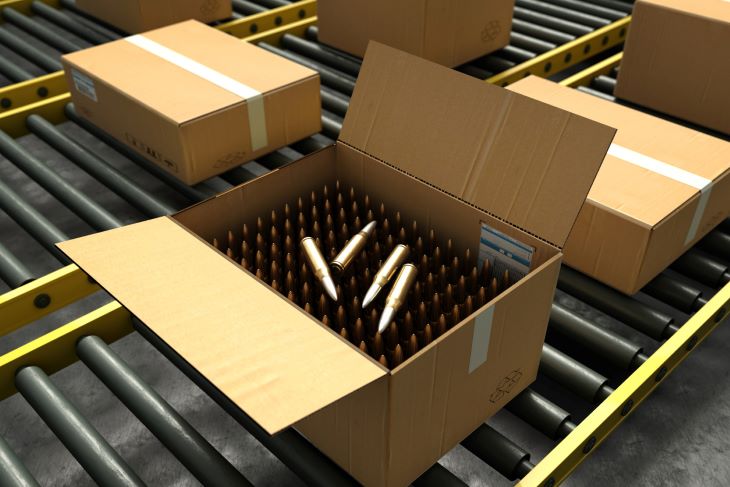
Military operations, including those by planes, tanks, and ships, involve enormous amounts of energy derived from fossil fuel sources and contribute 5% of global emissions. The US military has invested in energy-saving activities and the adoption of new sources of energy and counts these investments in its military spending. Do all NATO countries including Canada do that?
Defence spending is essential, but who benefits most from all that spending on arms production? Eighty of the top 100 arms producers in 2018 were based in the USA (41.7%), Europe (30.3%), and Russia (10.5%). Of the remaining twenty, six were based in Japan, three in Israel, India, and South Korea, respectively, two in Turkey, and one each in Australia, Canada, and Singapore. China is now ramping up.
The American obsession with military spending and guns has resulted in a firearm-related rate of 12.2 deaths per 100,000 inhabitants compared to 0.2 for the UK and 1.94 for Canada. The high US rate is second only to five impoverished South and Central American countries. Who makes the guns?
The Ukraine threat is real, but over the last two decades, Canadians have seen a variety of inflated threats. We were told Afghanistan was vital to fighting terrorism (it wasn’t), that Iraq had weapons of mass destruction (they didn’t) and that fighting ISIS was the “greatest struggle of our generation” (not even close). But when the dust settles, and these claims are revealed to be suspect, it’s understandable why the Canadian public might be skeptical.
NATO’s goal continues to ratchet up. Any Canadian government will face growing pressure to spend an additional $14.6 billion US to meet NATO’s military spending target of 2% of GDP. That’s $20 B Cdn.
The recent post-COVID cost-of-living spike affecting food, rent, and homelessness is the biggest priority for many Canadians, leaving little room for increased defence spending, but in fact Canada’s cost-of-living index is bang on the average for G7 and NATO countries. A recent Nanos poll of 1,000 Canadians indicated 64% are in favour of meeting the 2% NATO target, but they didn’t say what they would be prepared to give up to achieve the target.
The Canadian Climate Institute estimates, “Rebuilding infrastructure damaged by climate change will cost Canada $35 billion by 2030, diverting capital that could be used to increase economic growth. Proactive climate prevention and adaptation measures can cut those costs in half.” But too many voters and politicians continue to come up with every possible excuse to do nothing.
Pierre Poilievre’s top priorities are to cut taxes, build homes, and fight crime while balancing the federal budget. These are all worthy goals, but how do they square along with mitigating a climate crisis and making a $20 B increase in military spending all at the same time? He says he will cut military bureaucracy, but that would reduce military spending, not increase it. He has said he would “cut wasteful foreign aid” and international development funds to “dictators and terrorists,” but that would impact the victims of dictators, including Ukraine. He would stop “wasting billions of dollars” on defence contractors. However, all those actions are unlikely to satisfy NATO because they take away from NATO bottom-line spending rather than add to it. Governing is not an easy job.
Trudeau was confronted with those pressures when he met with NATO leaders in Washington on July 10. US Republican and Democratic politicians were trying to outdo each other as the US presidential election is less than four months away, and the outcome is far from certain. Trump has threatened to immediately slap a 10% tariff on US imports from NATO countries that do not meet the 2% goal. That tariff could cost $43.9 billion per year ($60 B Cdn.) and could come as early as January 2025. It would end up being a tax on American consumers, but how long would it take to get it repealed?
Unfortunately, both Liberals and Conservatives have wasted the last 20 years stifling each other’s military procurement programs, a casualty of our “first past the post” electoral system. So, the only way to get NATO credit this year is with money, manpower, and supplies. So as not to come empty-handed, Trudeau re-committed Canada to spending $500 million to support Ukraine and proposed $12.5 billion US to buy the first 6 of 12 new submarines. Canada has previously agreed to buy 88 new F-35 fighter jets at $14 billion, but NATO does not credit that spending until the hardware is available for use. Some of the first submarines and F-35s are expected to be delivered in 2026. Those commitments allowed Trudeau to say Canada would meet the 2% target in 2032.
It has fallen to NATO to protect the World’s democracies, but what happens to both NATO and democracy if NATO control is accidentally won by an unprincipled and widely untrusted demagogue?
Observers say Putin’s reckless invasion of Ukraine (A clear violation of the agreed upon UN Charter to respect existing borders) will put the Russian military out of business for several generations. That and the rapidly escalating need to spend more on climate disaster repair and climate change mitigation may be the only things that can inject some sense into this madness.

Hugh Holland is a retired engineering and manufacturing executive now living in Huntsville, Ontario.
Don’t miss out on Doppler!
Sign up here to receive our email digest with links to our most recent stories.
Local news in your inbox so you don’t miss anything!
Click here to support local news
“Canada’s gross debt as % of GDP is lower than all other G7 countries except Germany.”
Yes, and most of the G7 is suffering from low growth, low productivity, high debt, and economic malaise partly due to fiscal profligacy since the 2008-09 recession. That means nothing with regards to whether Canadian economic performance is adequate. It is not.
Nathan Cockram – Canada’s gross debt as % of GDP is lower than all other G7 countries except Germany.
Initially, inflation spiked in all advanced economies because of pandemic-related shocks — increased consumer demand as the pandemic eased and an inability to meet this demand because of supply chain issues, as companies had reduced production when consumers hunkered down during the pandemic. Indeed, inflation rose around the world — with Canada ‘s rate being in line with all peer countries and better than the USA – because of pandemic-related shocks that rippled across the globe.
Hello Mr. Cockram; Gosh. ? car pooling? Affordable housing nearer to employment? Smaller vehicles? Electric vehicles? safe biking paths? decreasing the number of cars in the driveway? effective vehicle maintenance, mass transit – I suggest that a multi-prong imagination and approach might work better than looking for a “silver bullet” answer.
Weigh the using up farmland for vehicles when food security during climate change is an important consideration.
In hindsight, I Shudder to imagine what a pandemic in the hands of a Harper Conservative government would have done.
Too much logic Hugh, at a time when logic is woefully out of favour!
There is a lot wrong with this analysis but I’m going to focus on the following:
“The recent post-COVID cost-of-living spike affecting food, rent, and homelessness is the biggest priority for many Canadians, leaving little room for increased defence spending, but in fact Canada’s cost-of-living index is bang on the average for G7 and NATO countries. A recent Nanos poll of 1,000 Canadians indicated 64% are in favour of meeting the 2% NATO target, but they didn’t say what they would be prepared to give up to achieve the target.
The Canadian Climate Institute estimates, “Rebuilding infrastructure damaged by climate change will cost Canada $35 billion by 2030, diverting capital that could be used to increase economic growth. Proactive climate prevention and adaptation measures can cut those costs in half.” But too many voters and politicians continue to come up with every possible excuse to do nothing.”
Inflation and cost of living increases are not simply a ‘spike’ – they are entrenched and the result of massive government over-spending, which was only accelerated recklessly during the pandemic. Looking at cost of living index is not relevant unless you look at a per capita baseline, which you haven’t. Per capital, Canada is at the bottom, and getting worse with investment declining under Trudeau. Indeed, per capita GDP under Trudeau has declined. This federal government has been trying to spend its way to prosperity for ten years and we are just left with massive debts and high inflation. So your suggestion that we use more government spending to improve the economy is folly.
You can gerrymander the stats, but the Trudeau liberals have been a disaster, and we are all poorer. Reducing the deficit and adopting fiscal restraint once again will go a long way to reducing inflation and interest rates, helping to bring forth a favourable investment climate to increase productivity. I fear you simply don’t get it.
Also, Canadian defence policy woes have nothing to do with first pas the post, and everything to do with a bloated, over politicized department of national defense. Defense spending should be left to generals.
Anna-Lise Kear: I dont think you realize that having more and more cars idling on the 401 is going to increase greenhouse gases. A new highway in the GTA is badly needed, unless you have a cunning plan for new, cheap transportation.
NRC
Thank you for your sensible statement of and investment in reality.
So, in Ontario, our government is building another highway across farmlands, ensuring beer is available when public healthcare isn’t, and building more trucks rather than any investment in EV’s. Covid continued, and waste water testing abandonned. Federal Conservatives do not acknowledge, let alone have a plan for climate change.