
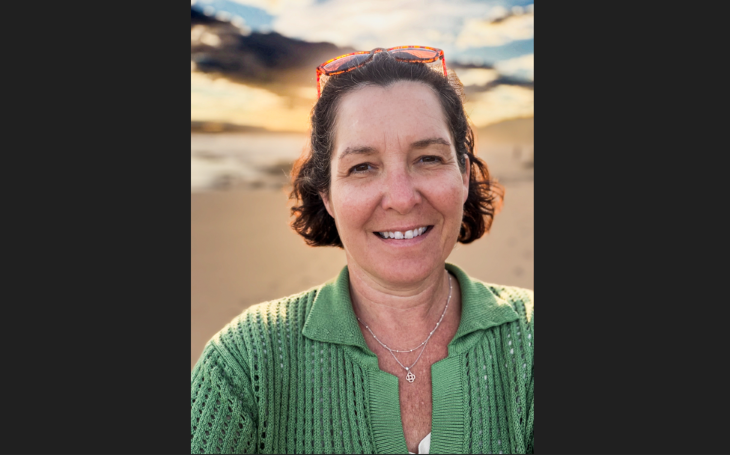
When Dr. Deborah Harrold was training to become a doctor in the 90s, she never saw a dying patient. Death was often seen by physicians as failure and thus was a taboo subject.
Today, when Harrold talks about death, she speaks with warmth, conviction, and even joy.
For more than two decades, Harrold has been at the forefront of palliative care in Huntsville and the surrounding area. She has helped transform how a community supports people facing serious illness, death and grief. As Medical Director of Hospice Huntsville and one of the architects of the region’s palliative care system, Harrold has spent much of her career challenging the idea that working in palliative care is inevitably sad and full of grief.
“I have a wonderful job, and I love it,” says Harrold. “I can’t give myself more credit than showing up when the patients need me and making a positive difference. To have you there listening to them and paying attention is definitely the best medicine.”
Harrold notes the term ‘palliative care’ has long been misunderstood.
“Serious illness navigation and support is not all about morphine and pain medications,” she explains. “The HOPE Huntsville palliative care team is 20 years old, and Algonquin Grace hospice in Huntsville is 14 years old. Yet, I feel we haven’t come far in creating a social norm regarding conversation about dying.”
Raised in Niagara Falls, Ontario, Harrold graduated from McMaster University medical school in 1999. She was completing her family medicine residency in Sudbury when she randomly chose an elective in palliative care.
“After three years of medical school and almost two years of residency, I was looking for something different in medicine,” recalls Harrold. “Medical training focused on diagnosis, treatments and evidence. I felt it didn’t recognize that medicine isn’t a cure for everything and lacked what I wanted to practice as a physician. I wanted to find my passion for medicine again. I chose a palliative care elective simply because I wanted to stay in Sudbury, where my husband and I lived. Turns out, I loved the course. I knew quickly it was what I was missing.”
Harrold wanted to be a patient-centred doctor who would always stop and listen. She wanted to be curious and ask questions that may not have answers. Palliative care allowed her to be that kind of doctor.
After graduation, Harrold completed a certificate of added competency in palliative care under the mentorship of Dr. Andrew Knight and later received guidance from renowned Ontario palliative care pioneer Dr. S. Lawrence “Larry” Librach. In 2018, Harrold would be honoured for her own pioneering palliative care work in Huntsville with the Dr. S. Lawrence Librach Award for Palliative Medicine in the Community.
In 2003, she and her husband, Dr. Rich Trenholm, deliberately moved to Huntsville to begin their medical careers.
“We picked Huntsville for the opportunities and the collaborative, team-based approach to patient care,” recalls Harrold. “The community was eager to improve the provision of palliative care. As opportunities came up, whether it was joining the hospice board or the Family Health Team board that developed a palliative care team, I’ve mostly been in the right place at the right time.”
In 2003, there was a dearth of specialized palliative care in rural Ontario. Harrold arrived with a vision and, by her own admission, a healthy dose of determination. She developed a 10-year plan that included two ambitious goals: creating a multidisciplinary community palliative care team and building a residential hospice.
The first goal arrived in 2006 when Harrold and lead nurse Norma Connolly established the HOPE Huntsville palliative care team. Today, the team includes four physicians, two nurses, a social worker and a network of home-care professionals. The team provides palliative care consultations, home visits, mentorship for local healthcare providers, and around-the-clock support for patients and families.
The second part of her vision was even more ambitious.
For years, Harrold advocated for a residential hospice in Huntsville. Alongside community leaders and volunteers, she wrote business plans, lobbied governments, organized capital campaigns and built public support.
The result was Algonquin Grace Residential Hospice, located at 100 Frank Miller Drive. The colourful residence-style building opened in January 2012 as Ontario’s first rural residential hospice.
“I call it my third child,” says Harrold, who has a son and a daughter. “Our mayor, the District, and the community played a huge role in getting behind the project. It was amazing when the hospice opened. There were people waiting to go in right away.”
The five-bed hospice quickly became an essential community resource. Patients, known as residents, are cared for in a setting designed to feel like home rather than an institution. Families can focus on spending time together rather than struggling to be the primary caregivers and manage their loved ones’ complex care needs.
“It frees families to love their person,” explains Harrold. “I also think house calls are wonderful things. You see people in their own environment with the people who matter. I enjoy not being an office-based doctor and having lots of time to provide care. People are always thankful a doctor will come to the house, but it’s really the nurses, PSWs, caregivers and lay caregivers, family, neighbours and friends who are doing all the heavy lifting.”
The belief that palliative care belongs to a community rather than a specialist has shaped everything Harrold has built.
“Great palliative care is a public health initiative,” she says. “Providing great support for serious illness is not a top-down approach but bottom-up. Much of our education goes into ensuring all physicians in our communities are great at doing palliative care. We want to lift up family doctors, nurse practitioners, emergency docs, internists and nurses in the hospital and community to do excellent work rather than just train specialists. We built the hospice with that in mind and welcome all primary providers to care for their own patients.”
Many visitors arrive at Algonquin Grace expecting a sombre environment. Most leave surprised.
“I’ll tell them there’s always coffee and soup on in the kitchen, and a patio where people can go outside,” says Harrold. “They get there and say, ‘I never knew it could be this lovely.’ Families often say they thought it was going to be a really sad, depressing place, but everyone’s nice, and they feel well supported.”
The hospice has become a source of pride for the community, supported by volunteers, donors and families whose lives have been touched by its care.
“Many people don’t know about the hospice until they need it or a loved one does,” Harrold says. “People volunteer, donate, run fundraisers, mow the lawn and bring soup. They give back. The hospice becomes carried by the community.”
Harrold’s leadership has extended far beyond Huntsville. Over the years, she has served in numerous regional and provincial leadership roles with organizations like Cancer Care Ontario as clinical lead in palliative care for North Simcoe Muskoka Local Health Integration Network, the North East Local Health Integration Network, and in the PanNorthern Palliative Care LEG (Local Education Group) with NOSM (Northern Ontario School of Medicine) palliative care educator for the Northern Ontario School of Medicine.
Yet Harrold remains most proud of the local programs she helped create, and enjoys being part of the growing palliative care community here.
“Now I’m creating sustainable programs that I can eventually walk away from,” she says.
Teaching remains a central part of her work. Through the Northern Ontario School of Medicine and regional palliative care education initiatives, she mentors students, residents and practicing physicians.
“I tell students their greatest asset is showing up,” she says. “Just show up and listen. That’s often better than morphine. Patients need to know they are not alone, that somebody’s going to support them.”
Over the years, Harrold has witnessed a shift in attitudes toward palliative care. Once viewed as a last resort when treatment options had been exhausted, it is increasingly integrated earlier into care for people living with serious illnesses who are not dying. Today, many patients receive palliative support while still undergoing cancer treatments, dialysis or therapies for chronic diseases.
Harrold’s lifelong personal philosophy mirrors the truths delivered by palliative care. She believes people should live intentionally and without regret.
“Live your best day, because we don’t know what tomorrow brings,” says Harrold. “I get to see and feel that every day and remind myself it’s not just a catchy phrase. It’s human nature to live as if you’re going to live forever. But every person I meet is facing the reality that it’s just not true. It’s such a beautiful gift these people give me, to have perspective.”
Deb and Rich raised their children in Huntsville, embracing opportunities to travel and experience life fully. Their kids, now launching their own futures, have grown up with frank conversations about mortality. For Harrold, palliative care has never been about death. It has always been about living the final chapter of life well.
Twenty-three years after arriving in Huntsville with a vision and a plan, the systems Harrold helped build have changed how an entire region approaches serious illness and end-of-life care.
Looking back, Harrold credits the town that embraced her ideas.
“This community has backed all the crazy ideas and passion projects I’ve had over the years, and there is still lots of work to do,” she says, with a smile. “Huntsville has always been the place where we say yes, I’d like to help. We overcome barriers instead of putting them up.”
Don’t miss out on Doppler!
Sign up here to receive our email digest with links to our most recent stories.
Local news in your inbox so you don’t miss anything!
Click here to support local news
Have had the pleasure of watching Dr. Harold work with many people over the years and always knew where her heart was. We are so blessed to have her and her team in our community.
And through it all is raising a wonderful family!
What a comprehensive and moving article! It is comforting to know that our town has this kind of community service and setting dedicated to making life better for individuals and families when they need it the most. Dr. Harrold’s commitment and dedication over the years has been inspirational. Thank you for your continued dedication, heart and service Dr. Harrold. .
Perhaps the town council should put Dr Harrold’s name forward for an award such as the Order of Canada for her outstanding contribution to our community.
How wonderful that our community has this place!
We are so very lucky to have Deb in our town. Thank you for your dedication snd devotion.
I second that, the staff at Hospice are AMAZING, I learned this first hand last Oct when my grandson was in there, Deb was always there to answer any questions we had… Thanks again Deb for all you did…
Vivian and Lori Sammons
Dr. Harold is truly wonderful as noted above. She guided us through the final stage of my husband’s life with compassion and honesty. Our respect for her is huge. We will be forever grateful for her guidance and and wisdom when we felt emotionally fragile. 💕
Dr. Harrold “practices what she preaches.” She listens to the residents, their families, the team. Algonquin Grace Hospice Huntsville is very fortunate and blessed to have her, and the rest of the team.