
Usually, when I write an opinion piece, it is because I actually have an opinion. This time, not so much. This article is more about a conundrum.
Last week, Prime Minister Mark Carney was in Saudi Arabia, where he entered into a billion-dollar investment agreement. He was asked in a scrum whether this was appropriate given the serious human rights issues in that country.
Mark Carney’s reply was “Engagement is not endorsement.”
Did he duck the question, or did he acknowledge the reality of a changing world with new circumstances that require new strategies?
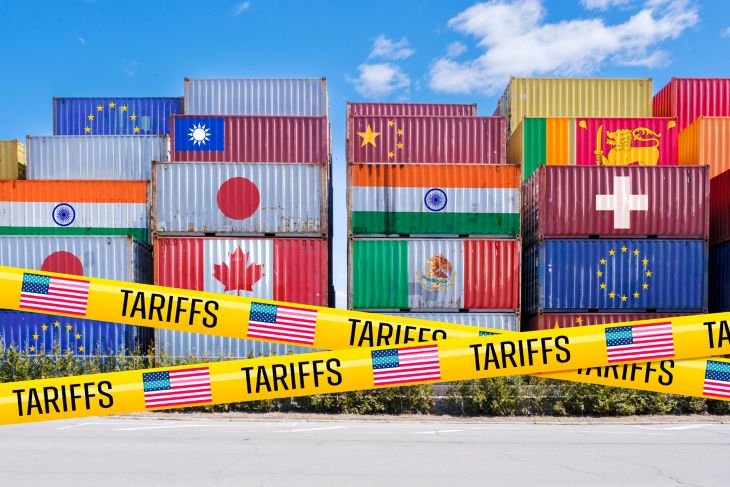
Canada is knee-deep in a trade war with the United States. Our relationship with that country, even if things eventually improve, has irrevocably changed. While trade between our two countries will inevitably continue at some level, it can no longer be a certain relationship that assures comfort to Canada’s economy.
The stark reality of that has led, and will continue to lead, the Canadian government to seek improved relationships and new economic partnerships with countries whose approach to human rights differs markedly from Canada’s.
My question about this reality is, where do you draw the line?
Is it morally acceptable to trade with countries whose values we would otherwise reject? Would refusing to trade with them be effective or merely symbolic? Can Canada afford to choose its trading partners based to a large degree on shared values? Has the world changed in a manner that forces Canada to rethink its foreign policy when it comes to free trade? Have we reached a new benchmark for global relationships?
Canada, of course, already trades with countries like China, whose human rights record is very different from those held as sacrosanct by most Canadians. But until now, those relationships have been limited, and the majority of our trading partnerships have been with countries whose values are similar to ours.
Now, there is movement to change that balance, arguably out of necessity, but nevertheless a potential shift in how Canada deals with humanitarian issues outside its borders.
If Canada is serious about reducing its dependence on the United States, we cannot replace much of our trade with them with only countries like the United Kingdom, France, Norway, Sweden, Australia and New Zealand.
The fastest-growing global economies today include, but are not limited to, China, India, Saudi Arabia, Vietnam, the Gulf States, and Indonesia. Many of these countries have a poor record on civil liberties, religious freedom, the treatment of women, and political dissent. To say that most Canadians would find this troubling would be an understatement.
Can Canada afford to improve relationships or forge new trade partnerships with countries like these, given the new realities it faces?
How can this be resolved? Can Canada speak with both sides of its mouth, aggressively defending humanitarian rights while also doing business with those who defy them?
Should Canada refuse to trade with countries that deny equal rights to women, imprison or sanction journalists, control the media, limit free speech, execute political opponents and use forced labour? Many Canadians would think not.
The practical problem, however, is that, insisting on trading primarily, only with those countries that meet our standards of human rights and democracy, our potential trading partners become quite small and our economy is threatened.
Alternatively, if we ignore or downplay these serious humanitarian issues when choosing new trading partners and increasing our relationship with others we currently deal with, such as China, does Canada risk becoming just another country willing to overlook significant global abuses whenever enough economic benefit is involved?
Some will argue that Canada can do both: trade substantially with countries whose humanitarian practices we reject and, at the same time, call them out for the manner in which they carry out their internal affairs.
I am not so sure about that, certainly not to the extent we have been previously able to. To do so in a substantive manner would put any trading relationship with those countries at risk.
Even if Canada could manage this double-speak, their important status as a defender of human rights on the world stage would be greatly diminished.
Mark Carney may be right that engagement is not endorsement. Nations have often traded with countries they did not admire for various reasons. But if engagement becomes the new benchmark, Canadians deserve to know where the moral boundaries lie. If every partnership can be justified as an economic necessity, then what principles remain non-negotiable?
The challenge for Canada is not deciding whether to deal with imperfect nations. Every country is imperfect, including Canada. The challenge is deciding which imperfections we can live with and which we cannot. That is what will define us as a nation.
In a world that is changing faster than it has in decades, that challenge may become the defining question of our generation, both domestically and globally.
We need to determine where to draw the line, and at the moment, that remains unclear to me.
Therein lies my conundrum.
Hugh Mackenzie

Hugh Mackenzie has held elected office as a trustee on the Muskoka Board of Education, a Huntsville councillor, a District councillor, and mayor of Huntsville. He has also served as chairman of the District of Muskoka and as chief of staff to the former Premier of Ontario, Frank Miller.
Hugh has also served on a number of provincial, federal and local boards, including chair of the Ontario Health Disciplines Board, vice-chair of the Ontario Family Health Network, vice-chair of the Ontario Election Finance Commission, and board member of Roy Thomson Hall, the National Theatre School of Canada, and the Anglican Church of Canada. Locally, he has served as president of the Huntsville Rotary Club, chair of Huntsville District Memorial Hospital, chair of the Huntsville Hospital Foundation, president of Huntsville Festival of the Arts, and board member of Community Living Huntsville.
In business, Hugh Mackenzie has a background in radio and newspaper publishing. He was also a founding partner and CEO of Enterprise Canada, a national public affairs and strategic communications firm established in 1986.
Currently, Hugh is president of C3 Digital Media Inc., the parent company of Doppler Online, and he enjoys writing commentary for Huntsville Doppler.
Don’t miss out on Doppler!
Sign up here to receive our email digest with links to our most recent stories.
Local news in your inbox so you don’t miss anything!
Click here to support local news
Don’t miss out on Doppler!
Sign up here to receive our email digest with links to our most recent stories.
Local news in your inbox so you don’t miss anything!
Click here to support local news
0 Comments