
Driving down Mary McCulley’s driveway to where she is building a new home is kind of surreal. One could easily think they are in a remote part of Huntsville – not just two minutes from downtown. Trees slightly overhang the driveway and, as you approach the site where the home will one day be, you will understand why she couldn’t resist buying the property. It’s a little piece of paradise on Town Line Road West. And a natural wetland and pond will be a main view from her one-of-a-kind home.
McCulley is having a rammed earth home built on the 4.68-acre lot she purchased last spring.
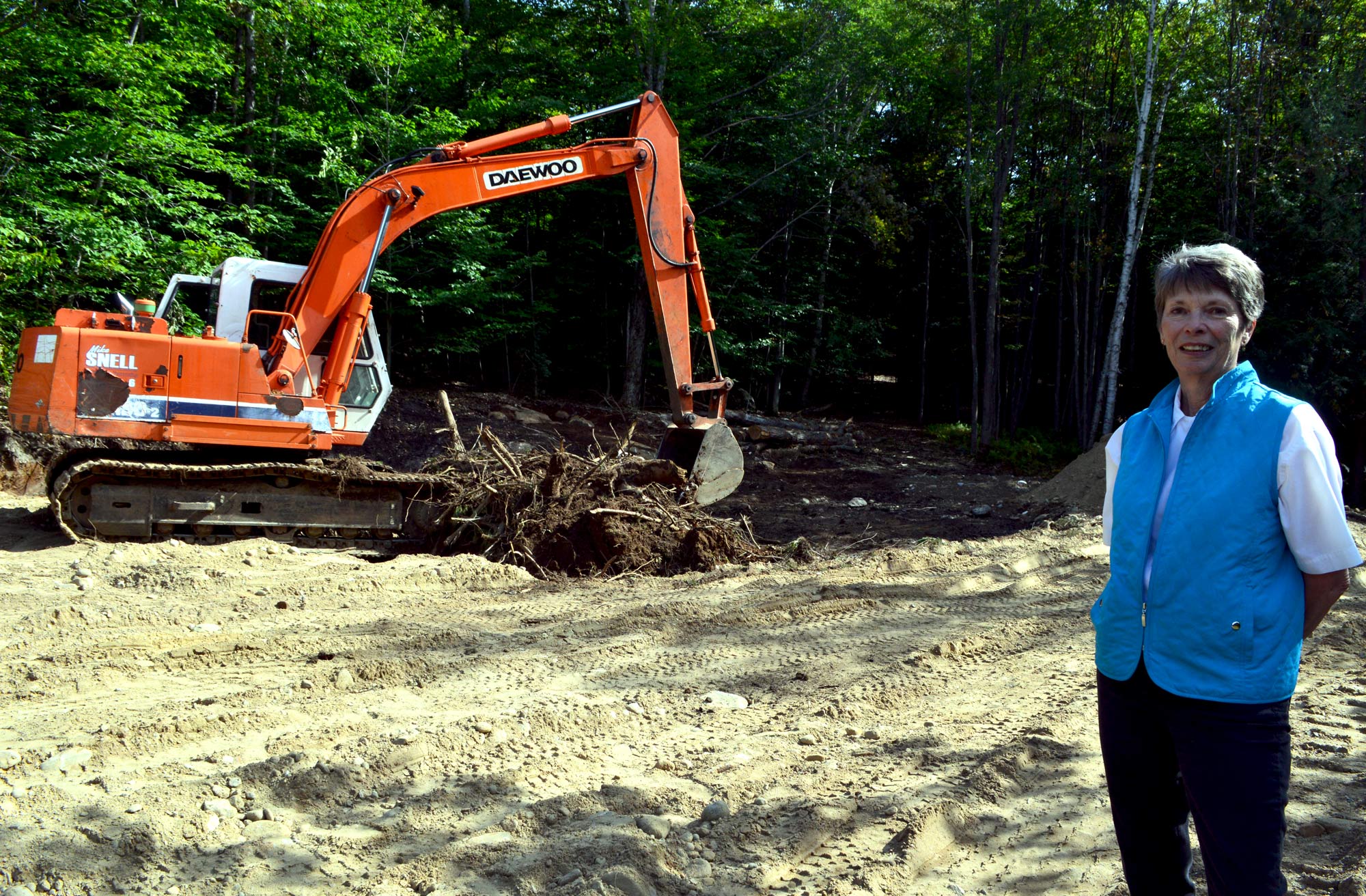
Huntsville resident Mary McCulley stands in front of the site where her rammed earth home will be built.
“There was a wee cabin, which I’ve had to move, a pond in the middle, a wetland to attract wildlife, gorgeous woods, granite rock outcroppings… That drew me to it [the property]. I had heard about how incredibly energy efficient rammed earth homes are. It’s probably one of the oldest construction methods known.”
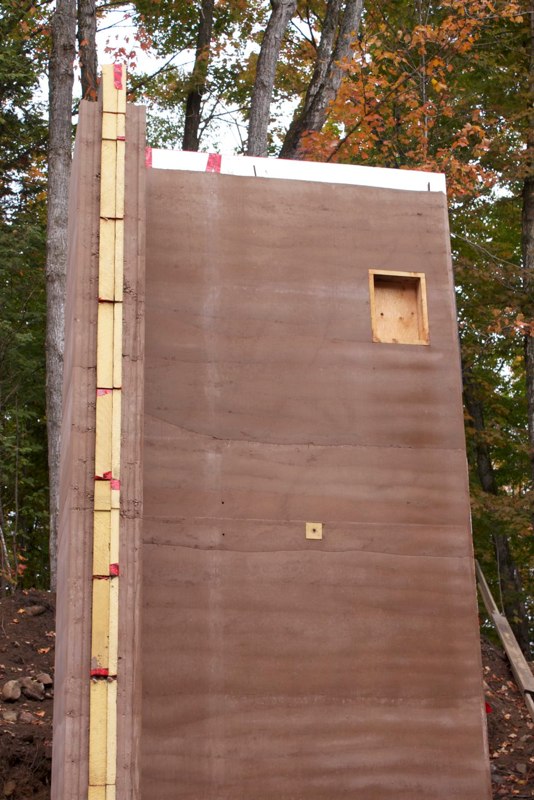
The construction of a rammed earth wall on another Muskoka Sustainable Builders Inc. project (supplied photo)
The walls of a rammed earth home have six inches of rammed earth on either side of six inches of insulation for a total thickness of 18 inches. The construction of a wall starts with a temporary frame called formwork. Typically made of plywood or wood, it acts as a mold for the shape and dimensions of each wall. When the form is braced, two opposing wall faces are clamped together to prevent deformation, and damp material, such as cement, is then poured and compacted to around 50 per cent of its original height. The material is compressed in batches to gradually construct the wall up to the top of the frame.
The high mass of the walls, which is one of the most unique features of rammed earth, helps make the home temperature- and humidity-stable. Other benefits include a high insulation rating (R33), high sound resistance inside and out, sustainability – they are know to last 1,000 years – and being insect- and rodent-proof.
“I have the basic option of going with either grey-black-white strata or more earth tones. I decided to go as golden an earth tone as possible. They’ve come up with dyes to give it a green hue or blue hue, but I’m not into that.”
McCulley opted for this style of home as it appeals to her environmental roots. She was a member of Huntsville’s environmental advisory committee as well as the Huntsville Lakes Council and was also involved in the town’s Unity Plan when the green plan was just being developed.
“Where I’m building beside the pond there has to be a retaining wall,” she said, adding that her lot is unique in that it is situated on a conservation wetland and her green home will be constructed beside a small pond.
McCulley fully intends to keep the property as natural as possible and has even shied away from blasting, despite the fact that the property is surrounded by bedrock.
“Unless I wanted to do a lot of blasting, what better place to be than beside the pond?”
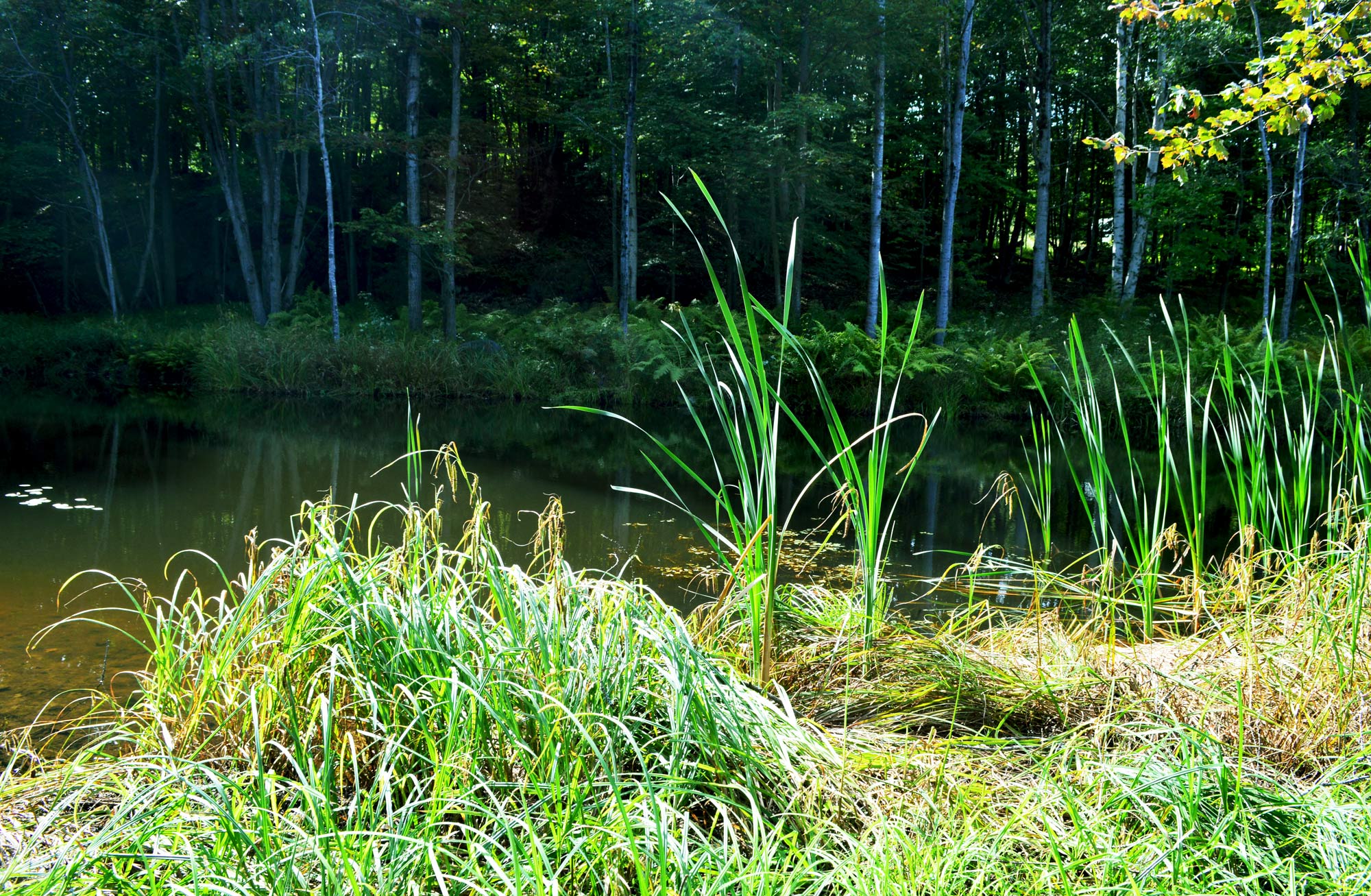
This natural wetland will be a main view from McCulley’s new home.
Huntsville-based company Tapial Homes, also known as Muskoka Sustainable Builders Inc., is constructing McCulley’s rammed earth house. According to co-founder James Blackman, who is also building his own rammed earth house, McCulley’s home will be the fifth of its kind in the Muskoka area.
When asked about why more people aren’t building rammed earth houses, Blackman explained that although it tends to be a bit more expensive than traditional building, basically it boils down to a lack of knowledge.
“We’re trying to build the awareness of rammed earth, and there’s been a huge interest,” he stated. “It’s pretty new to bring into this area. Traditionally it’s been done in warmer climates, and putting insulation in for our climate is pretty new.”
Blackman noted that rammed earth provides a home with a high durability that is highly energy efficient with a very aesthetic quality that is difficult to achieve any other way.
“Typically [building] takes a bit longer, but once the walls are finished inside and out, it takes about the same time as any custom-built home.”
The rammed earth walls of McCulley’s home should be completed by the beginning of November, but McCulley has no date in mind in terms of when her house will be fully finished.
“I’m keeping my fingers crossed that everything goes as planned.”
How about a follow up article now that the building is finished?
Great article Laura. Well written and informative