
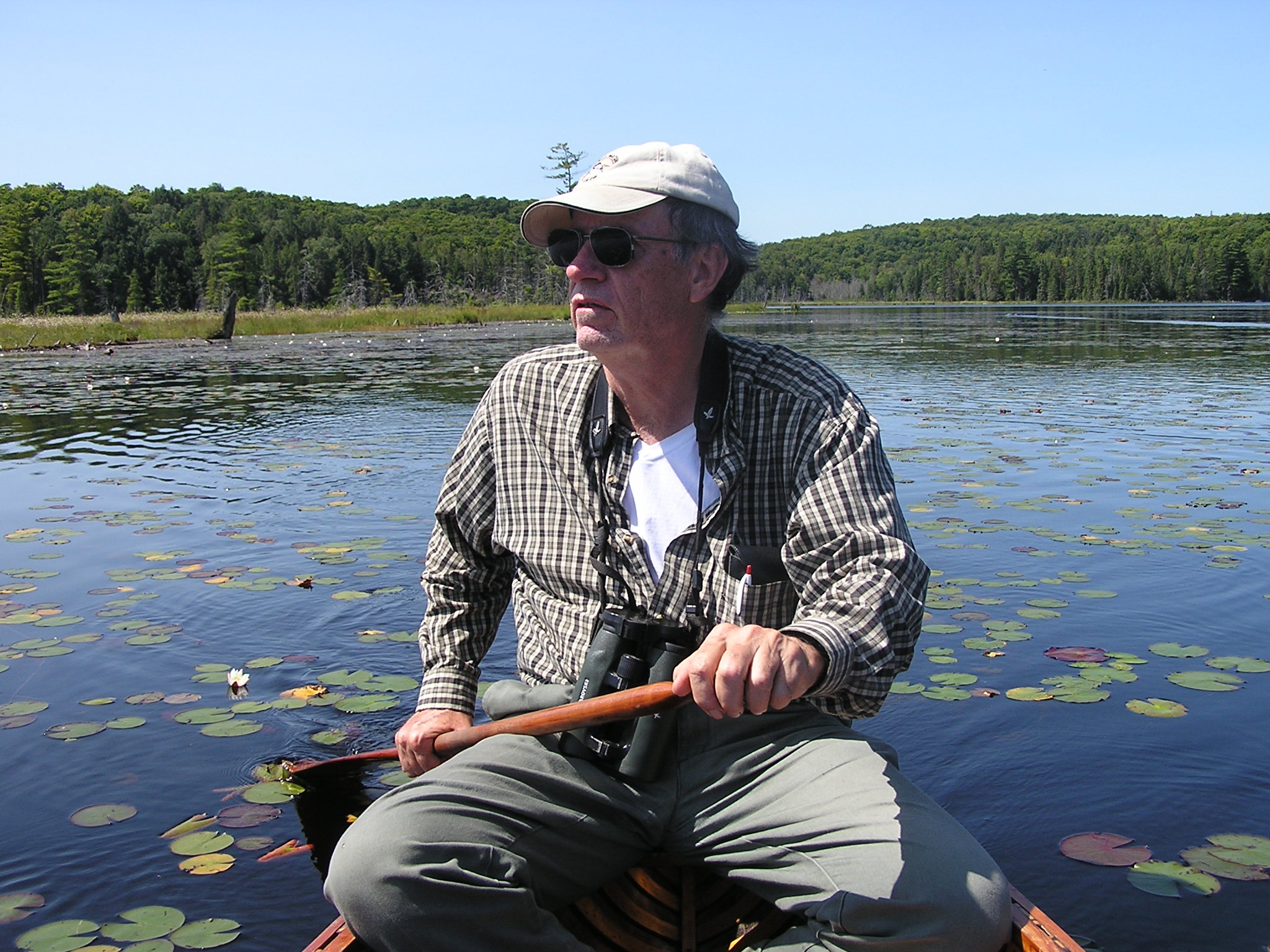
Every week, I will be profiling an extraordinary human being who lives in our community. If you know someone who is doing something interesting with their life, I want to hear about it. Send me an email at [email protected].
Ron Tozer has heard the lone cry of a wolf, and he’s also been in the middle of a surrounding pack when their howls are almost deafening to the ears.
That’s the thing about having spent more than 50 years in Algonquin Park. You see a lot of wildlife, and you hear it too. It was one of the perks of being the park’s naturalist, a position he maintained for 24 years. He retired two decades ago, but it was truly a dream job for a guy who had an inherent connection with nature. And even from the very beginning, it was always his love for our feathered friends of the forest that captured his attention.
He’s a self-proclaimed “birder”, which translates as being someone who has an affinity for bird watching and tracking. He’s been doing it long before his days at the park, and even co-authored a book in the mid-1970s that was very well-received. It was a labour of love, and so was the more recent one he published in 2012 that focused on the park’s birds.
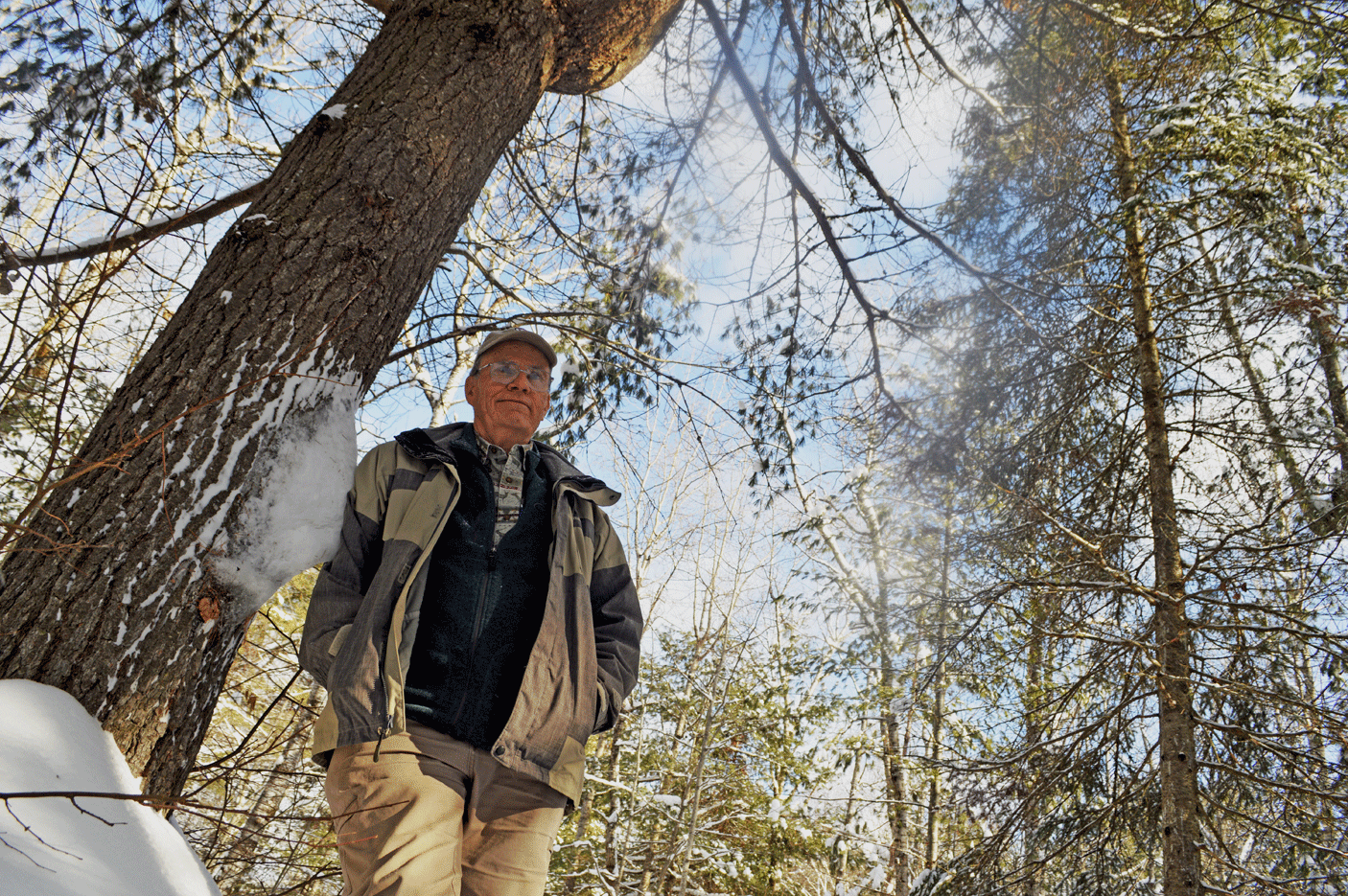
Ron’s always felt a deep connection to nature.
“When I needed to be occupied at a young age, my mother would sit me in front of the kitchen window and I would watch the house sparrows eating seeds on the ground,” recalls Ron, 75, who, despite his age, still maintains a fairly active lifestyle. “And then when I started to walk, I would try to pursue robins, of course, at limited speed. But it was an interest from an early age.”
He started out as a summer student in 1961, helping deliver popular programs such as talks at the outdoor theatre, and bird, night and wildflower walks. He also worked at the park’s museum and over the years, with the addition of the Visitor Centre, was involved in a lot of the park’s publications that were sold to the public.
Eventually, Ron went from working alongside other students to supervising them, and he then received the title of park naturalist after just about 10 years. Over the years, he led hundreds of excursions and helped spearhead many of the park’s successful programs. And among the many programs and activities the park offered, it was always the wolf howls that took place late at night that proved to be a real hit among public. Hundreds of people – sometimes 500 at a time – would show up on a warm August night to be part of the event. Wolves will howl back to vocal imitations and the calls don’t necessarily have to be that good, says Ron. And those who were lucky enough to hear the wolves howl back usually stood in the darkness completely captivated.
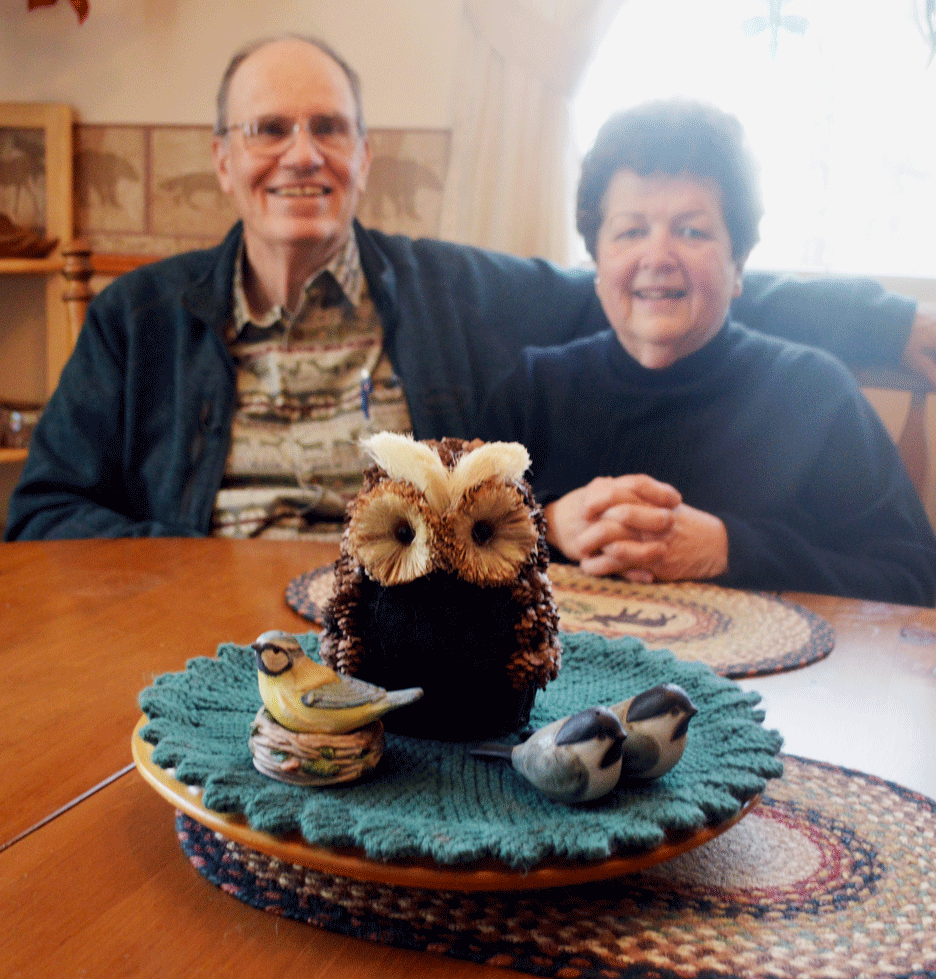
Birds are a big part of Ron’s life. Even his kitchen table is adorned with some of his favourite feathered friends. Here he is pictured with his loving wife, Pat.
And that’s the thing about Algonquin Park. The reasons why people continue to flock to the park year after are because the experiences they have are so personal. It means something different to everyone. Right now, many people are visiting the park to get a glimpse of the different species of winter finches that visit the area during the winter months. This year, a moose that was killed on the road was kept by park staff and then transported to Sunday Creek valley. For two-and-a-half weeks, wolves, fishers, ravens and bald eagles feasted on the carcass, and the public got the opportunity to witness that from the safety of the deck at the Visitor’s Centre.
Some people have canoed in the park every year since they were young. There’s [fishermen] trout fishing every year, without fail. So there’s all these varied things. It’s not an untouched wildness, but it’s an extremely wild area that is very close to huge numbers of people both Canadian and American. Over the years, the park has built up a tremendous following… You hear people talking about they come back and they can be guaranteed that experience they have had. That’s what they love about the park. In their natural lives, there’s many changes, but there’s a timelessness perceived about Algonquin Park. You can come back and enjoy it again and again like you always have.
On the other hand, says Ron, there’s some “special gridlock problems” that are associated with the park being so popular. In a sense it can almost be “loved to death”. When fall is in full swing and the leaves are bursting with crimson, bright orange and yellow, the park can become almost hazardous. With an influx of thousands of people from all over the world who all want to get a glimpse of the spectacular show of colour, traffic can often get backed up well past the park’s gates. People often park on the side of the road, in areas that are not necessarily safe but give them the best view.
“It’s a big deal,” Ron says. “Sometimes this attraction to the park can be so widespread it becomes a logistical problem.”
Back in 2009, Ron received an award from the Ontario Field Ornithologists for his dedication to birding and the book he helped write in the 1970s. Just last year, Muskoka Conservancy presented him with the prestigious Wayland Drew Natural Heritage Award. The award recognizes an individual who exemplifies environmental leadership by promoting stewardship, conservation, environmental education or awareness of Muskoka’s natural heritage. It was an honour to receive both, and there’s a few others he’s received for his dedication to nature.
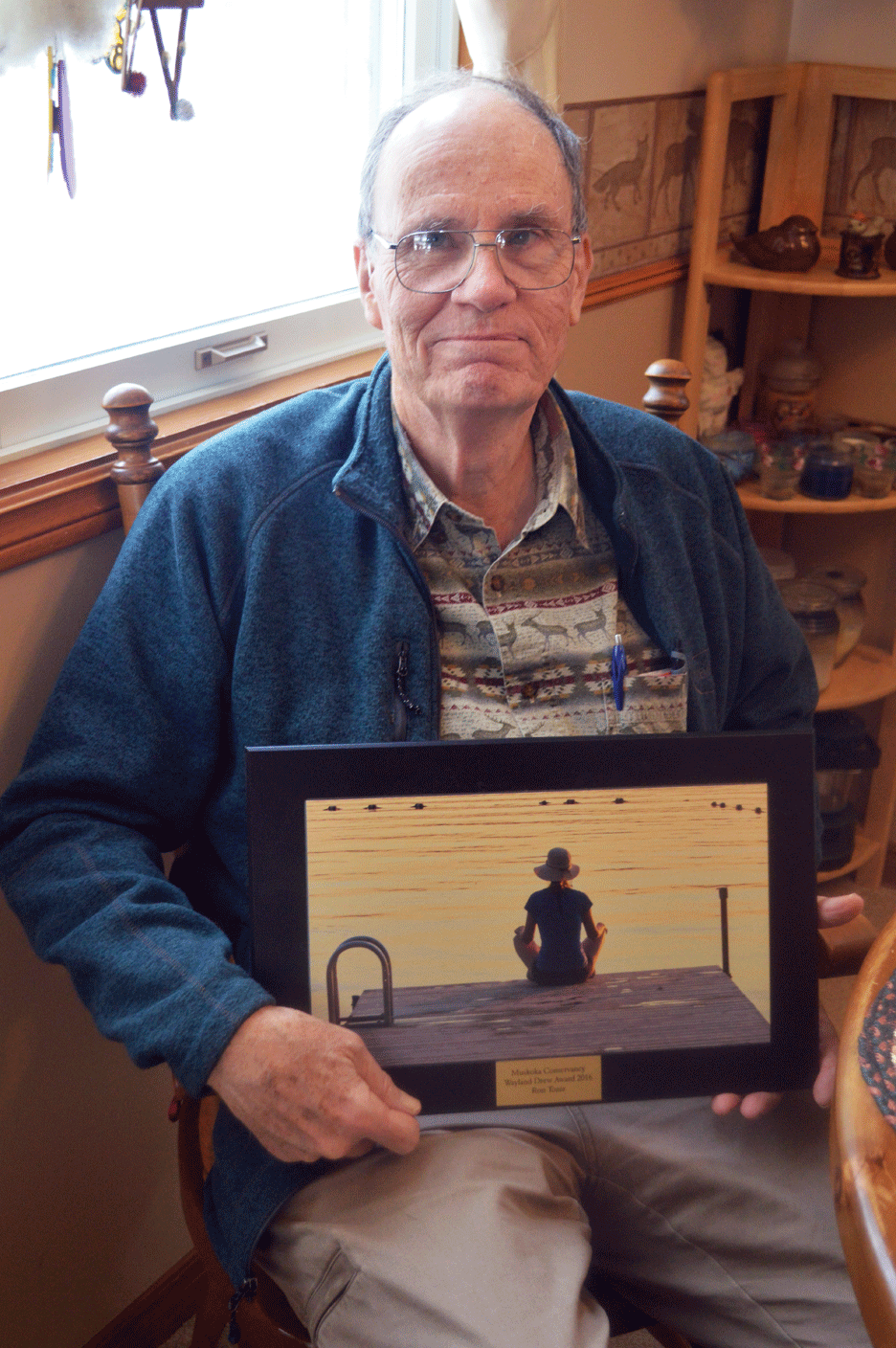
He received a prestigious award from Muskoka Conservancy for his dedication in preserving Muskoka’s natural heritage.
Despite the fact that he retired 20 years ago, Ron still can’t stay away. The park definitely has a big piece of his heart. He keeps himself connected by volunteering to maintain the bird records, with information from other birders stored electronically. Using the public as citizen scientists helps create a more in-depth look at bird distribution and numbers.
Ron also utilizes his passion for park history by volunteering to help maintain the archives at the museum. He, alongside a committee of staff and non-staff members, delegate which historical donations should or shouldn’t be accepted. If an artifact or particular item isn’t appropriate for the museum, the committee can recommend another institution that it would be more suitable for. He devotes a bit of time to looking after programs for the Huntsville Nature Club as well.
“I’m fortunate to be relatively active,” he says. “I still do a lot of speaking to groups and I go out birding. Every year, my wife and I got to Point Pelee, which is a high migration area as the birds funnel their way north. As you slow down in age, things take longer to do so we always seem busy.”
Don’t miss out on Doppler! Sign up for our free, twice-weekly newsletter here.
Our family has experienced the passion and education from Ron since the mid 60’s. From his knowledge shared at the old visitor centre (the art centre) to being a part of many of his wolf howls on Thursday nights in August, to enjoying his latest bird book, we are one of his devoted followers. One particular excursion quickly comes to mind; a history walk at the site of the Highland Inn. What an incredible surprise when we arrived and we saw it was Ron. His knowledge and passion have enhanced so many lives. Now! I have to track him down so I can have him sign his book that I purchased a couple of summers ago in the Park.
A great article about a wonderful, witty, knowledgeable fellow, who is a privilege to know. Karen
Ron has taught so many of us, yes Ron I am one of those people you have taught, a lot. I use your book at every opportunity I can to assist the Algonquin Park visitor.
A knowledgeable person with an amazing sense of humour.
What s beautiful tribute to a man who truly has contributed to the beauty of Ontario. I’ve only been birding for half of Ron’s life and still haven’t been to Algonquin. Congratulations on all your work!
A great guy, and a wonderful asset to the Park.