
Often, I read something and say to myself, “I wish I had said or written that.”
For example, I recently noted a letter to the editor in the National Post that expressed my own thoughts
about what qualifications are important for politicians.
Douglas Cornish of Ottawa shares my belief that it is unfortunate that our station in life—what we do—too often trumps what we are when we judge each other and when we choose our political leaders. He draws attention to the fact that Green Party interim leader Amita Kuttner is an astrophysicist. So what, says Cornish.
“Julie Payette was a rocket scientist, but she proved to be nothing but a train wreck… Politics is not about brain surgery or rocket science—it’s about character, strategy, public service, and trying to help others, rather than simply furthering one’s own agenda.
“Politics is also mainly ingrained; it can’t be learned in school. Having more degrees than a thermometer doesn’t necessarily mean success.”
Hear, hear, Mr. Cornish.
I’ve spent much of my life following politics and I’ve often marveled at how some people are so darned smart and well educated but so lacking in common sense, sound judgment and communications skills.
And some with much less formal education can be so well informed by their experiences in life, wise in practical ways of problem solving and just plain good at listening and understanding people and their needs.
As things stand, would-be politicians with big names and big jobs have a decided advantage over their
lower-profile competition.
Some voters are more interested in pedigree than others. Strategic thinkers will argue that the high rollers are better candidates because they are more apt to be appointed to cabinet posts and better positioned to deliver benefits to their ridings.
That strategy breaks down when high-profilers get elected to parliaments but find themselves in opposition or government back rows, bored and twiddling their thumbs.
Truth to tell, I believe our elected bodies—from school boards to parliaments—should reflect and understand the people who elect them. Democracy is under pressure these days as many have lost faith in our leaders and public institutions. Too many people feel alienated because it seems no one is listening to them.
The pandemic has reminded us how important it is to have leaders—both elected and appointed—who understand an issue and can explain it to the public in an honest and credible manner. Physician-scientist Dr. Tony Fauci became an international hero not only for his expertise but for his candor and calm in telling the story of COVID-19.
It didn’t hurt that he also had the guts to stand up to his bullying and lying boss, Donald Trump. I’ve made my own list of political figures who brought sharp brains and big hearts to their job.
John A. Macdonald’s personal life was besotted with tragedies. In winter I think of him making the endless journeys between Kingston and Ottawa and huddled by the fire charting a future for this young country.
Winston Churchill was to the manor born but enjoyed simple pleasures and knew how to inspire people to put their lives on the line to save the world from tyranny.
U.S. Senator John McCain’s warped arms spoke to the pain endured during six years in a prisoner-of-war camp and in my mind it is one of the tragedies of history that he never became president. His passion and patriotism were simply unassailable.
Angela Merkel lived a humble life and as chancellor of Germany set a high standard, was regarded as the world’s most powerful woman and was admired around the globe for her leadership abilities.
In much less noteworthy terms, I think of the characters I knew during my days at Queen’s Park.
One of the most memorable was a rural MPP who was sometimes the target of humour for his homespun style and practical approach to sophisticated issues. (“Me and the premier brung you this cheque” was just one of his popular pronouncements that became political lore.)
He was a big man with hands like catcher’s mitts and he knew how to win public trust and confidence
with straight talk. He was a breath of fresh air at cabinet meetings when he reminded his colleagues that their message had to resonate with the ordinary voter. He knew when an impending idea wouldn’t fly back home and
he wasn’t reluctant to say so.
I often wonder whether there are any of his ilk who sit around the cabinet tables in Toronto and Ottawa
today.
In our world of celebrity politics, we increasingly see the stars of sports, entertainment, media, and
famous families moving into political leadership (often with little or no experience in practising the art of
the possible.)
Whereas political success was once determined by who you knew and what status you had attained in your community, more and more we vote for faces and names we recognize from the mass media.
In Ottawa today, most of the influential people in cabinet are women and men who have personal ties to the prime minister. You can’t fault the PM for appointing people he can trust but cabinet-making is starting to resemble a fan club.
There is no question that backbench MPPs and MPs have less and less influence in being their voters’ voice in Toronto and Ottawa as power is increasingly concentrated within a small group of unelected people around the government leader.
I’m concerned with the practice of political candidates being appointed by the higher echelons of political parties instead of the traditional process of relying on members of local riding associations to recruit and elect their candidates.
This new practice is one way of making sure the candidates are well vetted but it’s yet another step away from grassroots involvement in the political process.
Many of us are influenced by status. We had a dear friend who was obsessed with members of the medical profession. This woman believed that doctors walk on water and occupy the pinnacle of the social ladder.
When a surgeon moved into her neighbourhood she was quick to invite him and his wife to dinner. Our hostess spared no expense, was an excellent cook and proudly presented a prime cut of beef to the dinner table and invited the esteemed doc to carve. He graciously accepted the invitation, undertook the task with gusto and within minutes the roast lay in ruin.
Turns out he was a genius with a scalpel in the operating room—but a rookie with a carving knife at the dining room table.
There is a lesson to be learned here.
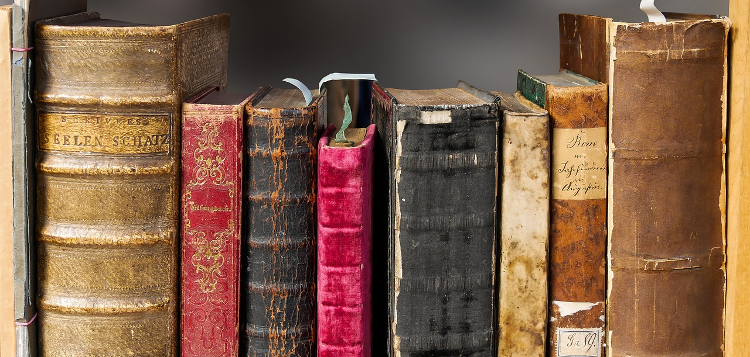
There is the old expression that suggests we shouldn’t judge a book by its cover.
Those with hard-won credentials and distinction in various fields should ask themselves if they are truly suited for politics. What motivates them? What do they hope to accomplish? Can they withstand the heat of the political kitchen?
And, as voters, we should ask ourselves if these experts understand critical issues and are the kind of leaders who can run the country and make decisions that affect the stability, health, and welfare of our daily lives and those of our families.
Here in Ontario, we get to answer those questions in the coming months with a provincial election slated for June.
Look ‘em over carefully. They have tremendous power over our lives and our future.

Sally Barnes has enjoyed a distinguished career as a writer, journalist and author. Her work has been recognized in a number of ways, including receiving a Southam Fellowship in Journalism at Massey College at the University of Toronto. A self-confessed political junkie, she has worked in the back-rooms for several Ontario premiers. In addition to a number of other community contributions, Sally Barnes served a term as president of the Ontario Council on the Status of Women. She is a former business colleague of Doppler’s publisher, Hugh Mackenzie, and lives in Kingston, Ontario. You can find her online at sallybarnesauthor.com.
Don’t miss out on Doppler!
Sign up here to receive our email digest with links to our most recent stories.
Local news in your inbox so you don’t miss anything!
Click here to support local news
JT, DF etc. blah! blah! blah!
Everyone talks of, and is supposed to be the benefactor of these ‘civil rights’, but I feel there must be a point where they should be for the greater good and not simply for a belligerent few. My opinion.
It would therefore be my question: Why is the civil rights of these (inactive?) truckers and their attendant mob, deemed of greater importance than that of a city and its citizens?
Is it our future that the course of our country will be dictated by a disgruntled mob?
Or should we hope the city will learn to love its’ oppressor; sort of a mass ‘Stockholm Syndrome’? Maybe a bit over stated, but possibly the result of watching little being done, by any party or politician.
And the really frustrating part is that these are the people and the ‘lawmakers’ we have to rely on.
Just listened to another speech stating that somebody else will have to suggest a solution rather that a certain party act and be responsible.
More’s the pity!
Mr. Markle;
JT is correct in caution when using the military in this instance. Can you imagine the uproar against civil right of assembly which could follow? From the get-go, the provinces did not agree, when offered, to enact the Emergency Measures Act at the beginning of the pandemic – a measure, which in retrospect may have been helpful at the first, for a period of time.
Pandemic has not been treated as the emergency it was at the beginning. Social consensus was not fostered as well as could have been by our Premier (who was busy lobbing political insults at the federal government and distracted with other things – hwys). It took DF ages to recognize that science was involved at all. The virus was/is the enemy, and the problem one of health. Unfortunately, our society was not willing to agree with this approach.
In Ottawa, would love to know the arrests taking place, charges being laid, and what protections continue to be put in place, charges for harassment (? outside a palliative care hospital, etc.)
Hi Allen, For the record, the image was my choice not Sally’s.
Interesting photo for your comment Sally. They may have been great books in their day, but they are old, dated and in some instances, maybe not any longer applicable. Exactly the same as a lot of the past leaders that people mention here on Doppler.
The leaders we have at present are incapable of doing the job and totally without conviction or presence. So what we get is someone without vision and no real message to deliver. In turn, said leaders are directed by unelected advisors, whose sole purpose is to get the present figurehead past the next election.
Conservatives are without a leader at present, and who could trust any of them, or want to be their leader. The Liberals are propped up by an NDP crutch, both parties quite vocal but speechless without each other.
Right now a mob of rowdies hold the nation’s capital hostage and we have a PM who abdicates power to the city, a police force that stands idly by and an army that says it is not a police force. But they are the commanders who seem quite proud of the fact that Canada has displayed those blue helmets around the world, and who advance in rank by placing our troops in harms way.
There are parking violations, noise violations, fuel transport infractions, health and safety violations (do they all have their own port-a potty?), all being ignored by a mob. Any one of these transgressions would get the average citizen ticketed or arrested, but the government stands back and allows a fringe group to erase the ‘nation of laws’ and ‘rights’ part of being a Canadian citizen.
And I contend that truckers who have jobs are out there trucking. I see them on the road all the time.
Interesting commentary Sally. A true leader has to be able to walk the tight rope between listening to people who are too busy to do much deep thinking about te big picture, and listening to those who have dedicated their lives to aquiring deep knowledge in this increasingly complex world. After listening to both, they have to be able to form and articulate a vision that is good for their country and the world.
The first step in healing is to admit you have a problem. Trump was good at telling himself and everyone else what they wanted to hear, that all their problems were caused by someone else,when in fact they were entirely self inflicted. That may work for a short time but makes things worse in the long run.
What we have are problems in the world, of environment and of people. What’s needed in politicians is the humility and sensibility to listen to experts in specific fields, get together with each other (of all stripes) and decide/implement best solutions. Take the pandemic, for instance.
I don’t see this happening, yet hope is eternal (we hope).
You could have mentioned a Saskatchewan Baptist minister and boxer, Premier Tommy Douglas or humanitarian Stephen Lewis, Ontario MP too.
One other essential characteristic I would mention to be found in a humble, but worthy leader is self-awareness – how well he/she knows himself/herself. That is not book knowledge, but personal knowledge of one’s strengths/weaknesses and one’s admitted biases. Knowing how one’s words might sound/affect a hearer is an essential responsibility. For example, take the words of former Toronto mayor, RF — identifying a particular ethnic immigrant community as “working like dogs” has at least dual meanings for the hearer. Excusing this as rough around the edges talk belies the potential insult/degrading that some people hear. DF hasn’t totally clued in as to how his words matter.
When the provincial and federal Conservative party (e.g., the Ford brothers, Stephen Harper, etc.) sought to be tutored by the populism in campaigning from the American Republican party (GOP), how close they aligned campaigns to shallow team slogans (e.g. buck-a-beer). SH was exemplary as a “party of one leader” – himself alone, his way or the highway (so much so that I recall an Alberta Conservative MP leaving the party in protest of being “one of the trained, clapping seals”.
In Ontario, DF displays the “peter principle” – one rises to the level of one’s incompetence. DF has hit his ceiling; he was much more comfortable and in his element in municipal politics. To restore that personal comfort level in service, he drove out to see/help his constituents during the last snow storm in TO, regardless of police warnings against doing so.
In light of the ousting of E. O’T (an attempted Conservative moderate), will it be “unite the ultra-right”? Can we look forward to the same contempt of the law here in Canada as displayed by the US. GOP legislators? The days of Bill Davis, John Robarts, or even John Diefenbaker, Joe Clarke are very long ago, and have morphed into the Social Credit/Reform party combo, supported by social Conservatives and a particular brand of evangelicals. The ‘unite the right’ a la Preston Manning and Stephen Harper are very much here to stay -watch for the “ultra – and then some”. The train is out of the station on this one.
It Libs and NDP were smart, they would form a coalition in light of the break up of moderate Conservatives and the newer Conservative ultra-faction leanings.