
Employers, particularly those in the health care, construction, retail, and tourism industries, were already finding it difficult to find employees—and the pandemic exacerbated the problem.
Debbie Knobelsdorf of West Side Fish and Chips restaurant said she’s frustrated. She’s down about 11 employees and is having to cut back the hours the restaurant is open.
She said COVID made it particularly difficult on her industry because restrictions were so volatile that many people left the industry altogether, and likely have no intention of returning.
“We are cutting back our hours. As of the end of May, I’m down three more employees, which is part of that 11. Those three have been staying on for me like a day a week just to help me through,” she said. “I might have to close Sunday afternoons because I won’t have enough employees.”
Knobelsdorf said challenges with finding help are also impacting existing staff. “Right now, I’m making my employees work every weekend and that’s not fair with summer coming up.”
She also said housing is so difficult to find that employers who have the means have started building housing for their staff.
Catherine Zacal, a dentist in town, said she’s also had difficulty finding employees even before COVID hit, but the pandemic has made a bad situation worse.
She said dentists are poaching staff from one another. “They’re paying crazy wages that nobody ever heard of to poach people away from you.”
Zacal said finding an assistant has been so difficult she has had to train her husband to help her. “He’s helping me so I can actually do my job, otherwise… I have to shut down.”
Zacal said the college is also partly to blame for the situation. “I’m sorry but they blew it because during COVID they were not teaching or graduating any assistants. So, we had a shortage of staff before COVID, then COVID happened and there were zero assistants being graduated, plus all our requirements from the government have increased,” she said, adding that in her opinion, one almost needs an extra staff member just to follow all of the regulations government has put in place for the industry.
The worst part is training someone who doesn’t stay for very long. It’s difficult because it costs money and time to train staff, said both Knobelsdorf and Zacal.
Muskoka Algonquin Healthcare (MAHC), which manages both the Bracebridge and Huntsville hospitals, is not immune to the situation either.
“Recruitment is an ongoing challenge, and with shortages in some professional categories (i.e. Registered Nurses, Lab Technologists, Ultrasound Technologists) it makes it even more difficult,” wrote MAHC interim president & CEO Vickie Kaminski in an email.
Outgoing MPP for this area, Norm Miller, said part of the problem is also the fact that people are retiring, and there aren’t as many young people to take on those jobs.
“I do believe it’s partly demographics. It’s partly that the economy is doing well so you have lots of people looking for people to work… so there’s lots of opportunity for people that have the skills to fill jobs but in terms of solutions, it’s getting more people interested in those jobs that are needed. Immigration is probably needed as well,” Miller noted. “I think we should be welcoming as many people as want to come here from Ukraine as possible, for lots of reasons, but for selfish reasons, we need people that want to work as well.”
Efforts by the province to make it easier to recognize nurses trained in other countries may help to alleviate the nursing problem. Miller said welcoming skilled immigrants and encouraging people to go into professions where there are shortages are also part of the solution, but it will take time.
“I think it’s still going to be a challenge for a few years, anyway,” he added.
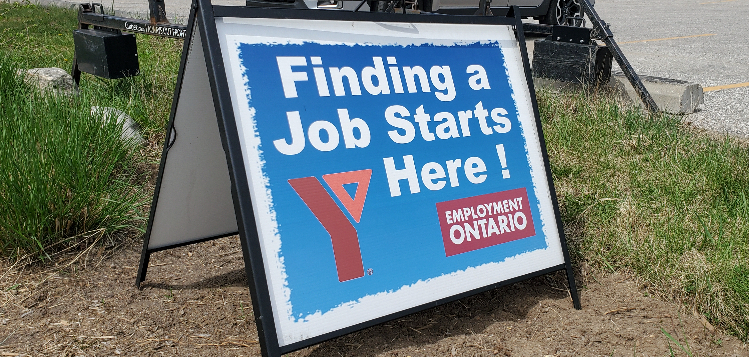
Lack of affordable housing and transportation isn’t helping, particularly in rural communities. The pandemic has also had many different effects on people, according to Mary Ellen Fetterly, team leader of employment services at YMCA of Simcoe/Muskoka.
Some employees have left industries that traditionally pay minimum wage, acquired new skills, and changed careers. Others have left the workforce altogether to care for children or elderly parents.
An aging workforce is also a factor, particularly in health care and in the skilled trades. People are retiring faster than there are people entering those industries, which is making matters worse.
The median age in Muskoka is 51.3, well above the provincial median age of 41.3. The population aged 60-plus makes up 34 per cent of the population in Muskoka while provincially this age group makes up only 23 per cent of the population.
The District of Muskoka has a labour force that is shrinking and aging which could pose a significant barrier to regional economic growth and diversification.
The shortage is also putting upward pressure on wages. “There’s definitely some stories of employers upping their wages and Deerhurst is one good example of that. They’re paying room attendants $20 an hour now so that’s as a result of not having enough workers. So definitely where employers can… they’re definitely paying more to attract people,” Fetterly said.
YMCA is partnering with post-secondary education providers to help people upgrade their skills and find work, particularly in the industries where shortages exist.
The organization is also facilitating programs that help employers train and retain existing employees by covering the bulk of their costs and looking at innovative ways of helping employers fill those positions.
They’re also looking at ways to encourage people who are out of the labour market to join it. “We are looking at doing some programming that’s geared to single-led households. So, trying to encourage people who are maybe traditionally not in the labour force, trying to encourage them through some support from us to look at different ways of getting back into the labour force and approaching employers with the requirements they have for work-life balance.” For example, those looking to join the workforce on a part-time basis could be accommodated through a job-sharing situation where two employees might be able to fill a full-time position, said Fetterly.
“We’re also looking at mature workers because due to the inflation rate being on the rise, we’re seeing mature workers that are wanting, or needing, to return to the workforce. So, we’re working… with them to find part-time opportunities and working with employers to encourage them to consider the part-time workers and sort of supporting that relationship as well.”
She said some employers are a lot more flexible and willing to meet employees halfway because they don’t have the workers that they need and they’re relying on their existing workers so much that it’s causing burnout.
Fetterly said the organization is working on bringing together a group of employers and community partners, “and we’re going to have a get-together and talk about some of the strategies they’re using—kind of what’s working and what’s not kind of discussions. Where some of the employers in the community have been very innovative and found ways of coping with the labour shortage and we’re going to bring a few of the employers together to figure out how we can support other employers in the community and perhaps do some sharing of those ideas.”
Don’t miss out on Doppler!
Sign up here to receive our email digest with links to our most recent stories.
Local news in your inbox so you don’t miss anything!
Click here to support local news
0 Comments