
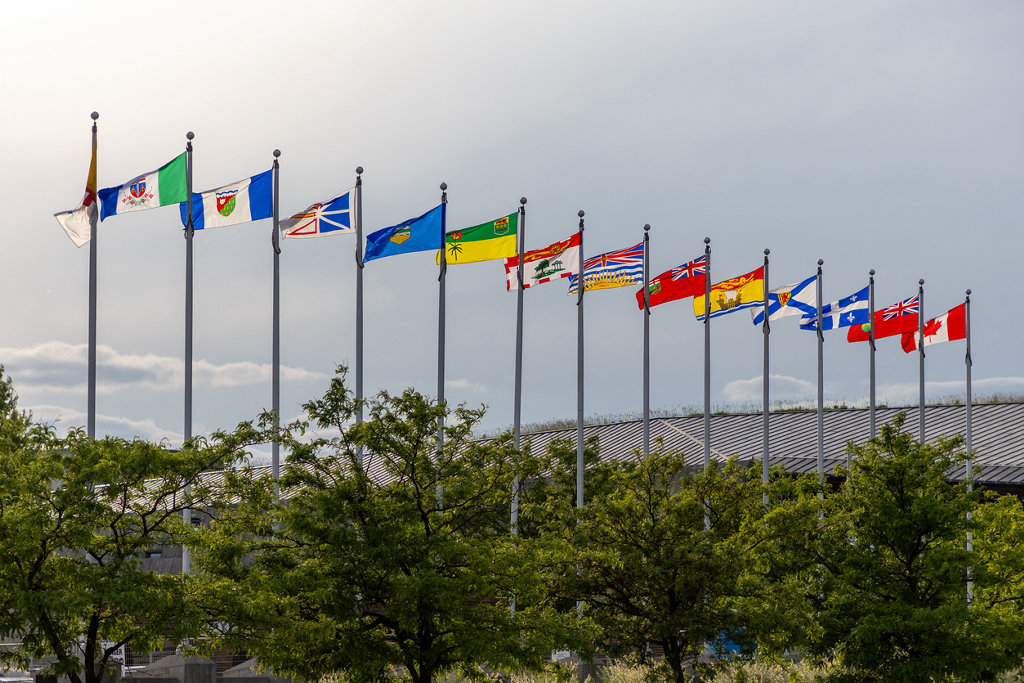
“Those whose politics is to destroy, to diminish, dismantle, they’re not going to change their instincts. This in many respects, this is their moment. We can’t match them by being timid imitations of them by pining for an old order that’s not going to return. It can only be answered by positive action, by building what comes next.” —Prime Minister Mark Carney
Last week, I wrote about the importance of Canada remaining a monarchy, especially given what is going on in the United States, a republic, amid threats by the Trump Administration to Canada’s economy and sovereignty.
This week, I want to talk about internal challenges facing Canada that must be addressed if our sovereignty and our ability to control our own future are to remain intact and impervious to outside influence.
In my view, Canada’s sovereignty is threatened less by foreign rhetoric than by domestic division, constitutional drift, weak national purposes and governments that too often place regional or partisan interests ahead of Canada itself.
Canada is not only a monarchy but also a federation. Political leadership is divided in Canada between the provinces and the federal government. That often creates tension and sometimes raises the question of who is really in charge. This means that Canada constantly lives with two competing realities.
Some would argue that this is no different than the United States, but it is. Imagine, for example, what would happen if any state in America seriously proposed to separate from the United States. It would not be a long conversation, and it would be quickly shut down by the federal government by any means necessary.
Not so in Canada. We have been batting around issues of separation here, almost since Confederation, like a cat bats around a ball of wool. Our Constitution may be a factor in allowing this to occur, but especially in this day and age, it is extremely dangerous and a threat to Canada’s sovereignty.
Separation movements in Quebec and Alberta are not merely provincial debates. They are clearly national security and sovereignty issues.
Federations like Canada only work when governments still believe that the country itself matters more than any regional political gain. That does not mean that regional differences should not be celebrated and respected. We are, after all, a large and diverse country with two founding languages and different challenges in most parts of Canada. We are not all cut from the same cloth.
However, a federation without a serious sense of nationhood is, in my view, eventually doomed to unravel, eventually becoming little more than individual entities competing with each other for their own gain.
The crux of the matter to me is that I cannot see how sovereignty in Canada can exist over the long haul without national unity. And please do not pretend that we have it now, because we do not.
Foreign governments pay attention to division. If a country appears fractured internally, its international leverage weakens considerably. Allies question stability, investors hesitate, foreign powers exploit our divisiveness and national programs and economic initiatives stall.
The United States, in particular, prefers dealing with a weaker and more regionally divided Canada because it increases American leverage both economically and politically. As one pundit recently opined, “A house arguing over whether it wishes to remain standing cannot effectively defend itself from external pressure.”
A long time ago, there was a popular comic strip called ‘POGO’. I haven’t seen it in years, but I still recall one of that character’s famous lines: “We have met the enemy and he is us.”
I do not see that as an expression of despair. I view it as an appropriate way to remind ourselves that the first responsibility for preserving Canada is the active, rather than passive, willingness of its own people to hold it together.
To protect our sovereignty, Canada must become more internally disciplined and strategically serious. Attacks on our sovereignty and on our economy by the United States have certainly spurred us in that direction, but we have a long way to go.
We have much work still to do in building economic independence, reducing overreliance on the United States, further strengthening internal trade, developing energy infrastructure, protecting our sovereignty in the Arctic, restoring confidence in national institutions and demanding that political leadership in all parts of Canada prioritize the country over polarization. We cannot be deterred by knee-jerk objections from self-serving entities.
The comment by the Prime Minister in his quote at the beginning of this article, that “We cannot pine away for an old order that is not going to return,” was, of course, directed at the United States. But it was directed at Canadians as well. It was a call to action.
Mark Carney, or for that matter, any other prime minister, cannot protect Canada’s sovereignty on their own, regardless of how capable they may be.
In my view, Canada’s greatest immediate threat is not annexation, invasion or even economic pressure from the United States. Rather, it is the erosion of national coherence and a strong sense of national unity and determination from within.
Nations do not remain sovereign just because maps say they are countries, just a line in the sand. In attacking Canada’s sovereignty, President Donald Trump has made exactly that point. Rather, Canada will remain sovereign only if its citizens and various governments act decisively as though our country is worth preserving.
Instead of simply blaming external threats for the survival of Canada’s sovereignty, we must ask ourselves the harder question: whether Canada has the internal unity, confidence and institutional strength necessary to withstand and to overcome those threats.
One way or another, Canada needs to get its house in order if we want to protect and preserve our national sovereignty. That means, first and foremost, that national agreement and unity must be the top priority for Canadians and for the politicians that govern us. Pardon the pun, but it trumps everything else.
Does that mean a constitutional conference or a national summit on Canadian unity? I wish I knew. What I do know is that it needs clear, strong and determined political leadership that can forge a consensus among Canadians, achieve unity and speak with one voice in protecting Canada’s sovereignty.
Pogo may have it right. We have found the enemy, and it is us.
Hugh Mackenzie.

Hugh Mackenzie has held elected office as a trustee on the Muskoka Board of Education, a Huntsville councillor, a District councillor, and mayor of Huntsville. He has also served as chairman of the District of Muskoka and as chief of staff to former premier of Ontario, Frank Miller.
Hugh has also served on a number of provincial, federal and local boards, including chair of the Ontario Health Disciplines Board, vice-chair of the Ontario Family Health Network, vice-chair of the Ontario Election Finance Commission, and board member of Roy Thomson Hall, the National Theatre School of Canada, and the Anglican Church of Canada. Locally, he has served as president of the Huntsville Rotary Club, chair of Huntsville District Memorial Hospital, chair of the Huntsville Hospital Foundation, president of Huntsville Festival of the Arts, and board member of Community Living Huntsville.
In business, Hugh Mackenzie has a background in radio and newspaper publishing. He was also a founding partner and CEO of Enterprise Canada, a national public affairs and strategic communications firm established in 1986.
Currently, Hugh is president of C3 Digital Media Inc., the parent company of Doppler Online, and he enjoys writing commentary for Huntsville Doppler.
Don’t miss out on Doppler!
Sign up here to receive our email digest with links to our most recent stories.
Local news in your inbox so you don’t miss anything!
Click here to support local news
Mr. Mackenzie, I would add to your well written article and come excellent comments that follow, that some Canadians need a better understanding of our history and Parliamentary system, including the jurisdiction of Federal and Provincial powers and responsibilities.
However, I do suggest that we keep front and centre, social media and foreign interference through that vehicle. We need to remain critical thinkers of the sources of the latest click bait. Both are a responsibility of a robust educational system and public institutions, as well as some oversight legislation to help protect public consumption to healthier sources.
Before I hear the shouts of “free speech” and “censorship”- I am asking the reader to recognize research data concerning our children and mental health. Public and social policy needs to take into consideration what is available from research that supports those ways to encourage critical thinking and how/what we need to protect.
To Hugh Holland: well said. I particularly agree with your stance that Poilievre is a threat to our sovereignty. He is showing his true colours more and more.
Stanley Moulson: your statement that it was PM Pierre E. Trudeau who introduced multiculturism in Canada is not accurate.
Multiculturalism was introduced by the arrival of the European settlers. When the French, British and Irish colonists arrived, followed by the imported labour from far and wide, (Chinise workers who laboured on the trans-Canada railway are a good example), multiculturism became the way of Canada (way before Pierre E Trudeau. This multiculturism has served the country well. It has been only possible to build the giant numerous infrastructures, that the vast country required, with the labour of all the people of Canada, not only efforts of the descendants of the European settlers.
If we all , who live in this beautiful country, stand together, the country will stand strong and prosperous. If we continue dwelling on trivial differences instead on things that unite us, we shall fall.
Hugh, this may be one of the most important pieces you’ve written because it shifts the conversation away from outrage and back toward stewardship.
What struck me most was the reminder that sovereignty is not protected only through borders, trade, or political leadership. It is also protected through the strength and cohesion of the people living within a country and within communities. Small towns especially cannot function without a basic level of trust, restraint, and willingness to keep living alongside one another even when we disagree. In communities like ours, you still see the same people at the rink, in the grocery store, at fundraisers, and after storms when neighbours help clear one another’s driveways.
Muskoka has always been layered. Historical families, newcomers, seasonal residents, immigrants, workers, retirees, and people arriving from somewhere else hoping to build a life here. That complexity is not a weakness. It is part of how communities evolve and endure. A place begins to fracture when belonging becomes conditional, when people feel pressure to perform anger or political loyalty just to remain part of the group around them.
Political disagreement has always existed in healthy communities. But when outrage and grievance become the social glue holding groups together, trust begins to erode much faster than people realize. Small towns can survive disagreement the way a good meal can survive a little too much salt. What they struggle to survive is when bitterness itself becomes part of the recipe.
Healthy communities leave room for people to evolve. They allow disagreement without turning neighbours into enemies. In a time when so much public discourse rewards division, certainty, and permanent outrage, that may be one of the most important forms of national unity we have left.
Canadians have been losing their identity and cohesion since Pierre Elliott Trudeau introduced “Multi-Culturalism” in 1971. If we want Canadians to be united, we need to get rid of the corruption that is the Liberal government. Lowest growth rate in 10 years. Rights and freedoms illegally taken away during the plandemic and now with the passing of Bill C-139, the media can now openly lie to us. If Canada is to be invaded, it won’t be by outside forces. It will be by those the liberals have already let in. In 1932 before Newfoundland became part of Canada, thousands of Newfoundlanders stormed their parliament in order to end the corruption. Perhaps, even 94 years later, such a demonstration is necessary again.
Once again Hugh Holland uses per capita stats to make a point. Alberta has 5 million people the NWR has 45,000. This is similar to Mr. Holland saying Chinas per capita pollution is less than Canada’s. So put 5 million people in the NWT and then figure out the per capita stats. And if we all go to electric cars who will pay the road tax?
You are right Hugh. Canada’s sovereignty has often been under threat but perhaps never as much as today.
PQ extremists have always said they will never swear allegiance to the British monarch, but that has never amounted to anything. Certainly, if you watched Montreal beat Buffalo 6 to 2 at the forum last night, you would never doubt French and English players and fans being united.
The Alberta Independences movement is more serious. But the Toronto Star’s Richard Warnica spent a week in Alberta following Mitch Sylvestre, architect of the independence movement. The fact that Alberta’s GDP per capita is high at $96,544 has gone to their heads. But Nunavut’s is $136,875 and the NWT has $113,198 for the same reason. Warnica “found those involved to be serious but dangerously detached from reality”. And their very careless handling of the voters list has lost a good deal of their support. But it is said that Putin’s agents are stirring the pot, and it is part of Trump’s short-sighted fantasy to annex Canada, or a part of it, to access Alberta’s oil which will be replaced in about 20 years by new technical developments and renewable energy. But we shouldn’t take the movement too lightly.
And the 3rd threat is our own Pierre Poilievre’s desperate moves to keep his job as leader of the Conservative party. He is against anything and everything the government is trying to do. His latest idea to eliminate the tax on gasoline for the remainder of the year would increase the deficit by $5 to $6 billion or 10% to 15%. And who pays the interest on the deficit? We do! Brilliant idea Pierre! The best way to get rid of all the problems the addiction to fossil fuels is causing is to electrify with renewable energy ASAP. That’s what smart countries are doing. Most countries could be self-sufficient with their own renewable energy and that eliminates much of the current and future conflicts.
Thanks for opening this discussion. Our lack of national unity has worried me for a long time. Having traveled this country, I understand some of the partisan issues but in the end are we not Canadians who know how to negotiate disagreements and stick together over the long haul?
Pogo had it right, a long time ago: the enemy is us – We can blame “social media” but isn’t that due to ourselves in the end?
We need to cease being lazy in our attitudes and set ourselves to learning, helping, speaking out, asking pointed questions, demanding ethical results from those we put in charge of our country’s welfare.
Canada’s situation is structurally different from the United States, so regional separatism tends to surface more often here where provinces have significant constitutional powers and distinct identities. U.S. states also have powers, but the question of secession was effectively settled by the American Civil War and later Supreme Court rulings that said states cannot unilaterally leave the union.
Maybe we can reduce the grievances in PQ and AB that foster a desire for separation. And we definitely can make the country less Ontario-Quebec centred, admittedly opening the government to the criticism that we’re ‘sucking up’ to separatist threats. Separation is complicated and our systems like transfer payments, military, infrastructure, Indigenous treaties etc. etc. are deeply intertwined. Maybe the feds need to relentlessly pound that fact home with economic facts.
We did establish clearer rules on succession following Quebec’s almost successful separation referendum in 1995, but it’s ambiguous, like many oh-so-Canadian rules/not rules. Can the federal government not make it less wishy-washy and make separation an actual prohibition?
Canada has always been a kind of negotiated federation that’s not as centralized in identity, so unity has required constant maintenance and compromise. While there are some things we can do, I’m tired of all this compromising. We need to take a much stronger stance. And BTW….I think our PM, Mark Carney, is the man to take this on.
The enemy is not us. It is the social media drivel that people think is reality. I wish that seasoned politicians and public officials would come up with some better ideas than blaming the people. We are living in the best of times right now.
Ah Ha!! It’s NOT Trumps fault we’re declining! Alright, now let’s examine WHY the separatist movement is alive and well in the West, since separatism is just a symptom of the bigger problem that the entire country must resolve.