
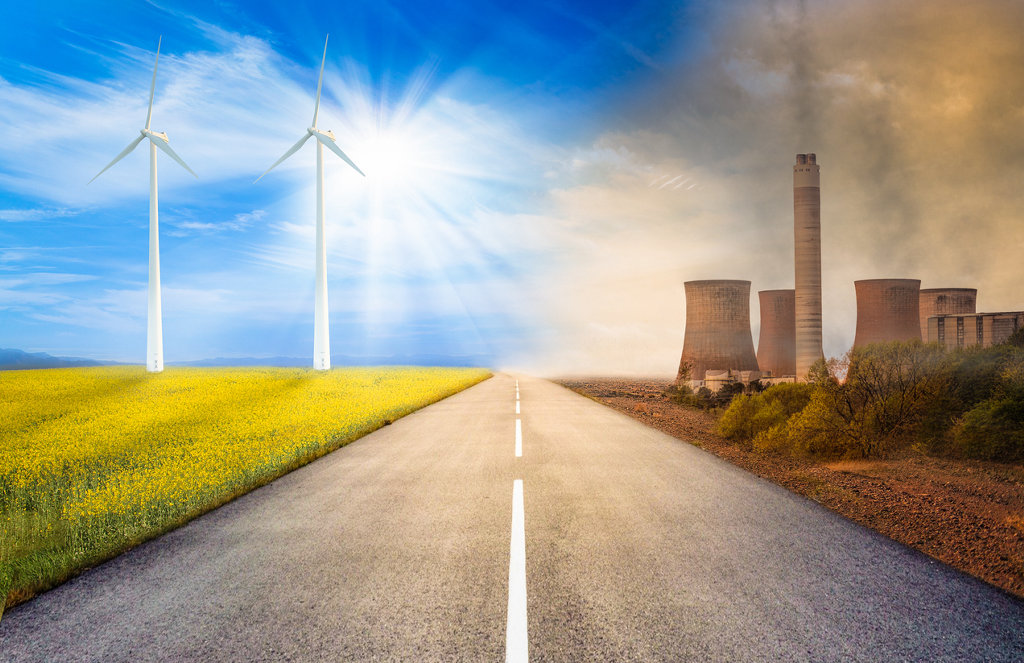
Hugh Mackenzie is taking a break this week.
The best political, scientific, and corporate leaders foresee threats and problems and take steps to protect their constituents and customers from them.
For decades, it seemed that the emerging deadly combination of a rapidly growing global population, a shrinking base of finite resources, and the resulting impact on the Earth’s climate was being ignored. However, a consensus of 80 years of detailed climate data from three leading US and two European Climate Centers shows that there is no longer any doubt that global warming is accelerating rapidly. There are still deniers, but growing evidence suggests that many more leaders are coming around and joining the fight for a better future.
If the professional climate scientists are correct, we have about 25 years to 2050 to make the transition to clean energy. The consequences of being too slow will be different for each country but will be felt by all countries.
If the professional oil and gas market forecasters are correct, we have about 50 years to 2075 to avoid serious energy shortages. Conventional oil and gas reserves are finite resources. They are not like wheat. We can’t just plant seeds and grow more of them. When it’s gone, it’s gone.
As late as 2023, fossil fuels still produced 80% of the world’s primary energy. That highlights the scale of the energy challenge. According to the International Energy Agency, transportation uses almost 1/3rd of the world’s final energy, and cars and light trucks make up roughly 60% of that. That too shows us the scale of the challenge of switching from gasoline to light-duty electric vehicles, and from diesel to hydrogen-electric fuel cell-powered heavy trucks and mobile equipment.

Hyundai XCIENT – the world’s fist commercialized fuel cell heavy duty truck.
But 18 of the world’s top 20 car companies (by sales) have joined the transition to clean energy and are now producing electric vehicles (EVs) in some form—whether fully electric (BEVs), plug-in hybrids (PHEVs), or both. Toyota is ramping up its EV production alongside hybrid models. Volkswagen has a strong EV presence in VW, Audi, and Porsche. General Motors is investing heavily in EVs from Chevrolet, GMC, Cadillac, and Buick, which will go all-electric by 2030. Ford, Hyundai-Kia, Stellantis, BMW, Mercedes-Benz, Honda, and Nissan are all actively producing EVs. BYD and Tesla are the leaders in global EV sales. The EV shift is no longer a trend — it’s the future of mobility.
Toyota, GM, Caterpillar, Komatsu, Hyundai, Nikola, and Ballard Power all have hydrogen-electric fuel cell powered heavy trucks and mobile equipment under development. Toyota, Hyundai, and Nikola have products on the market. CP has Ballard fuel cell locomotives operating in Alberta.
While Exxon (the world’s second-largest energy company) is forecasting oil demand will continue at 100 million barrels per day through 2050, the US EIA, OPEC, and BP are currently showing that proven global reserves of oil and gas will be depleted in about 50 years (by 2075). That says the world has 25 years to go from using 100 million barrels per day to zero.
The six biggest oil users (USA, China, EU, Japan, India, and Russia) each have less than 25 years in reserve, so from 2050 to 2075, they will be buying from the six countries that have the biggest reserves (Venezuela 304 b bl, Saudi Arabia 297, Canada 172, Iran 155, Iraq 145, and Russia 107).
Climate change remediation is taking an increasing amount of money. That puts a practical limit on the amount of investment money that can be allocated to oil and gas exploration in increasingly remote, deeper, and more expensive areas. More reserves could indeed still be found, but replacing the entire current reserves of oil and gas within the next 50 years is extremely unlikely. New discoveries may still happen, but the rate has slowed dramatically, and the easiest-to-access reserves, including US shale oil, have already been tapped.
Without international help, there will likely be some residual demand for oil and gas beyond 2075 from poor and small island nations, but at what point does it simply become uneconomical to supply oil and gas, or for those countries to buy it?
However, if we think of the “Big Oil and Gas companies” transforming themselves to become “Big Energy companies” gradually replacing fossil fuels with alternative energy sources, then yes, a timely transition to clean energy is possible.
Nine million people are employed in the global auto industry, and 8.3 million are employed in the global oil and gas industry. It’s much faster and less disruptive to employment and financial markets to have the existing big companies transform their enormous resources and expertise, rather than have them die out and be replaced by new organizations starting from scratch.
So, many of the world’s top oil and gas companies are actively engaged in the transition. BP has committed to becoming a net-zero company by 2050 and is investing heavily in renewables, electric vehicle charging infrastructure, and hydrogen. It now refers to itself as an “integrated energy company.” Shell has been expanding into wind, solar, and hydrogen and has installed over 30,000 high-speed EV charging stations to date. TotalEnergies (France) is shifting toward solar, wind, and battery storage. Equinor, Norway’s state-backed oil company, rebranded from Statoil to Equinor. It’s investing in offshore wind and carbon capture technologies. PetroChina is investing heavily in wind, solar, geothermal, battery storage, and EV charging networks. It aims for non-fossil energy to make up a full one-third of its capacity by 2035. U.S.-based ExxonMobil and Chevron are investing in carbon capture, hydrogen, and low-carbon fuels.
But it will require a massive, coordinated global effort to fully replace fossil fuels by 2050 or even by 2075, by using 3 times the energy efficiency of EVs and heat pumps, and 3 times the generating capacity of renewables and SMRs (Small Modular Reactors built in factories and shipped to sites).
The momentum behind the transition is inevitable and undeniable. But there is no time to waste. The future health of the global climate and the global economy both hinge on the public’s acceptance of reality and how fast we can implement the transition to clean energy.
Hugh Holland
25 Largest Car Companies in the World (Ranked By Sales 🚗💰)
Top 10: Energy Companies | Energy Magazine

Hugh Holland is a retired engineering and manufacturing executive now living in Huntsville, Ontario.
Don’t miss out on Doppler!
Sign up here to receive our email digest with links to our most recent stories.
Local news in your inbox so you don’t miss anything!
Click here to support local news
It makes absolutely no sense for Canada to mandate EVs for new cars in 2035 then prevent Canadians from buying inexpensive, high quality EVs from China.
Instead of putting a 100% tariff on EVs from China, Canada should be encouraging them to build EVs in here to avoid any tariff.
Just like the Japanese were encouraged to build superior small cars in Canada to avoid tariffs in the past.
80% of the world’s EV batteries and 90% of the rare earths and magnets already come from China.
The best legacy automakers can hope for is a local joint venture with Chinese automakers.
Assuming the Chinese are interested, a “skateboard” (chassis, motor, battery and controls) could be imported from China and then the body and interior produced here could be stuck on top of it.
The shipping volume of a skateboard is much smaller.
Chinese BYD even has built their own ships to send EVs around the world to 70+ countries.
Chinese EVs are selling well in the EU even with a 35% tariff.
BYD is building an EV plant in Hungary to supply inexpensive EVs to EU countries to avoid the tariff.
They are thinking about building a plant in Mexico to avoid tariffs in North America.
Chinese EVs use mostly LFP batteries which drastically reduces the chance of fire.
Much cheaper sodium ion batteries don’t use lithium or cobalt or nickel and are largely unaffected by cold. They are in production in China.
If the current 500 km range doesn’t suit 1000 km range EVs exist in China with 1500+ km coming up with solid state batteries.Solid state batteries are also largely unaffected by cold.
EVs in China are not only cheaper to buy and far cheaper to operate but they are also eliminating smog and the resulting health care costs in Chinese cities.
For example “Once suffocating from the effects of smog, Shenzhen now has some of the cleanest air among cities in China, and in 2018 had its highest air quality index recorded in over 15 years. What’s driven this change? In short, it’s what Shenzen is driving — a large variety of electric vehicles.” Quote from “How a shift to electric vehicles is driving change in ‘China’s Silicon Valley'”
Meanwhile smog persists in North American cities. Tens of thousands of ICE vehicles crawling along in the GTA twice a day for hours during rush “hour” creates massive amounts of emissions.
More green energy is installed in China than the rest of the world combined.
Storage makes green energy available 24/7.
Search “China is installing the wind and solar equivalent of five large nuclear power stations per week.”
“Energy experts are looking to China, the world’s largest emitter, once seen as a climate villain, for lessons on how to go green, fast.”
New nuclear of any sort is too expensive and takes far too long to build.
“Eye-popping new cost estimates released for NuScale small modular reactor”
China used to think nuclear had a bright future. Now, not so much.
Search “China’s quiet energy revolution: The switch from nuclear to renewable energy | RenewEconomy”
While Ontario goes backwards rapidly.
Search “Polluting gas will provide 25% of Ontario’s electricity in 2030 – up from 4%”
Billions to be spent on nuclear SMRs instead of much cheaper wind, solar and storage.
We have been told for years to buy an EV and save the planet. Now we are to buy the expensive ones made in NA and not the cheap ones from China. What a farce.
Poitical will. Lobbyist pressures. Consumer foolishness. It all adds up to a big problem. I know that my next car will at least be a hybrid.
Bob Braan, 7.6% of the 353 million vehicles on the road in China are EV’s, while only 1.6% of 370 million vehicles on the road in North America are EVs. So, from a global emissions perspective, it would be better if both China and North America worked to convert their own fleets ASAP, rather than take EVs from China to NA.
GDP per capita in NA is more than 5 times China, so Americans can afford to pay more for their cars. The auto industry is an important part of the economy in both regions. Abruptly opening the flow of EVs from China to NA would be very disruptive to jobs and the economies of both regions. Much better if the convergence of trade in all sectors is managed more gradually over the next 2 decades.
Diana Mitchell, regarding lifetime emissions, producing lithium-ion batteries involves mining and processing materials like lithium, cobalt, and nickel, which can emit 2.5 to 16 metric tons of CO₂ per battery.
But according to a TD Economics report: A typical gasoline car emits about 70 tonnes of CO₂ over its lifetime just from burning gasoline In a province like Ontario, where 90% of electricity is generated primarily from hydro and nuclear power, the lifetime emissions from charging EVs is negligible.
The Bottom line is that Battery electric vehicles (BEVs) in Canada, on average, emit 70–77% less CO₂ over their lifetime compared to gasoline vehicles.
Regarding risk and cost of fires, a Swedish study found EVs were 20 times less likely to catch fire than gas powered cars. A U.S. analysis showed 1,530 fires per 100,000 gasoline vehicles vs. 25 for EVs. Hybrids actually have the highest fire rate, likely due to the combination of both systems.
In gas vehicles, fires often result from fuel leaks, hot engine components, or collisions, and can ignite almost instantly, giving occupants little time to react. However, while EV fires are rarer, and slow to start, they can be more intense and harder to extinguish, which may explain the disproportionate media coverage.
This is only hearsay but I have heard that in the end there is inadvertently more pollution from the lithium batteries than from the emissions from gas vehicles. Also that there is a terrible pollution from actually mining the lithium from the ground that is very very toxic, so I hope that we are not jumping from the fry pan into the fire?
As well, I wonder if these electric vehicles are safe because an electric school bus caught fire in Huntsville and thanks to the bus driver (that he didn’t decide to look at the engine, etc. first) but immediately organized to get all the students out. This could have been a terrible tragedy. Apparently they can’t put these fires out and just have to wait until they burn out. There is some chemical that will work but it pollutes everything around which does not help the situation at all. Also, apparently there are lots of electric cars that go on fire but the powers that be are trying to keep it hushed up.
There are some who are trying to install lithium batteries in the area of Burk’s Falls, Emsdale, etc. area which is a real concern. We are told that they are safe that they are many safeties set up to cover everything. Yes well, remember the Titanic was unsinkable. There is no such thing as 100% safe. If these batteries should catch fire, what about the forests all around here. Also the Magnetawan River is there and it flows into many lakes. Would they all be polluted?
I know that they believe that world warming is causing all the fires we are experiencing but we don’t want lithium batteries causing forest fires either and the trees are what are giving us fresh air.
Please, all I ask is let’s not charge into electric vehicles 100% without making sure that they will truly benefit and cut the warming of the earth WITHOUT adding or damaging something worse.
Canada is preventing a big drop in the cost of living and a big drop in smog related health care costs by preventing the sale of inexpensive, high quality EVs from China with a 100% tariff to copy the US.
Drop the EV mandate and drop the 100% tariff on inexpensive, high quality EVs from China and most Canadians will go EV when they need a new car. Long before the 2035 mandate.
Cheaper to buy and FAR cheaper to run while drastically reducing the carbon footprint.
It’s only $100/year to run an EV 16K kms in Ontario at the ultra low 2.8 cents per kWh overnight rate.
People are spending 10-20X that to run their ICE vehicle.
Inefficient legacy automakers are far, far behind the Chinese.
50+ countries including in the EU and Australia confirm they are very high quality and safety is not an issue.
Ford’s CEO drove one and didn’t want to give it back. China is far, far ahead of legacy automakers.
Search “Ford CEO doesn’t want to give up this Chinese EV he’s been driving for months”
Some people think EVs need a huge amount of new energy.
Not really.
Only 8.2 kWh average per day if you drive 20,000 km and your EV uses 15 kWh per 100 km.
Your daily home usage varies more than that.
An extra 8.2 kWh at night is peanuts.
Switching to a heat pump water heater saves that much energy per day so no new energy would be needed at all for EV charging.
Same kind of power as your electric clothes dryer uses. Also not needed that much.
8.2 kWh is only 1.5 hrs charging per day.
Or 3 hrs every other day.
Or 6 hours every 4 days.
For those with 100 amp service and the panel is full you can get a Neocharge box that auto selects the clothes dryer or EV charging.
BC gives a rebate for those boxes to ensure it’s one or the other.
Do you need the dryer in the middle of the night?
In fact switching your electric resistance water heater to a heat pump water heater may save you that much energy per day.
No new energy would be needed at all for EV charging in that case.
In the US with big rebates those are the least expensive type of water heater as well.
Canada? Not so much.
Thanks for a great article. The complexity of politics and technological changes accelerates the need for leaders and consumers to change to meet the challenges of efficient resource use, energy transition and environmental extremes.Unfortunately, we mostly live in short-term bottom line, pay check to pay check traps that makes 2050 and 2075 seem like distant due dates that will never arrive. Nature is telling us not to be so sure- payment is now owing.
By 2030, China will have the solar and battery. manufacturing capacity to make a United States worth of electricity generation every year (yes, all US current generation from all sources).. We in North America haven’t even started. We are still arguing about carbon taxes, and electing politicians grounded in yesterday.. We don’t even know there is a race.
AI will drive electricity demand exponentially. Transportation requirements will be dwarfed by AI training and inference requirements.
Steel and gas were the kinkmakers of the 20th century.
AI and electricity will be the sources of power and prosperity in the 21st century.