
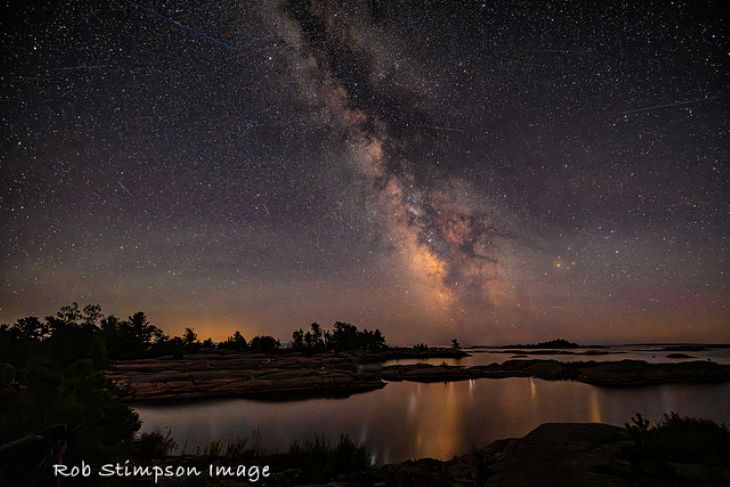
Many who live in Muskoka, particularly the Lake of Bays area, can attest to the wild beauty of forests, rivers and lakes surrounding the many villages that dot the entrance to Algonquin Park—one of Canada’s most visited and cherished refuges from urban sprawl and the endless vivacity of city life.
With its vast, rugged terrain and seemingly endless skylines, placid waters, and deep silence, artists of varying competencies have tried their hand at capturing and bearing witness to its rich panoply of mysterious colour and wonder.
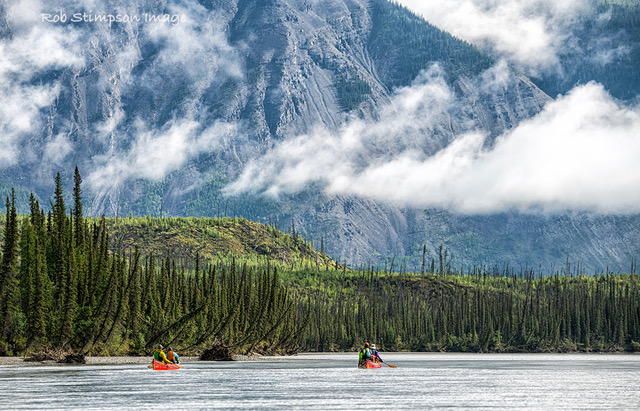
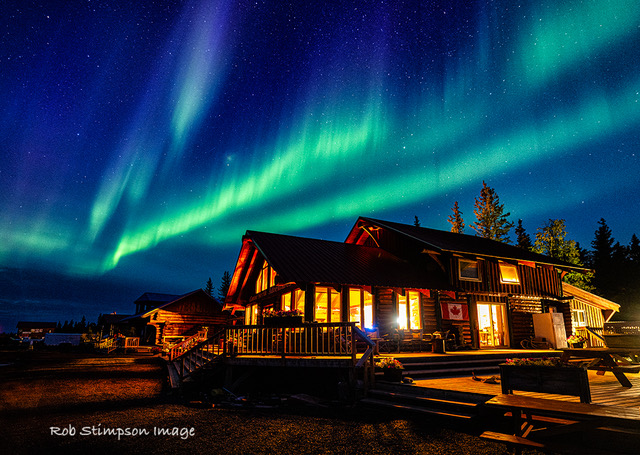
Few have succeeded with such prowess as photographer, Rob Stimpson, a twenty-five-year resident of Lake of Bays, who, with camera in hand, has travelled the world creating a stunning body of resonant photography. As a professional expedition photographer, he has explored remote wilderness areas in Antarctica, the Arctic, Northern Quebec, the Northwest Territories and Greenland. Stimpson reveals with a smile, “I literally am living the dream, and I’ve always known what I wanted to do; now I’m doing it.”
In addition to his location assignments, Stimpson is a much-sought-after lecturer and public speaker. While his presentations range in topic from the Group of Seven, Antarctica-the last great wilderness, to the magic of the winter forest, showcasing his photography on these topics, Stimpson is primarily a storyteller, luring and inviting audiences into the phenomenal landscapes he has been privileged to view through his lens. The art of enthralling photography is creating a narrative, Stimpson emphasizes. “A lot of photographers don’t understand how to create a narrative” in their imagery. The essence of great photography is creative insight: understanding the scene, finding an inner, imperceptible quality beyond what the eye perceives and responds to through the viewfinder. Stimpson defines that artistry as the ability to fuse light, shape, colour, texture and visual tension into a unique storyline that communicates and shares the experience inwardly with the person looking. Modern cameras, capable as they are of great marvels, cannot replace the humanity and distinctive voice that an experienced and inspired photographer brings to an image. In fact, Stimpson believes gear can be a trap that belies the mental and emotional work of composition and connecting to the subject matter.
When asked how to aspire to learn such a skill, Stimpson states, matter-of-factly, “I would say to the people [that ask where’s] the best place to [learn] photography, [that it] is the library – go to the library and look at the books of the artists. And then from there, you’ll start to understand who makes a good photo.”
Stimpson immersed himself throughout his formative years in the work he saw and read in his youth.
He said he spent many hours in the library, as his mom was a librarian and used to take him to work with her in the evenings. “She would drag me to the library, and she put me in front of—because she always knew I loved nature—she put me in front of the books about nature. So by the time I was 12, 13, I was immersed in some of the best nature writers that were around at that time and still are, as far as I’m concerned. Some of the best that ever lived, so I learned very quickly about nature, not through visuals, but through writings and artists,” explained Stimpson.
“I’m a bit of a rarity because… I love looking at where photography has come from. So, some of my favourite photographers are from the 20th century, and what they’ve done, you know, I look at Elliot Porter, I look at Sebastião Salgado, Freeman Patterson, who I started to follow years ago. And so, you start to learn what makes a compelling photograph, what’s good. What I teach is how to create a narrative.”
Teaching is another aspect of Stimpson’s professional work. He runs, or is commissioned to lead, workshops that educate others on how to put the wow in their shots and overcome the postcard trap—moving from documenting to interpreting.
Several times a year, Rob hosts, teaches and instructs outdoor tours where participants photograph a wide field of subjects. Upcoming tours include The River Awakens, Saturday, April 11th, 2026, a tour to photograph the spring runoff of the Oxtongue River; on Saturday, May 9th, 2026, Spring Wildflower Photo Exploration and the exciting and popular Algonquin Moose Photo Adventure Safari on June 5th – 7th, 2026. Rob Stimpson is an avid outdoorsman and adventurer, down-to-earth, engaging, knowledgeable, and easygoing. All these tours have intriguing dynamics while offering specialized guidance and instructive lessons from Rob’s long career. https://Robstimpson.com/workshops/
“In this business, you can’t rest on your laurels. You’ve got to continue to improve,” explained Stimpson during a discussion regarding the status of an independent, entrepreneurial photographer. Throughout his professional career, he has worked on a wide variety of projects, including writing numerous articles for outdoor magazines and for Parks Ontario. He co-authored the book, An Artist’s and Photographer’s Guide to Wild Ontario,” with Craig Thompson. He is also working on a new book of photography, titled Water, which will soon be published.
Among all his enterprises, his most cherished are gallery showings of his work, where he feels people see and feel the great splendour and power of nature reflected in his photography. His most recent show, Polar Shift, an exhibition of the beauty of the Polar Region, at Coles Art Market, finished on February 7, 2026, to great acclaim. He also hosts a gallery at his studio by appointment. https://Robstimpson.com/
Passionate and dedicated to the natural world, Rob Stimpson celebrates its magnificence through his adventurous images and reveals the inner hidden secrets that abide within its rich, miraculous tapestry—sometimes overlooked and undiscerned by those who do not take the time to see.
Don’t miss out on Doppler!
Sign up here to receive our email digest with links to our most recent stories.
Local news in your inbox so you don’t miss anything!
Click here to support local news
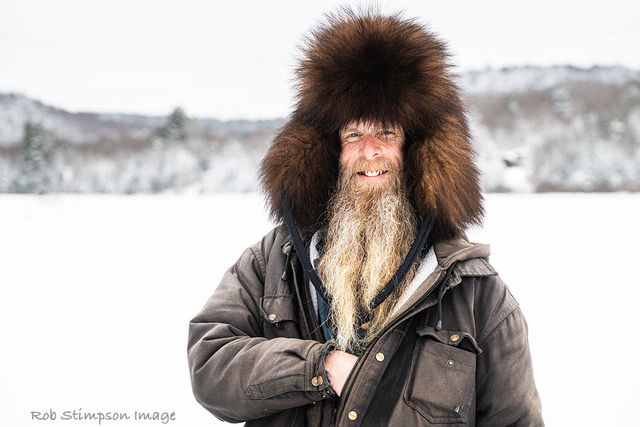
Good grief Rob. I took one look at the picture of you with a beard and fur hat and thought ” your the lift operator at Hidden Valley Ski Hill “.
They keep him away from the little kids on the learning hill.
Kidding aside. I just came back from skiing at Big White Kelowna, BC. Oh my. What a beautifull area. As long as you don’t look at what the forest fires did.
100 wineries. Beautiful lakes. Mountains.
So much. As they say “God’s country”. It certainly is.
But. We have so much here also and I don’t think many realize what we do have here.
More needs to be done for people to know and respect what we have.