
Hugh Mackenzie is on break this week.
By Hugh Holland
As a Canadian who worked four decades as an engineer and manufacturing executive in the global auto industry — visiting many global companies and watching the U.S. and Canadian economies, industries, and communities intertwine — I’ve never seen the Canada–U.S. relationship under more strain. Counterproductive tariffs are back. Auto jobs threaten to leave Canada. And the climate clock is ticking louder than ever. Yet amid the noise and nationalism, there is still a better path — one rooted in shared prosperity, clean energy, and a livable environment.
We need to review a bit of history to understand what’s at stake. Henry Ford started building cars in the U.S. in 1903. Sam McLaughlin started building cars in Canada in 1907.
Since the auto trade agreement was signed in January 1965, Canada and the U.S. have built one of the most successful industrial partnerships in the world. Our auto sectors didn’t just trade — they co-produced. Parts of a car assembled in Ontario might cross the border several times before final assembly in Michigan, or vice versa.
That integration created jobs, lowered costs, and made both countries more competitive and prosperous. And I can tell you that in the company where I worked, Canadian plants were always fully competitive with US plants in quality, productivity, and cost.
But today, that legacy is under threat. Trump says he wants to bring auto jobs “home,” even though this global industry evolved on both sides of the border at the same time, and even if it means gutting Canadian plants and unraveling decades of cooperation. Under pressure from Trump, Stellantis recently announced it will shift production from Ontario to Illinois, despite substantial Canadian financial support, with a legal agreement. Financial support from states and provinces is quite common, given the number of jobs at stake. The next day, they said they have other plans for Brampton, but will Trump allow them to do it?
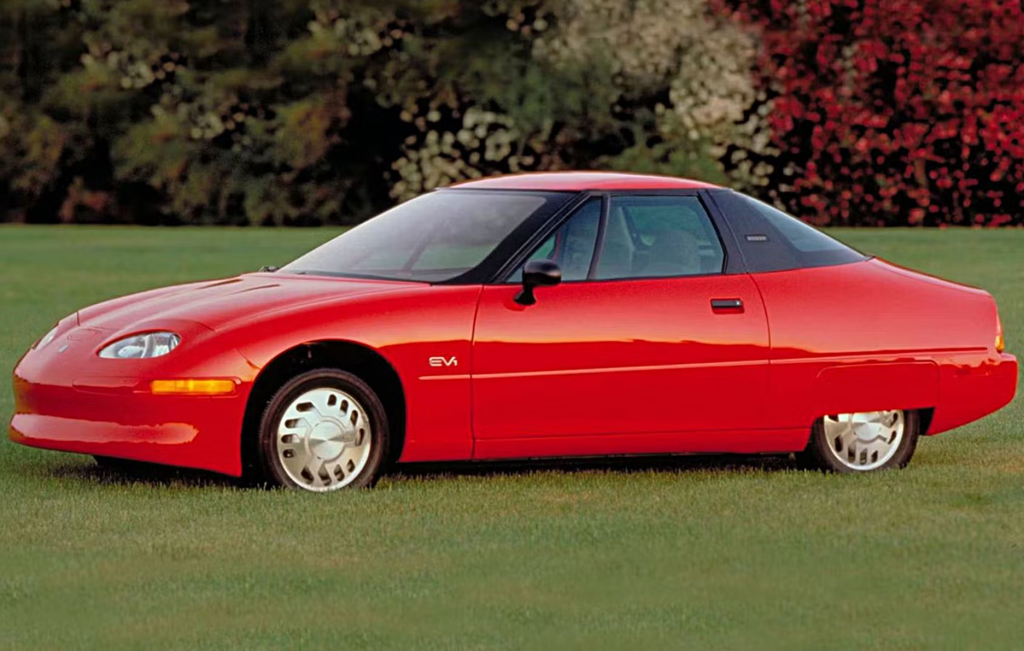
In 1996, General Motors developed EV1, the world’s first modern electric vehicle, to help solve a serious air pollution problem in LA. But, while U.S. auto companies spent 30 years and billions of dollars to engineer and tool up a line of climate-responsible products, the U.S. fossil fuel industry finished its multi-decade campaign in 2010 to eliminate election campaign contribution limits. So, Fossil fuel money then misled U.S. voters about energy and climate change, and elected Trump.
But the real danger isn’t just economic — they are strategic. Scientific and financial information from all credible sources tells us that Trump’s denial of reality is nothing short of reckless and unconscionable. Unless we act with urgency today, everyone under 25 years of age everywhere will face both severe climate change and severe energy shortages before they retire. These aren’t distant threats. They are already disrupting food systems, migration, infrastructure, and economic stability. Ironically, as the world’s biggest consumer of oil, the U.S. is particularly vulnerable.
And yet – while the rest of the world races ahead on electrification – the U.S. is falling behind. China is flooding global markets with affordable EVs. Europe — and much of the world — is scaling battery production and hydrogen as a carrier of zero-emission electricity. If the U.S. turns inward while others electrify, they will need Canada’s oil more than ever. But Canada will be forced to redirect our edge in critical minerals — including high-energy aluminum — to European and Asian markets, albeit with higher logistics costs.
There is a better path.
Imagine a North America that leads the world in clean transportation. Where Canadian minerals power American batteries. Where Ballard Power of Vancouver builds more hydrogen-powered freight locomotives for CPKC Rail to operate across the continent. Where John Deere, Caterpillar, Alstom (France), JCB (UK), Daimler, VW, BMW (Germany), Volvo (Sweden), Hyundai (Korea), Kubota, and Toyota (Japan) deliver zero-emission transportation, farm, and construction equipment. Where Canadian-built EVs roll off the line in exchange for specific products from the U.S., Europe, and Asia. Where our grids are smart, our air is clean, and our workers are building the future — not clinging to the past.
That’s the promise of realistic and forward-thinking governments. One that restores the spirit of cooperation and sees Canada not as a competitor, but as a partner. One that invests in shared infrastructure and harmonizes EV incentives. One that understands that economic prosperity and environmental sustainability are not opposites — they’re inseparable.
Our trust in the U.S. has been severely shaken. But there are many signs the American people also want that future. They’re tired of chaos, division, and zero-sum thinking. In the meantime, Canada must chart its own course to defend its interests and sovereignty.
We can’t wait for Washington to come around. We must accelerate our own electrification and EV adoption, deepen ties with Europe and Asia, and invest in the workers and technologies that will define the next century. But we must also keep the door open — and the light on — for a renewed partnership with our physically closest ally.
When the U.S. inevitably sees the light, Canada will be ready to move forward together.

Hugh Holland is a retired engineering and manufacturing executive now living in Huntsville, Ontario.
Don’t miss out on Doppler!
Sign up here to receive our email digest with links to our most recent stories.
Local news in your inbox so you don’t miss anything!
Click here to support local news
Yes it seems that President Trump and his friends are in denial that climate change is real or that anyone should even mention. Even our highly aware climate economist PM is accepting that politically our economic dependence on the oil and gas industry must continue to be supported by new pipelines and LNG to keep Albertans in Canada. Shifting to renewable energy solutions will take some time- ( less need for private cars, planning communities and shared energy networks and rapid transit etc) although we do seem to be ready to quickly accept the water-guzzling, power hungry data centres that fuel AI. Enjoy all this while you can.
The transition from ICE cars to EV’s is infact slowing in most countries, outside of perhaps China. As many countries see government incentives end, most consumers are just not willing to spend the significant extra money up front.to buy an EV. This is the case in Canada too, as the earliy adopter wave diminishes. A hard reality.
Even in energy insecure EU, the high costs of their ambitious green agendas are being felt as industry continues to suffer and manufacturing leaves, driven in large part by high energy costs from excessively stringent climate policies.
Let’s also be clear about what China is doing. Their EV sector is highly subsidized, in an obvious move to buy global market share. They’re certainly not doing it to reduce emissions. They continue to burn coal at record levels and invest in new gas & coal power plants.
A reset of the rapid Net-Zero transition is clearly underway globally. The reality of the high costs of the energy transition are beginning to set in. At the end of the day, countries prioritize their economies over fighting climate-change.
Don’t believe the articles that EV sales are down.
Watch the video: “The World is Switching to Electric Cars Faster Than You Think…”
Just not so much in the Nanny states of the US and Canada.
So far.
“Global EV adoption is accelerating far beyond earlier forecasts, driven by plunging battery costs, government incentives, and rapid expansion of charging networks. From Europe to China and the U.S., automakers are phasing out combustion engines faster than anyone expected.”
EV sales are up 30% yr/yr. To 17 million in 2024. 25 million expected for 2025. Over 50% EV globally by 2030 is likely.
Norway is 98.5% ev for new cars in Sept 2025.
Canada was very close in Q4 2024 to the 20% EV mandate for 2026.
Just before the EV rebate was paused which paused a lot of sales.
“In Q4 2024, Canadian zero-emission vehicle (ZEV) sales reached their strongest point of the year, with 61,795 battery-electric vehicles (BEVs) and 19,410 plug-in hybrid-electric vehicles (PHEVs) registered, resulting in an 18.3% market share for the quarter.”
If inexpensive, high quality Chinese EVs are produced in Canada US residents will cross the border to buy them here.
Like they cross the border now to Mexico where Chinese EVs are sold.
Not only do Chinese EVs save money purchasing and operating cars, they also save money in reducing climate change and health care costs.
Chinese cities used to be known for choking smog from noisy scooters and ICE cars. Now they are relatively quiet and clean.
Chinese has switched to almost 100% EV for scooters and 50%+ EV for cars in just a few years.
Watch the video: “China’s Air Miracle: How Beijing Cut Its Toxic Smog by 67%”
Canada’s grid has always been very low carbon but Ontario’s is getting much worse.
Search “Polluting gas will provide 25% of Ontario’s electricity in 2030 – up from 4%”
To see the direction EV batteries are going watch the video:
‘CATL’s New Sodium Battery Will Reshape the Entire EV Industry.”
High volume production starts in China in December this year after passing all testing.
Maintains 90% of range at -40C and +60C.
No lithium, cobalt or nickel needed.
Zero chance of fire as required by China next year.
Half the cost of inexpensive LFP.
Higher energy density than LFP used in 70% of EVs now. Used to be much lower.
Easy changeover of existing LFP battery production lines to sodium ion.
5-6 million km life and much faster 500 kW charging.
Sodium ion is what battery plants in Canada should be producing.
China is even farther ahead with batteries than they are with EVs.
It’s actually legacy automakers that are equally responsible for Chinese domination in automaking.
The Chinese auto market is almost double Canada and the US total.
31 million light duty auto sales in China vs 15.9 million here.
Legacy automakers used to make 50% of their profits building and selling cars in China with joint ventures.
China wouldn’t allow legacy auto to own the auto plants.
Legacy auto taught the Chinese how to build cars.
Now most of those joint ventures are gone as Chinese companies eat legacy auto’s lunch.
China did allow Tesla to own their EV plant in China to learn best practices in making EVs like gigacasting.
Now Chinese EV makers are going beyond what they have learned from legacy automakers and Tesla as far as production cost savings as they dominate car making around the world.
Very rapidly taking market share with low cost, high quality products.
One last big advantage of an EV, especially in Muskoka, is many now have 120VAC and even 220VAC outlets.
You can plug into these outlets instead of a noisy, GHG and deadly CO spewing portable generator during the many power outages we have. EVs can power your home for a week or more if you conserve.
Hugh, everything Bob Braan says is true. Jim Farley the CEO of Ford and cousin to the late Chris Farley is a very sobering listen. I would also add that there are no “good auto jobs” to bring back to Canada as you mentioned, maybe in sales and management but factory jobs are being replaced by robots at an incredible pace. EV’s have less than half the components and drive themselves off the assembly line at twice the pace ICE cars do.
Hugh, fossil fuel production will not slow down until renewable energy approaches the tipping point. Every country is using this strategy including China. Far too risky to start shutting down traditional energy sources until a country is 100% confident they have adopted the best renewable source. Most coal plants are at or past end of life so more will be built before we can shut them all down. CATL the largest lithium battery producer in the world has just started the transition to sodium ion batteries. They spent billions over decades and concluded they were not on the best path with lithium. Sodium is cheaper, more abundant, much higher energy density, not compromised by cold weather and will outlast any vehicles life with unlimited charging cycles (10,000 cycles).
Solar energy is more than enough energy Hugh. It represents 80% of renewable energy today. It is abundant, safe and free. Hydrogen spent 30+ years on the drawing board and kind of flopped shortly after it was introduced. It is more expensive per mile than gasoline, hard to store and hard to transport. Europe has already started shutting down its hydrogen fuel network.
For an idea of the direction automaking is going in the world search these headlines.
“Carney may look to China to save Canada’s auto industry from Trump.”
“5 to 10 Years From Now, Your Driveway Will Likely Have a Chinese Car”
“Why Chinese Cars Are About to Dominate North American Roads”
70% of the world’s EVs, 80% of the batteries and 90% of the refined rare earths come from China.
Say goodbye to Canada’s auto industry unless we encourage the Chinese to build in Canada to avoid the 100% tariff, copied from the US. There is no reason to block China if Trump is moving existing Canadian autoworker jobs to the US.
Just like Canada encouraged the Japanese to build superior cars in Canada while legacy automakers made garbage like exploding Pintos, Vegas and K cars.
Final assembly of complete EV “skateboards” (chassis, motors, batteries and controls) from China built in auto plants vacated by legacy automakers as they move south at Trump’s behest.
Like the Chinese are building in Spain, Turkey and Hungary to avoid the EU tariff.
China is investing more in EV production outside of China than domestically now. Canada needs to get in on that if we have any hope of continuing an auto industry. The above also means China will resume buying Canada’s canola.
Win-win.
Ford’s CEO recognizes the superiority of inexpensive, high quality EVs from China. “Most humbling thing I’ve ever seen’: Ford CEO sounds alarm on China’s EV dominance — what that means for you” “Their cost, their quality of their vehicles is far superior to what I see in the west.” Farley said.”
Search “The CEO of Ford says he’s been driving a Xiaomi EV for the past 6 months and doesn’t want to give it up” Search “Ford’s CEO sounded the alarm again on China. Here are 3 ways Chinese EVs drastically differ from their US rivals.” Ford’s CEO says Chinese EVs are far ahead of their US rivals on cost, quality, and technology. High-tech features such as autonomous driving and AI assistants are now standard in many Chinese EVs. An electric car in China costs around $25,000 less on average than in the US.”The average price of an EV in the US in May was around $57,000, according to Cox Automotive, with the $32,000 Nissan Leaf the cheapest model on the market””.By contrast, the average price of an electric car in China was around $31,500 as of December, with best-selling models like the BYD Seagull selling for under $10,000″
Chinese EVs are less expensive than the ICE equivalent and FAR less to operate.
In Ontario it’s only $100/year to run an EV for 16K kms at the optional ultra low overnight rate of 2.8 cents per kWh. Including the variable part of delivery. Most of it is fixed.
We save $150-$200/year on that rate in spite of the ultra high 28 cents per kWh 4-9 pm weekdays that comes with it. Just with timers on the hot water tank and hot tub so they only heat at the ultra low time.We will save thousands/year with an EV.
2.8 cents per kWh is cheaper heat that nat gas for hot water so more expensive gas water heaters would be obsolete.
I agree Hugh. We need to get focused on the future. The last century was about fossil fuels, steel, computers and the internet..The 21st century is about replacing fossil fuels with electricity and batteries. It is also about replacing computers with AI. Canada needs to focus on winning in the future.
As for cooperation with the US or any country, we need to stop focusing on who is good and who is evil and focus on strategy and cooperation. Trump and Republicans are in charge, suck it up. Stop with the rhetoric and let’s start working together..
Brett, I agree with you on many points. Battery-electric and hydrogen-electric technology are the future for all vehicles and mobile equipment. But, like everything else, this fact is controversial until it is broadly accepted. Trump has made it controversial in the USA. To get his $450 million election funds from the declining fossil fuel industries, Trump has taken the US backward by denying climate change and defunding many US environmental programs. Meanwhile, China’s all powerful one-party government has done just the opposite. That’s why they are now ahead in production and application of clean energy.
But solar alone is not nearly enough. Diversity of energy sources and the materials behind them is the best way to ensure we don’t run out of anything. China is still the biggest consumer of coal, the most damaging fossil fuel, and solar alone will not solve their coal problem. To defeat fast rising climate change, every country will need their own unique set of clean energy sources, including solar, wind, hydro, geothermal, and nuclear. And Canada can do all of those well.
But we must get through the last few months of an ill-advised and dying Trump autocracy. And when we do, we will need some of those good auto industry jobs here so Canadians can make a living too. Personally, I prefer to partner with a Democratic America right next door than with a one-party dictatorship on the other side of the world.
Huge I would challenge you that the primary reason we have made cars for the US market is simply because our dollar is lower and we pay less. That’s it.
Legacy auto manufactures are in serious trouble. The Trump administration knows this and are buying time hoping they can catch up and be competitive with the Chinese. 90 million cars are manufactured world wide. 30M in China, 30M in Europe and 30M in the rest of the world including the Americas. US manufactures have already shut down all plants in Australia, China and many in Europe. The USA specifically manufactures 15M per year while Canada produces 2M. Chinese EVs are better in every way and much cheaper, that’s a fact that US auto executives do not dispute.
Adding insult to injury we are still producing mostly ICE (internal combustion engines) while Chinese produce mostly EV’s and dominate the battery market. CATL and BYD have 55% market share worldwide. The latest generation batteries have ranges up to 1000km, charge in 10min or less and are not affected by cold weather. Have a look at the financials for all legacy manufactures including USA, Germany, Japan. They all carry huge debt and sales are declining while Chinese EV’s sales grow world wide by close to 30% year over year.
Hugh I also do not think we will experience an energy shortage. The combination of solar and battery will provide more than enough power. China is way out front on this as well. In China, Australia, Japan you simply pull into your driveway or garage, plug your car into your house and they share power ultimately from the solar panels on your roof. If it cloudy your car or home battery storage will provide power to your home for weeks. Off grid!
The convergence of solar, batteries, autonomous EV’s and AI will be an incredible disruption to our economy in my opinion.
Inspirational Hugh!!
Thanks