
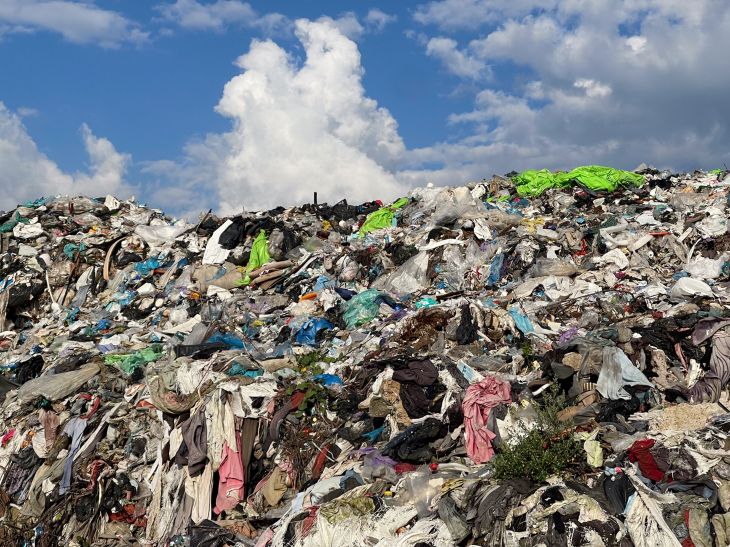
The District of Muskoka has released a new 30-year Solid Waste Master Plan that aims to dramatically reduce the amount of garbage sent to landfill, extend the life of the region’s only active landfill site, and modernize waste services across Muskoka — but it won’t come cheap.
The strategy is estimated to require roughly $3.175 million in capital expenditures between 2026 and 2035 to implement the identified initiatives. The plan also estimates an additional $1.71 million in annual operating costs once all identified programs are in place. Yet officials also acknowledge that the eventual cost of some of those initiatives remains unknown pending future studies.
The report also states that implementing the Master Plan will require phased increases in the Solid Waste Levy. Under the status quo, solid waste rates are projected to rise by about 1.3% annually, while implementation of the Master Plan would increase that to approximately 2.18% annually over the next decade.
For households, the projected average solid waste levy would increase from $253.11 per household unit in 2026 to $311.54 by 2035 under the Master Plan scenario, compared with $283.63 under the status quo.
At the heart of the plan is a growing concern: the Rosewarne Landfill in Bracebridge, Muskoka’s sole active landfill, is projected to reach capacity in approximately 16 years if current waste disposal habits continue. District officials warn that without significant changes, the site could be full by 2042.
What is notable is that while the plan acknowledges that additional disposal capacity will eventually be required, it does not recommend a specific end-of-life solution for Rosewarne. Instead, it calls for future evaluation of options such as:
- Expanding or further optimizing the existing landfill (if feasible).
- Developing or securing access to another landfill site.
- Exporting waste to facilities outside Muskoka.
- Alternative waste processing technologies, including energy-from-waste systems.
The report states that these options require further technical, environmental and financial analysis before any decisions can be made. As a result, the costs associated with a future replacement landfill, landfill expansion, waste export contracts or energy-from-waste facilities are not included in the current $3.2-million implementation estimate. Consequently, some councillors were critical of the plan noting that there are too many unknowns, and while the plan provides a roadmap to delay the problem, it does not yet answer the question of where Muskoka’s garbage will go after Rosewarne is ultimately full. That decision—and likely the largest future cost facing the waste system—has been deferred to future studies and councils.
The master plan, developed with public input and guidance from a community-based steering committee, outlines a roadmap to 2056 focused on reducing waste generation, expanding diversion programs, and exploring new technologies to preserve landfill space, but conspicuously missing are tangible solutions once the landfill does reach capacity.
Ambitious Waste Reduction Goals
The District currently diverts about 37 per cent of residential waste from landfill, trailing the provincial average of 49 per cent. Officials are now aiming much higher. The plan sets a target of reducing average waste generation from 275 kilograms per person annually to between 50 and 100 kilograms over the next decade.
District staff say achieving that goal would significantly reduce pressure on the Rosewarne Landfill while lowering greenhouse gas emissions and creating a more sustainable waste management system.
New Bag Tag System
One of the most noticeable changes for residents is a new annual bag tag system, scheduled for implementation in 2028.
Instead of the current weekly garbage limits, households would receive 80 garbage tags each year. Every garbage bag placed at the curb or delivered to a waste facility would require a tag. Residents who exceed their annual allotment would need to purchase additional tags, with the funds generated from the sale of the tags offsetting the cost of the overall program. The District says the system is intended to encourage waste reduction while providing flexibility for both year-round and seasonal residents.
The plan also recommends exemption programs for households that generate additional waste because of medical needs or child-care requirements. The tag system is estimated to cost $400,000 annually in operating costs beginning in 2028 for administration and distribution, and $50,000 in capital costs.
There were logistical concerns regarding the bag tag implementation and the impact it would have on secondary units. Council heard that all legal secondary units would receive the same number of tags. One councillor referred to it as “too many moving parts,” but in the end, the majority of the council approved it.
Organics and Reuse a Major Focus
A significant portion of the strategy focuses on keeping food waste and reusable materials out of landfill.
The District plans to investigate expanding organic waste processing facilities, evaluate the use of third-party composting services, and develop a strategy to divert construction, renovation and demolition materials from disposal sites. Officials note that food waste currently makes up between one-quarter and one-half of the garbage stream, representing a major opportunity for diversion.
The plan also calls for expanded reuse programs, including partnerships with community organizations to collect household goods and textiles.
Curbside Collection for Lake of Bays
Residents in the Township of Lake of Bays will eventually see curbside waste collection introduced.
The master plan recommends studying the feasibility of replacing the area’s current reliance on transfer stations with curbside service. District officials believe increased convenience would boost participation in recycling and organics diversion programs.
The plan also proposes expanding curbside collection to include additional materials such as batteries and textiles and potentially introducing a pay-per-use bulky item collection program.
Addressing Illegal Dumping and New Technologies
Other recommendations include creating a strategy to combat litter and illegal dumping, implementing waste education programs in schools, improving public communication tools, and exploring artificial intelligence-powered customer support for waste-related questions.
To maximize landfill capacity, the District will also examine options such as shredding bulky waste, using alternative landfill cover materials and remediating the closed Rosewarne East landfill.
Immediate Priorities
Several initiatives are expected to begin as early as 2026 and 2027, including efforts to reduce litter and illegal dumping, launch school outreach programs, improve waste education tools, study future organics processing options, develop a disaster debris management strategy, and begin planning for the new bag tag program.
District officials say the plan reflects strong public support for a more ambitious approach to waste management, with residents consistently ranking environmental sustainability and cost-effectiveness as top priorities. Surveys conducted during the planning process showed broad support for moderate to aggressive action to reduce waste and preserve Muskoka’s natural environment.
If successful, the strategy could significantly extend the life of the Rosewarne Landfill, delay the need for costly new disposal facilities, and move Muskoka closer to its long-term vision of sending little or no waste to landfill by 2050.
But many of the larger projects in the plan are still only at the feasibility study stage. The report repeatedly notes that the costs of future facilities, expanded organics processing, energy-from-waste options, and other major infrastructure are not yet included, meaning the final price tag could be significantly higher.
After much discussion, the majority of the District Council endorsed the plan, but the financial aspects of the plan will still have to be revisited at budget time.
Want to dig deeper? You can find the report HERE.
Don’t miss out on Doppler!
Sign up here to receive our email digest with links to our most recent stories.
Local news in your inbox so you don’t miss anything!
Click here to support local news
Not sure this 80 bag tag system is realistic for some households- no indication that there is a consideration for household income or number of residents in household. How was that magic 80 arrived at?Waste management is a highly visible experience of District service relationship with taxpayers, so bound to be controversial. I guess I should read the staff report you link and look forward to more information about strategies proposed.
Why don’t we have an incinerator???? I can not reduce my garbage any more. I put very little out. And I’m NOT IN FAVOUR OF BUYING GARBAGE TAGS. I Think more LIMITS ON GARBAGE IS GOING TO CAUSE PEOPLE TO THROW MORE GARBAGE ON ROAD SIDES. WHY DONT YOU GET THE FACTORIES TO MINIMIZE THE WASTE IN EXCESSIVE PACKAGING. IM NOT PAYING ANYTHING MOREM MY TAXES PAY FOR TLGARBAGE DISPOSAL AND I CAN BARELY AFFORD MY PROPERTY TAXES NOW.
Basically the District is saying Legacy Tax Payers have had their taxes wasted and completely mismanaged by expensive consultants, negligent staff and councils.
They are also blaming the taxpayer.
After decades of taxes paid, the top-heavy District and Townships rather than managing the resources paid for by taxpayers have completely broken the social contract, and are now demanding even more money on top of their already egregious inflationary tax increases.
Where exactly has the money been going for decades?
What happened to the massive savings from the uploading of recycling services to the Province combined with the slashed services to businesses now conveniently labeled “producers”.
All waste has already been taxed multiple times over, by the time it hits the curb or bin so how is it not already accounted for?
Where is all the money going GHD, WSP, HDR?
Very interesting that every municipality in Ontario is “organically” moving towards the exact same subscription based racket for waste, with bag-tags etc.
This should mean huge profits for somebody from the broken software and hardware coupled with service contracts they’ll scam the municipal governments into.
We should view “waste” as a “resource” to be used, ideally in totality.
There is more “usable stuff” in our waste than we would find in freshly mined ore. It just needs to be better classified and reclaimed. This looks like a daunting job but when you think of the cost of finding and developing a new mine for some mineral this cost starts to look smaller.
Prevention at source is also overlooked. There is much packaging that is not done in any easily recycled form. If consumers paid a bit more attention to the packaging that they must dispose of when they buy something it might help, though one has to admit that there is virtually no direct way for the consumer to have much input on this in the short term.
This said, I do hope that any new plan will make some allowance for businesses that cater to tourists. We pay a lot of taxes as we usually occupy fairly prime real estate but we currently get a zero allowance for our domestic trash that tourists create during their stay. This is quite simply not an acceptable way for the District to treat these businesses. If one looks at the breakdown of the municipal tax bill one can see that they are being charged for “waste disposal” but these same businesses are denied the ability to dump any quantity of garbage. Unlike “households” where permanent residents have every opportunity to learn and reduce their waste, these businesses have to try to instantly educate their customers regarding all aspects of the local waste system and even then are granted no allowance based on the effective number of households they represent when they are operating at full capacity. This is taxation for a service denied to them and is possibly even illegal and should be changed.
As for curbside pick up in Lake of Bays, I can think of no better way to spread trash around on the roadside. I can see no real need for it. Our transfer station system seems to work well and before I’d sign on to curbside pickup I’d want the issue of business allowances addressed and also to see a thorough analysis of the costs of curbside pick up vs the current system. I have not seen even a hint of this analysis to date. It needs to be done and done in a transparent public manner. This could become an election issue this fall.
Simply the timing of curbside pickup would be a big issue for my business. If the services of things like Canada Post rural route are anything to go by the curbside pickup will be a disaster. I note that Canada Post is heading in the opposite direction from our waste plans in that they are dong their best to eliminate rural route delivery altogether, favoring customers having to go to the actual post office or one of their communal mail box sites.
I’d propose to eliminate all the foolishness about bags, (size color and number) and simply charge a fee per pound to dump all waste that is not recycles. This would require a better accuracy of scale at the transfers and increase the workload for the scale attendant but they are already talking to every person entering. They would need to re-weigh before departure and that might be an issue but maybe technology could help here. Think a second scale, one each side of building, one in, one out and credit card registry for all users so that the bill appears automatically on your credit card, thus no need to stop and pay cash for every user which could be slow.
Our waste charge on our tax bill should then be eliminated as we would all “pay as we used”, a fairer way to charge for waste as it would place the cost on those that created the waste, not those who recycled and reused stuff to reduce the waste in the first place. The cost of waste should not necessarily be tied only to real estate assessment as it currently is as many of us have assessments driven to stratospheric heights by real estate values and nothing else. No relation to wast created of income from which to pay.