
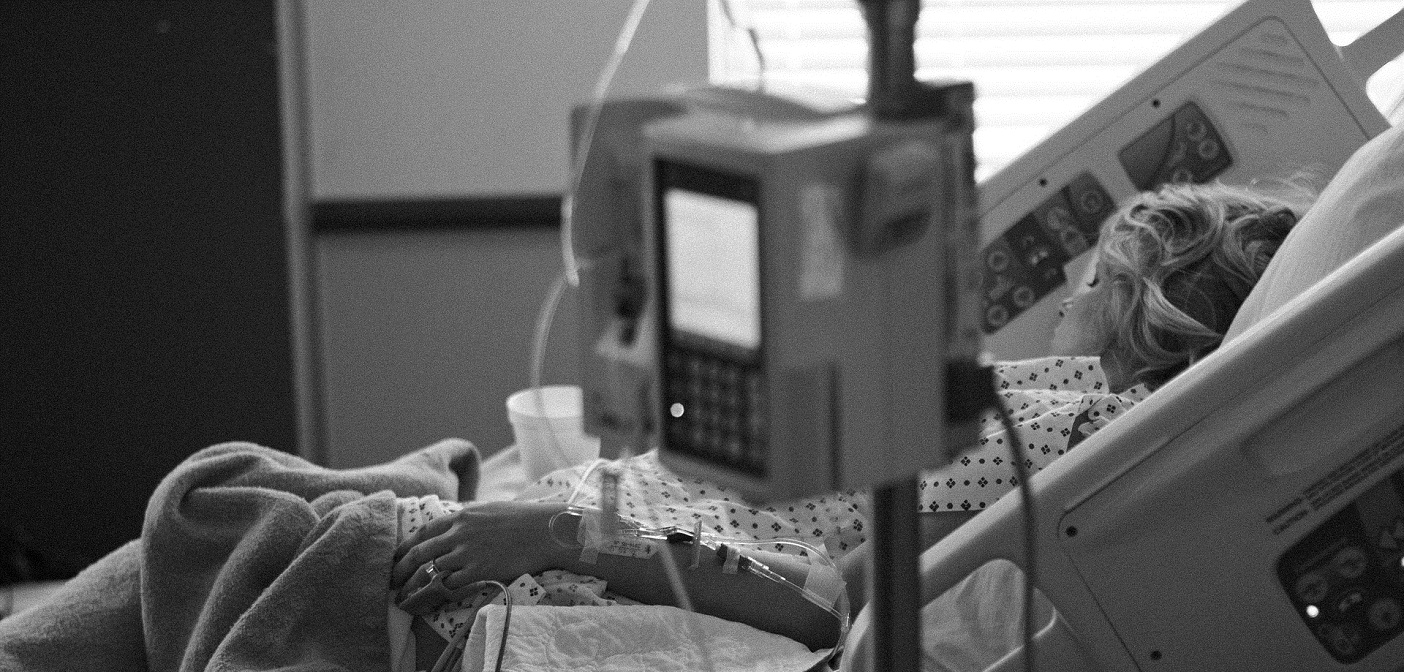
About 150 people in Muskoka suffer from a stroke each year and depending on the severity of the stroke, some will need to be relocated elsewhere. That’s because despite the best intentions of local healthcare providers, there are no designated stroke rehabilitation beds in our community.
Patients in need of intense stroke rehabilitation are relocated
Dr. Mackenzie Brooks, a psychologist from BC, encountered the issue first hand when she flew to Huntsville to care for her sister, who suffered a stroke last month.
“I’ve seen and learned a few things here,” she said.
Anybody who knows a stroke victim, the sooner they’re assessed and put in rehab in a familiar environment with access to their family, the better their chances at recovery. That’s not seemingly happening here, whatsoever.Dr. Mackenzie Brooks
Brooks said she was disappointed to learn that proper rehabilitation services were not available for her sister in her own community. She was told her sister would be transferred to North Bay but on the same day the transfer was scheduled to take place she was told the bed was no longer available. She said Huntsville staff tried to cast a net to find her a bed elsewhere, areas such as Toronto, Hamilton and Barrie, but they were not sure when one would become available and she was told it could take weeks. In the meantime, she said, her sister was already three weeks into her stroke.
“Huntsville Hospital, they’re amazing here. They spent I don’t know how many hours of staff time case managing and planning a strategy for her and then at the last minute having it pulled out from underneath her,” said Brooks who went to the media with her concerns. She contacted the Toronto Star’s health reporter who she said made some calls.
“A bed magically became available the very next day by 10:30 a.m.,” she said.
There is something going on in Northern Ontario that’s very concerning… If they don’t get into rehab quickly it increases the chances that they’re going to be institutionalized, which is very costly. They’re dependent on the system… it has life-long consequences for a stroke victimDr. Brooks, who wondered how many others experience similar situations
We asked Natalie Bubela, CEO for Muskoka Algonquin Healthcare, which manages both the Huntsville and Bracebridge hospitals, for input on the issue. She confirmed that Muskoka is part of the Central East Stroke Region, one of 11 established by the Province to co-ordinate stroke care. And while Huntsville is considered a district stroke centre, it has no dedicated rehabilitation beds.
“We do not have designated acute rehab beds. We’re not funded in the organization to provide that, however we do have on any given day patients that are recovering from a stroke in our acute care beds and we look after them,” said Bubela.
Huntsville hospital is considered a stroke centre for patients who wind up in its emergency department because it is able to provide services that are required to look after patients who suffer from strokes. It also provides services like speech language pathology, physiotherapy and occupational therapy. The problem occurs when patients require more intensive rehabilitation.
From time to time though, the type of care or the intensity of what the patient requires is beyond what we’re capable of providing. So if someone needs very detailed physiotherapy that is very active, so potentially a couple of hours a day in services, we’re not equipped to provide that here… we then attempt, after we’ve assessed the patients and what their deficits are and what their needs are, to match them to the appropriate stroke rehabilitation centre and then we get them in there MAHC CEO Natalie Bubela
Bubela said wait time for a rehabilitation bed averages about 10 days.
Stroke patients, duration of hospital stays and those relocated by the numbers
She said in 2013/2014, MAHC saw 147 stroke-related cases. The average length of stay for those patients was approximately 9.15 days and 12 were referred elsewhere for rehabilitation services, the majority to Penetanguishene. In 2014/2015 Muskoka had 137 stroke-related patients. Their average hospital stay was 10.5 days and 26 of those patients were relocated elsewhere, the majority to North Bay.
More recently, between April 2015 and January 2016, MAHC has seen 136 stroke patients. “I think if you extrapolate that to the end of our fiscal year we will be in line with what we did back in 2013/2014, maybe a little higher,” said Bubela. She said the average length of stay is currently at 10.73 days and so far 20 patients have had to be referred elsewhere for rehabilitation services with the majority going to North Bay.
The promise of beds put on hold
Attempts have been made to get funding for rehabilitation beds in Huntsville, but to date those attempts have been unsuccessful.
The North Simcoe Muskoka Local Health Integration Network (LHIN), which distributes and co-ordinates health care funding dollars in the area, considered creating rehabilitation beds at three different hospital sites in the area.
“At one point they were actually looking at three areas in this LHIN to have those designated beds,” said Bubela. The sites were Huntsville, Orillia and Barrie. That proposal put forward between 2012 and 2013 was put on hold on what she presumes was the advice of the Ministry of Health.
Pilot project could see results here?
“They are doing a pilot right now in the Barrie corridor to just understand the cost and what the actual staffing and operation requirements are needed to actually have these stroke rehab beds. Our hope is that when the pilot is done in the Barrie centre that they move ahead with designating Huntsville and Orillia to have stroke beds,” she said.
It is not certain just how long the pilot project will take to complete, “it could be any time now,” said Bubela.
Not everyone is hopeful
Dr. Timothy Lapp, who specializes in physical medicine and rehabilitation in Huntsville lamented that it has taken this long for those beds to materialize.
“There was a proposal made that was thought to be very cost effective for new stroke rehabilitation beds to be provided in a number of hospitals not just south. So there would’ve been more beds in Orillia and in Huntsville and we were supposed to receive approximately 10 beds and with that there would be funding for specialized nursing, specialized physiotherapy, specialized occupational therapy, specialized speech and language pathology, an intensity that would allow us to perform our own rehabilitation here in Muskoka. The government didn’t accept that proposal and is now in the midst of deciding how this might work,” said Lapp.
There’s a pilot project underway involving patients from Collingwood and Barrie to look at this more intensive rehabilitation method but as it stands right now Muskoka has been shut out of that so we’re left with again doing the best we can with the resources that we have and I don’t see any likelihood in the near future for us to get any funding for dedicated rehabilitation beds. Dr. Timothy Lapp
He argued that research out of London aptly demonstrated the cost effectiveness of an integrated stroke unit to manage stroke patients “rather than haphazardly managing on other floors with non-specialized nursing and therapy staff.”
He said the stroke council, which he sat on, agreed with the position that the creation of rehabilitation beds would be a cost effective way to go about managing stroke victims in North Simcoe Muskoka. “The government didn’t accept that explanation and felt they wanted to rework the numbers and needed more evidence before they considered funding it. “It’s very disappointing, I can tell you that.”
There’s no question that Muskoka in particular “appears to provide substandard, inappropriate stroke care despite the best intentions of the people involved who are working pretty hard at this but it’s beyond their capacity,” said Lapp.
Cheryl Moher, Regional Director for the Central East Stroke Network explained in a written statement, “There is an ongoing need for rehabilitation system change particularly to improve access to hospital-based outpatient rehabilitation and CCAC (Community Care Access Centre) services.” Click here to see her full response (PDF).
She said the pilot project underway is expected to “influence implementation in the other parts of the LHIN.”
CAO argues for a new hospital model
In the meantime, Bubela also made a pitch for developing one brand new hospital for Muskoka.
“If we were to get the (stroke) beds tomorrow we would have difficulty bringing them in because we don’t have the room,” she said.
We would shift people around and do our best to accommodate the beds but that would then influence our infection control practices where we try to have people in single rooms, etc. It would be a challenge and a stretch for us because we don’t have a big physiotherapy area here for the rehab like a big purpose-filled gym… that’s the appeal of a new hospital build . Bubela
Bubela noted that staff is doing a phenomenal job at dealing with stroke patients at the acute care level. She said the hospital has started placing all stroke patients together in one unit within the past three weeks and has developed outreach educational programs for stroke patients and their families in the past year.
Liked this story? You might like these ones, too!
Fairvern turns to Town and District for help with redevelopment needs
Local health practitioners call on Minister of Health to protect acute care in both hospitals
Don’t miss out on Doppler! Sign up for our free, twice-weekly newsletter here.
Thank you, Tamara, for writing this comprehensive article about my sister & about your provincial government’s unconscionable gutting of services provided by your Ontario Hospitals.
My sister & our family are experiencing first hand this travesty. I now know that we are not the only ones.
FYI: Today, we were informed by the North Bay Regional Health Centre that – after only two weeks of rehab – they were once again going to pull the bed from my sister and kick her to the curb. Regardless of the fact that my sister has been making many positive steps forward during these two weeks.
Neither my sister, nor us – her siblings – have been provided with an answer that makes any sense to us as to why this hospital is yanking the bed from under my sister when she has only been provided the two week assessment period and not the up to eight weeks of intensive rehab that she has a right to & would have a profound positive impact on the quality of her future life.
For some reason, unfathomable to us, this hospital is refusing to provide the very rehab services they were designed to provide to the very person who requires their services.
How does anyone make sense of this service provider’s behaviour?
Once again, the amazing staff at Huntsville Hospital are stepping up to the plate and, even though they operate with limited resources, are again coming together and case managing a plan to do whatever they can for my sister. I thank each and everyone of you for modelling the standard for what Canadian Health Care Services are meant to be and we have a right to expect.
If you find these current conditions as appalling and as galling as I do, I thought you might interested in knowing that you are not the only one AND there is something you can do about it. The following link will take you to an article in the North Bay Nugget where citizens, like you and me, have decided they have had enough and are not going to stand idly by and let this gutting of services continue.
Remember, you end up with whatever you tolerate.
‘Big fight’ on the horizon | North Bay Nugget
http://www.nugget.ca/2016/04/20/health-coalition-plans-referendum-on-hospital-cuts
I previously sat on two LHIN committees, and I hasten to point out that these ridiculous situations, i.e. being a designated stroke centre without any acute care beds for stroke victims, is not due to a lack of care or appropriate analysis at the committee level. Many members sit on multiple committees, which meet for three hours monthly. In considerably less than fifty hours annually, they are tasked with researching, analyzing, and preparing various reports, while adhering to their vision/mission statement and the strategic plan of their committee. Moreover, partisanship with respect to their constituents only obfuscates consensus.
I have consistently supported a new hospital on the Port Sydney site. Although Provincial priorities have shifted toward infrastructure expenditure, it is to be expected that such a facility would be a multi-year, staged construction. Therefore, either dedicated, acute-care beds for stroke patients could be included in Stage 1, or if Stage 1 was otherwise constituted, a shift from the other towns would create the space in their facilities.
The other possibility would be a rapid resolution of the Fairvern conundrum. The resulting domino effect would likely accelerate the construction of the senior care facility on District Road 3 N. They could include the required beds, but as a for-profit facility, they would not be covered by OHIP.
Regardless, the status quo is untenable. The Barrie pilot project will drag on, and will neither ensure a definitive conclusion, nor prevent a further pilot project, for say, Orillia, and eventually Huntsville. In government, the sum total of monies expended in arriving at an obvious conclusion to proceed must exceed the cost of proceeding immediately. It is, at once, their mantra and their raison d’ etre.
It seems strange that it took a psychologist from another province to contact media resources in and around Huntsville to obtain the required hospital bed overnight, and as a result of her visit, Ms. Bubela is pleased to announce that “the hospital has started placing all stroke patients together in one unit within the past three weeks and have developed outreach educational programs for stroke patients and their families in the past year”??? Maybe inter-provincial communication and resource sharing, coupled with a bit of notoriety are the solutions to better patient outcome as definitely outlined in this case?? No long waits for government decisions based on the input from a hospital board (who are following their own agenda and which may differ drastically from the majority of doctors and members of the community), just action timely received. Kudos to the Toronto Star’s health reporter for fast reaction and results, our adaptable hospital staff of amazing professionals, and to Dr. Mackenzie Brooks for showing an alternate route to take.