
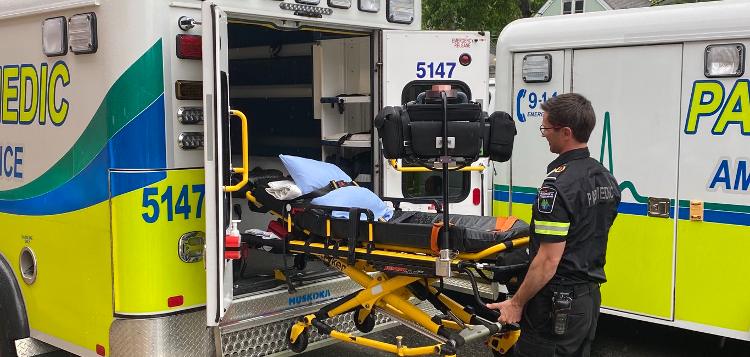
The Ontario government is investing $13.5M in Parry Sound-Muskoka to connect more people to emergency care faster and increase the availability of paramedics and ambulances in the community.
“I’m thankful and proud that our government is making significant investments in emergency care here in Parry Sound–Muskoka,” said MPP Graydon Smith. “For too long, northern and rural communities were left behind. We are fixing that and delivering the support our ambulance teams need to respond to calls across our large region. To all our paramedics and first responders—thank you for the critical work you do every day to keep our families safe.”
In Muskoka, Ontario is increasing land ambulance funding by 9 per cent, bringing the province’s total investment in the region to $7,213,406 this year. In Parry Sound, land ambulance funding is increasing 4 per cent to $6,262,072. This increase in base funding helps ensure municipalities address increased costs so they can continue to deliver high-quality emergency care. This investment is part of the almost $1 billion in land ambulance funding Ontario is providing municipalities across the province this year, representing an average increase of 8.7 per cent from 2024.
In addition, to further reduce delays paramedics encounter when dropping patients off at a hospital, Ontario is investing $109,200 in the District of Muskoka through the Dedicated Offload Nurses Program to hire more nurses and other eligible health professionals dedicated to offloading ambulance patients in hospital emergency departments.
The program allows paramedics to get back out into the community faster and respond to their next 9-1-1 call sooner and has played a significant role in reducing ambulance offload times and increasing ambulance availability for 9-1-1 patients across the province. As a result of this investment and the dedication of health-care professionals, provincial ambulance offload time has been reduced by approximately 65 per cent since its peak in October 2022.
“Our government is making record investments to protect Ontario’s health-care system and connect people to the care they need, when they need it,” said Sylvia Jones, Deputy Premier and Minister of Health. “Through these additional investments, we are providing paramedics and emergency departments with the tools they need to connect more people across the province to high-quality emergency care, faster and closer to home.”
To ensure urgent patients receive critical care sooner, Ontario is also continuing to implement the Medical Priority Dispatch System (MPDS) across the province. The system helps to better prioritize and triage emergency medical calls and dispatch paramedics sooner. The province has expanded the use of MPDS to Mississauga, Kenora, Thunder Bay, Ottawa, Renfrew, Georgian, Kingston, Lindsay, Oshawa and Timmins and is accelerating progress to implement the system at the 10 remaining Central Ambulance Communication Centres across Ontario over a year ahead of schedule. Through Your Health: A Plan for Connected and Convenient Care, the Ontario government continues to take bold and decisive action to protect the province’s health-care system and ensure people and their families have access to high-quality care closer to home for generations to come.
Don’t miss out on Doppler!
Sign up here to receive our email digest with links to our most recent stories.
Local news in your inbox so you don’t miss anything!
Click here to support local news
This is good news for the area. Yes, getting more beds and more doctors will help. Having more Paramedics also helps. Paramedics treat patients for certain illnesses and injuries in the field. This leads to shortened ER or hospital stays and improves recovery times. For some medical issues Paramedics can treat in the field and often times the patient does not need to go to the hospital. Having Advanced Care Paramedics (Paramedics who can provide more care to patients in medical and trauma emergencies) help. Having Community Paramedics (Paramedics who visit homes of patients with chronic illnesses like diabetes, chf and COPD, to help them manage their illnesses better to keep down trips to the hospital). Paramedics often have to take patients from the scene to a hospital for specialized care.
In short adding more ambulances is good for the community.
Frees up the ambulances by offloading the patients faster.
If the emergency department is already overloaded where are these patients going?
The finding does nothing to solve the overloading problem in the ER.
Just another photo opt solving one problem and creating another.
This appears to be regular inflationary money dressed up for “photo/ media opportunities. You can put more ambulance, nurses or paramedic on the street but if there is no beds in the ER they can not unload
When the CMA & Government start licensing more Doctors MANY. MANY trips to the ER would be reduced I was shocked to read the stats of American, European and many other countries who have applied for accreditation and are waiting months and years. Lots of excuses but no assistance with short educational upgrades available
The logjam of ambulances tied up at hospital emergency wards was indeed a problem .. Hopefully this funding keeps the ambulances on the road able to respond and not spending time in patient care at the hospitals .