
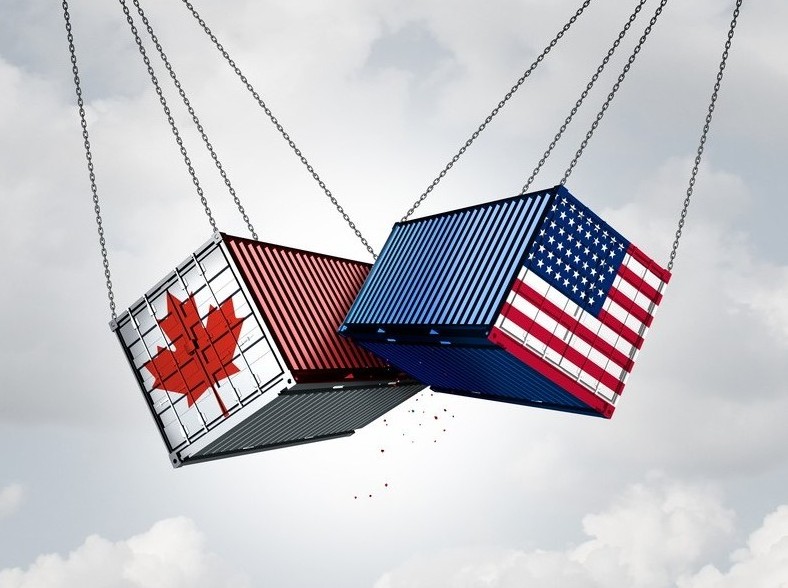
This past week was a good one for United States President Donald Trump. He got his massive “Big, Beautiful Bill” through Congress. It was a squeaker both in the Senate and in the House, but nevertheless, a win is a win, no matter the pressure applied or the promises made.
The result was unprecedented power for the President of the United States.
On the other hand, Canada’s Prime Minister Mark Carney has not recently had the best couple of weeks.
He came out of the G7 Summit meeting in Alberta looking pretty good. He had managed to get his signature legislation, Bill C-5, passed by both Parliament and the Senate in record time. He moved quickly to solidify and improve Canada’s relationship with other world leaders.
He also established a cordial but firm collaboration with the United States in dealing with threats of crippling tariffs on Canadian goods by the Trump Administration. At the G7 Summit, this resulted in a commitment by both Trump and Carney to negotiate a trade agreement within 30 days.
But then came the unpredictable reality of Trumpism that anything can happen or change in a nanosecond, depending on what goes through the President’s mind at any given time. In this case, in spite of the agreement just days before, he stopped all tariff and trade negotiations with Canada because of the three percent digital service tax imposed by Canadian legislation that was scheduled to come into effect on July 1st.
Clearly this is an issue that falls entirely within the negotiation process between the United States and Canada in relation to trade and tariffs. However, Trump chose to preempt that process and throw the hammer at Canada.
Faced with this, Prime Minister Carney had a hard decision to make, and in order to keep trade negotiations going, he agreed to rescind the digital services tax. Was this the right thing to do? Some people certainly didn’t think so.
Lloyd Axworthy was the Minister of Foreign Affairs in Jean Chretien’s Liberal Government. He has blasted Carney for “taking a boot-licking approach” to Donald Trump “at the expense of Canadian values.” According to a Toronto Star article, Axworthy also said, “Forget any dreams of a more sovereign, self-directed Canada. We’re doubling down on the corporate coziness and U.S. dependency that has defined our last half century.”
The Trump Administration has boasted that Prime Minister Carney “caved” to Trump’s ultimatum and many political pundits and media outlets agreed with that.
So, Did Mark Carney bend the knee and cave in to Donald Trump?
Canadian journalist Warren Kinsella had this to say. “If Carney had kept the Digital Services Tax his critics would have said he was reckless and clueless for defying Trump. Now that he has ditched the Digital Service Tax his critics say he is reckless and spineless. Ain’t politics grand?”
I tend to come down on this matter on Mark Carney’s side. As a result of the preemptive strike by Donald Trump, Carney was between a rock and a hard place. Without question, there is a time to stand up and fight. In my view, this was not that time.
While we do not know the state of tariff and trade negotiations that are now once again taking place, there have been signs, including a statement from the United States Ambassador to Canada, Pete Hoekstra, that a deal acceptable to both Canada and the United States is in the works and not far away.
Yes, given the reality of Donald Trump, that needs to be taken with a large grain of salt. With Trump, it isn’t even over, when it’s over!
Mark Carney knows where these trade negotiations are now, and he had to decide whether to walk away or do what was needed to keep the talks going. As I have said, it was a tough decision, but I think it was the right one.
However, there is a very short window on this. If trade negotiations don’t end in a manner acceptable to Canada by July 21st or shortly thereafter, it is a whole new ballgame. That outcome can only result in “elbows up” big-time.
As an article in the Toronto Star points out, Donald Trump has, “mused about using economic force to annex Canada. As if taunting or teasing this country, he questions why it exists and keeps floating the prospect of it becoming the 51st state.” That is a hard act to follow.
If Prime Minister Mark Carney can negotiate a trade deal that is acceptable to Canada, loosely within the timeline that both he and Trump have agreed to, and if he can deal effectively with perhaps the most erratic and unstable president in the history of the United States, then he (Carney) will be remembered as one of our great prime ministers.
I still see it, however, as a long shot, given Trump’s nature. If that turns out to be the case, then the gloves need to come off. We would need to meet Trump’s tariff for tariff, threat for threat. We would need to accept that the United States is no longer our closest ally but rather, our closest threat. We will need new and strengthened alliances and trade agreements that, out of necessity, may cross the line of acceptable foreign relationships.
That will be a tough transition, not only for the Canadian government but for Canadians themselves. The hard facts are that the world is changing, the axis of power is changing, and the relationship between Canada and the United States will never be the same.
For decades, Canada has defined its international identity in large part through its proximity, geographic, economic, and cultural ties to the United States. Now, without a comprehensive, mutually acceptable trade relationship between the two countries, that closeness, by definition, is changing — and not for the better.
If our diplomatic relationship with the Trump Administration in the United States turns into open hostility, Canada will have to summon a new kind of resolve, redrawing its place in the world, building meaningful bridges elsewhere and awakening to the realities of an unpredictable neighbour with whom there would now be an unfriendly relationship.
Hopefully, it will not come to that. The best solution is a compatible relationship and trade agreement with the United States. Mark Carney was right to do what he had to do, in light of Trump’s unpredictable personality, to keep open the door to meaningful trade negotiations.
Whether that will turn out to be an effective approach should become clear in the next few weeks.
Prime Minister Mark Carney is operating, through no fault of his own, in a world of poor choices that illustrates the chaos of dealing with Donald Trump, according to former Quebec Premier Jean Charest. “Deciding to scrap the Digital Services Tax in that context,” he said, “was certainly a legitimate choice.”
It is difficult, if not impossible, to know what is coming next from the Trump Administration. We can hope for the best, but must also be prepared and ready for a serious ‘elbows up’ plan B to protect and strengthen Canada.
That is the ultimate challenge for our relatively new Prime Minister.
Failure is not an option.
Hugh Mackenzie.

Hugh Mackenzie has held elected office as a trustee on the Muskoka Board of Education, a Huntsville councillor, a District councillor, and mayor of Huntsville. He has also served as chairman of the District of Muskoka and as chief of staff to former premier of Ontario, Frank Miller.
Hugh has also served on a number of provincial, federal and local boards, including chair of the Ontario Health Disciplines Board, vice-chair of the Ontario Family Health Network, vice-chair of the Ontario Election Finance Commission, and board member of Roy Thomson Hall, the National Theatre School of Canada, and the Anglican Church of Canada. Locally, he has served as president of the Huntsville Rotary Club, chair of Huntsville District Memorial Hospital, chair of the Huntsville Hospital Foundation, president of Huntsville Festival of the Arts, and board member of Community Living Huntsville.
In business, Hugh Mackenzie has a background in radio and newspaper publishing. He was also a founding partner and CEO of Enterprise Canada, a national public affairs and strategic communications firm established in 1986.
Currently, Hugh is president of C3 Digital Media Inc., the parent company of Doppler Online, and he enjoys writing commentary for Huntsville Doppler.
Don’t miss out on Doppler!
Sign up here to receive our email digest with links to our most recent stories.
Local news in your inbox so you don’t miss anything!
Click here to support local news
Carney’s move has many sides. The Digital Services Tax has sat mostly unused for some time since inception (16-Nov/22), and may have never been threatened if everyone was playing nice. It’s one of the probably many cards that Canada and other nations have on the table, yet not seen by those only thinking of self gain. Like the tariff threats, on again off again. The Digital Services Tax is better than (on again/off again threat). It’s just there, and known. The US copper tariff is a bully threat. It won’t go into effect for 3 weeks. Lame. Copper tariff is a “fishing for a reaction” ploy. There probably won’t be a Canadian reaction unless it’s regarding the tariff implementation. Cut the shipments off now would be one possible reaction, don’t let them stock pile for 3 week. Or the better way, wait and see, he could move the tariff back until Christmas. The Digital Services Tax can be in operation in 5 minutes.
I agree with you Hugh, the DST had to go. It was likely always going to be gone in any negotiations anyway. In reality, it didn’t cost us a cent as it was a tax that had never been collected so it was an easy thing to give up for the bigger goal.
A great piece Hugh. Boot licking seems to be at work in this country as well. Trump and Carney are both business men, both are commanding their followers in a similar manner. Only time will tell where either country is after the tornadoes on both sides of the border have passed. In the mean time hold onto your hats and anything else that isn’t tied down. This tornado season is scheduled to last for four years.
Despite the short-sighted critics, Carney was right to ditch the DST for now. The 3% revenue from the DST for a year is the same value as our exports to the US every day. The DST is a very legitimate tax on foreign companies doing e-commerce and e-advertising in any country including the USA. But the DST should be more than the 3% first enacted by Canada. It’s much smarter for Canada to join the OECD strategy on the DST when the time is right. Maybe after Trump is gone and the US elects a smart, far-sighted and fair-minded president.
The DST would have been paid by Canadians anyway.
The tech companies would have just added a 3% DST to their fees for Canadians.
It never would have come from their massive profits.
“Costing You More… 5 Ways the Digital Services Tax Will Impact You
Your next online purchase, ride share, meal delivery, or vacation could soon cost even more now that the Digital Service Tax is implemented.”
It seems there is no likelihood of appeasing the President. He has his agenda and extremely wealthy friends and supporters. We lost a lot of revenue we need with the death of the digital services tax ( nice wedding gift for Jeff Bezos) – worse we signalled that Canada will be soft in “negotiations.” Dairy supply management is next. Not sure that any level of charm or lobbying American interests will substantially help Canadian jobs and steel, aluminum and agricultural business. Our PM must commit to draw the lines very clearly and firmly.Canada’s values and resources are not negotiable. The President has been clear about his priorities. The passage of the Big Beautiful Bill and some U.S. Supreme Court decisions signal more chaos. We will be under siege for a long time.
In 1968 Henry Kissinger said “the word will go out to the Nations of the World that it may be dangerous to be America’s enemy but to be America’s friend is fatal”. Nothing has changed much since his comment.