

On a February morning in Muskoka, the world can feel very far away. The lakes are frozen solid. The roads are quiet. The skies are impossibly blue. Snowbanks rise higher by the day. The concerns are practical: heating bills, staffing shortages, bridge repairs, and whether the plow will make one more pass before morning.
Many of us learned steadiness here long before we had language for it. Bussing tables at Friendly Acres. Caddying at Hillside. Flipping pancakes at Strawberry Suppers and staying for baseball on summer evenings. Showing up early. Cleaning up after. Learning that contribution matters. Life here has always required steadiness — not only from the weather.
In small communities, our strengths and insecurities are visible. It is troubling when political, religious, or ethnic differences slip into mockery, and repetition turns into condemnation — when debate resembles a schoolyard dynamic we should have outgrown. When belonging depends on belittling others, culture erodes. So does character. That erosion shapes who feels welcome — and who chooses to stay.
Communities like ours rely on newcomers and essential workers. Our resorts struggle to find staff, and our health care system depends on skilled professionals from around the world. Many who support our tourism economy come from backgrounds different than our own. When online anger spills into everyday interactions, recruitment and retention become harder. In a region where housing is scarce and seasonal turnover is high, belonging is already fragile. We should not make it harder.
These local pressures exist within a wider global moment. Democracies are under strain. Groceries cost more almost everywhere. Technology is reshaping work faster than many families can adapt. Migration pressures are real, and public safety concerns are debated across countries. Politics has grown more polarized. It is tempting to believe every strain has a single local cause. Blame travels faster than explanation. The reality is more complex — and political tone matters.
Over the past decade, anger has become a political asset. When division becomes strategy, fellow citizens are recast as opponents to defeat rather than neighbours to persuade. That approach may win campaigns, but it leaves communities weaker long after the signs come down. Democracies depend on habits — restraint, respect, and a shared commitment to rules that protect everyone. Those habits are easy to weaken and slow to rebuild. Institutions are imperfect and evolving, but anger is rarely a good architect.
In Muskoka, our relationship with the United States reflects that complexity. Families from south of the border have been coming to these lakes for generations, investing in property, businesses, philanthropy, and long-standing friendships. Tourism built around that relationship employed many of us in our first jobs at marinas, docks, kitchens, and resorts, where we learned responsibility long before we understood trade policy. Veterans trained and served alongside Americans. Firefighters collaborate across borders when forests burn, and hydro crews assist one another when storms knock out power. These relationships are reciprocal and built over decades by people who chose to invest here, not just visit. The Dyer Memorial overlooking the Big East River stands as a quiet reminder that some commitments to Muskoka are meant to last.
Rural communities depend on sound fiscal management, reliable trade access, infrastructure investment, and institutions that function properly. Stability may not trend online, but it underpins everything from mortgage rates to municipal budgets. Spectacle is easy; stewardship takes more work.
Economic resilience also begins closer to home. Small businesses across Muskoka operate without the purchasing power of multinational corporations and rely on local circulation — dollars moving from customer to employee to supplier and back again. Large retailers bring efficiency and lower prices, and in tight times, that matters. But the lowest price is not always the lowest cost. When purchasing decisions consistently favour scale over community, we may save in the short term while weakening the capacity that sustains us. Once independent businesses close, they are not easily rebuilt.
The same principle applies to how we invest in our towns. When homes and cottages shift from community anchors to revolving doors, the fabric of a place begins to thin. A community cannot be sustained by occupancy alone; it requires commitment.
Canada has always been interconnected. Supporting locally owned businesses, when we are able, is not nostalgia. It is strategy. If we do not strengthen our own capacity — locally and nationally — we become more vulnerable than we realize.
Unity does not mean uniformity. Healthy democracies depend on debate grounded in facts, accountability, and respect. That is not the same as permanent outrage designed to inflame rather than inform. Unity requires a commitment to reform rather than demolition, and to protecting the institutions that allow us to disagree without tearing each other apart.
We are not broken. The world is under pressure. Under pressure, material either fractures or strengthens. Communities are no different. The better question is not who is winning, but what we are building together — in how we speak to one another, in where we spend our dollars, and in whether we choose steadiness over spectacle. Canada and communities like Muskoka are worth building carefully and defending against our worst instincts.
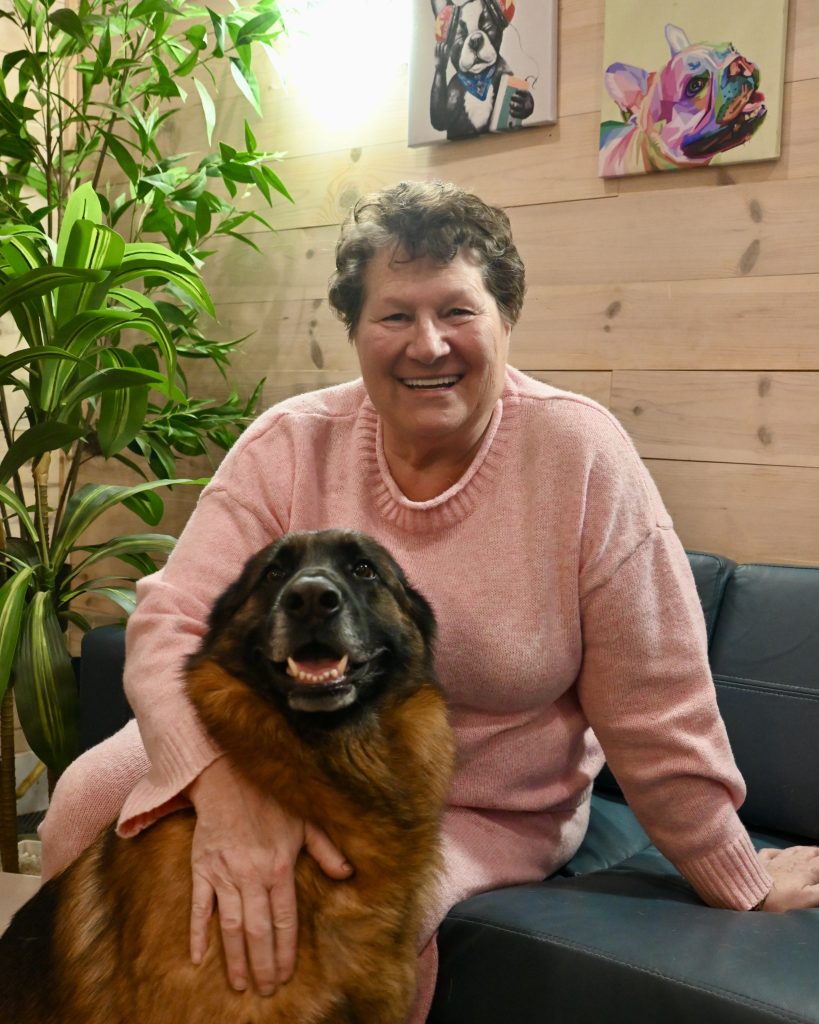
Lisa is a local business owner whose company marks its 30th year on April 1. Based on Brunel Road, her business provides playdays, boarding, and grooming services, and has reinvested in its facilities each year since opening. She writes about business, trade, and public policy, and is the former publisher and editor of Cottage Dog Magazine.
Don’t miss out on Doppler!
Sign up here to receive our email digest with links to our most recent stories.
Local news in your inbox so you don’t miss anything!
Click here to support local news
How incredible that such a fundamental lesson in philosophy could be
shared in a small online publication, stated by a pet groomer, in terms that
world leaders should take to heart.
In a seeming impossibility, the Governor-General, Carney and Poilievre held
hands at Tumbler Ridge; indigenous leaders prayed and a small town preacher
stated realities that are common to all world religions.
People learn to serve their communities through their parents.
And they also learn how to take advantage of situations like using their secondary properties as commercial entities. It is up to the local governments to take care not to let this happen. Transient tourists are meant to be housed in resorts and hotels, not the house next door.
Saw a large oversize load coming into town on Muskoka 3 north with a huge blade for one of these monstrous windmills. Can anyone tell me where its going as I don’t want to see these spoiling the Muskoka skyline.
Your look at who we are, looking deeply into how a community survives, and thrives, is insightful. I will make sure my grandkids read this and understand that they too can contribute positively in all those ‘invisible’, yet valuable ways. Show up early, clean up later, treat everyone with respect.
Lisa, a really good commentary on our current situation. Thanks for this perspective.
I’m struggling to find the substance of this word salad.
Beautifully written. Thank you, Lisa.
Well said, thank you