
It’s Wayback Wednesday, sponsored by Jamie Lockwood, broker/owner of Sutton Group Muskoka Realty!
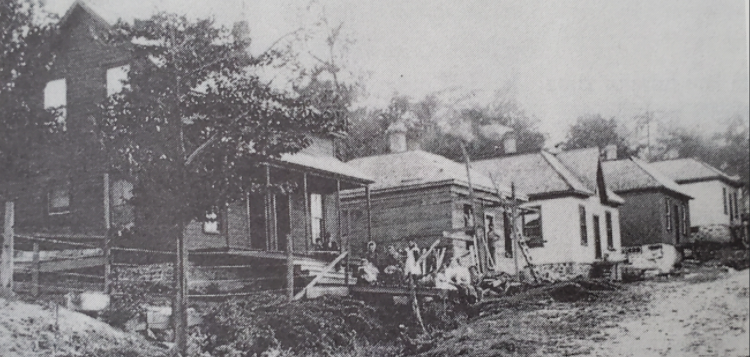
W.H. Davis moved to Huntsville in 1894, a few months before the great fire of 1894. Almost all of the buildings on Main Street between the bridge and West were destroyed in the blaze, including Davis’s butcher store. He set up a livery business at his home on the corner of West and Duncan Streets.
At that time, there was no regulation limiting the number of houses on a town lot. Davis’s entrepreneurial spirit went into overdrive and he built two housing units on the lot next to him in 1898, and two more on another lot on Duncan Street. In April 1902, he had 18 more houses planned south of Duncan Street.
Davisville, as the area was called, grew to 40 houses by 1904, with Davis building as many as six tenement houses per year. Each was two storeys high and contained seven rooms.
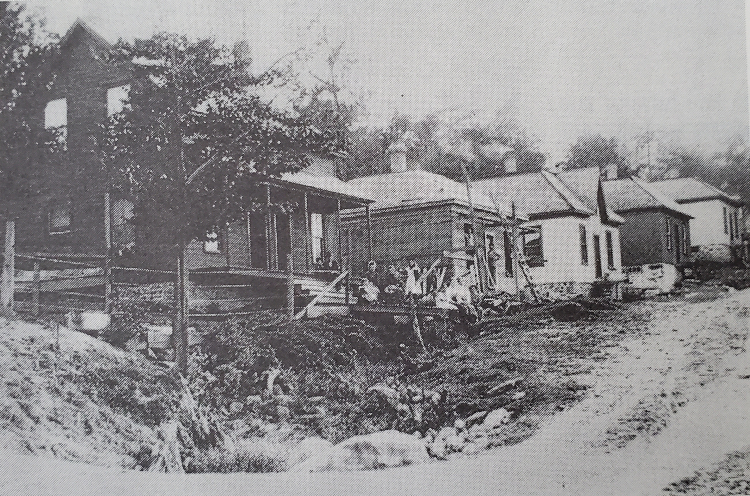
Photo and details courtesy of Huntsville: With Spirit and Resolve.
See more Wayback Wednesday photos here.
Don’t miss out on Doppler!
Sign up here to receive our email digest with links to our most recent stories.
Local news in your inbox so you don’t miss anything!
Click here to support local news
You can be pretty sure of your bet if you say that the carbon footprint from these homes was considerably less on a per person basis than that from one of the current mega cottages that grace (not sure “grace” is the right word here) our shorelines these days.
I suspect that even if unused, these modern buildings are creating an environmental footprint many times over these older ones.
Now we have the environmental problem of figuring out how to bring the environmental impact of a modern mega home or cottage back to even less than these older little homes had.
Observing the actions people in today’s society, I think we are being a bit wishful if we think Trudeau or some conference in Ireland is somehow going to solve this issue for us by 2035 in a painless manner.
I do try where I can but sadly have to admit that I am part of the problem when I look at the overall picture.
Wonder what the rent was on such a property? No driveways, but then no cars. No room to keep a horse, but who had one, and wonder where they might have planted a garden? That road would have been a corker in the winter. Maybe it still is? Those renter/workers would have likely been paid a fraction of a dollar a day.
For a bit of reference, in tyhe 20’s, Bethune Pulp and Lumber Co. rented out the Mawhiney farm house on Lake Vernon to a family for $7.00 a month, after the company had purchased the property for a new sawmill. In papers I have access to, mill men and general labor were earning under $100.00 a month, well into the 20’s. Some even less than that, if they were employees of certain businessmen. Minimum wage was alive and well in Muskoka back then!
With a minor variance, Mr. Davis could have pushed those buildings to 3 stories. But the seven rooms? The man had people warehousing all sussed out at the end of the 1800’s!
Might have been a developer, even today.