
Sexism is part of our everyday lives and constantly surrounds us, even in a modern, “woke” society.
Everyday sexism is something that as consumers and business owners we often don’t even realize is happening. A prime example of this is the price of women’s haircuts versus men’s.
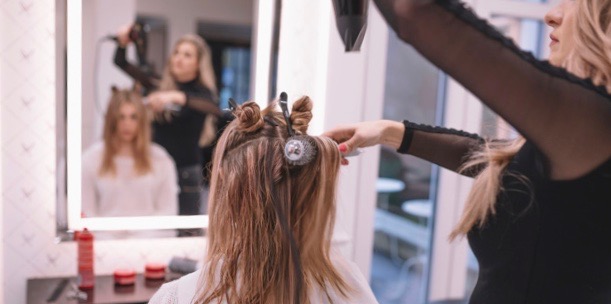
After talking to three of my friends who have short hair they told me that even though their hair is just as short as a typical man’s style, they pay the full “women’s” price which is nearly double at the salons they go to. How does that make any sense?
While researching the topic further I quickly learned that it’s very hard to find gender-neutral pricing, no matter what town or city you’re searching in. However, there are a few out there that are more inclusive.
“I definitely do not discriminate by sex,” said Stacey Thornton, owner of local hair studio Orbis. “Short hair is short hair. It doesn’t take me any longer to cut a woman’s hair short than it does to do a man’s fade. I pride myself on that. If a man has hair past his shoulders, it’s a long haircut.
“Women have also come to accept it,” added Thornton. “They shouldn’t. There are exceptions of course but there are exceptions to men’s hair also.”
By offering completely gender-neutral pricing it also is inclusive of all genders including individuals who identify as non-binary.
I think it should be a tiered system based on the amount of time spent with the client, and not anything to do with the gender of the client. I completely understand the amount of work that goes into a blow out and styling for a traditional ‘woman’s cut’ therefore if cuts were priced by time this would eliminate the sexist aspect.
When researching further I sadly discovered that haircut pricing isn’t the only thing that has the maddening “Pink Tax”. The Pink Tax is defined as the extra amount women are charged for certain products or services. This can apply to things like dry cleaning, personal hygiene products, vehicle maintenance, “girls'” toys, and of course, haircuts.
One of the most discussed markets affected by the Pink Tax is the women’s razor industry. Anne Kingston, writer at Macleans, found that women’s razors cost significantly more than men’s.
Two disposable men’s ‘Sensor 3s’: $13.99. Two disposable ‘Embrace’ Venus razors: $17.99. Eight Fusion Power blades which promise ’12 months of shaving’ cost $49.99 or $6.25 each; Four Venus blades promising ‘ComfortGlide with Olay Sugarberry Scented’ run for $31.99 or $8.00 each.
Anne Kingston, Macleans
She also took on the skeptics who could potentially argue that more work goes into women’s hygiene products than men’s. “Of course, it could be argued that the technology required to remove men’s and women’s hair differs given women’s complex curvature and our marketing-driven belief that we need to be seal-like smooth. But come on: Proshield Chill Razor’s ‘Flexball Technology’ can’t come cheap,,” she said. (Read the full article here.)
Gender-based pricing needs to end. It’s no different than race-based pricing, sexual-orientation-based pricing, or religion-based pricing.
I mean, cut us women some financial slack. We do make 77 cents on the dollar, after all, right?
Don’t miss out on Doppler!
Sign up here to receive our email digest with links to our most recent stories.
Local news in your inbox three times per week!
Frank and Tony have been cutting my hair for 40 years. When I started out with them it was $7.50, $11.00 if you wanted one of those fancy Beatles cuts. It’s now $35.
At the same time, I have less and less hair to cut so the price should be going down not up, right?
In the period when my 12-minute hair cut, performed eight times a year started til today the cost has gone up nearly five times. My wife tells me she only pays three times as much. Of course, she won’t have me mention when she got started!
.
Thanks for the well researched and sadly real facts on how our society chooses to constantly keep women financially disadvantaged.