
By Danielle McPherson
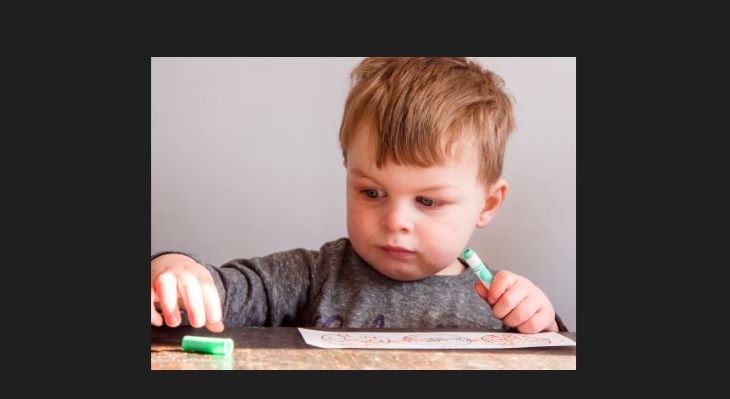
It’s been a bumpy road since the start says Huntsville mom, Cassady Slatter, of her son’s autism diagnosis.
She knew something wasn’t right but it wasn’t until her son Christopher turned 18 months that she started to see the markers of autism presenting themselves.
“I started noticing that he wasn’t responding to his name, clapping his hands, he was very texture sensitive with his food, and overall, just not meeting his milestones.”
With the help of a naturopath, the family was able to get most of his health issues under control, but still, something was eating away at Slatter. With her son’s sensory issues, walking on his tiptoes, lack of interaction with other kids at daycare, and very little verbal development, Slatter kept digging and pushing for answers.
“There was a lot of advocating for him, a lot of phone calls to the doctors and really pushing to get him in.”
She says she is grateful to her family doctor for taking the time to listen and help advocate for Christopher to be seen by specialists and receive support.
With their family physician on board, Slatter said she finally began to receive the help and support she had spent months fighting for. “After that, I got phone calls for speech and occupational therapy, Hands for infant development, and the ball really just started rolling from there.”
Christopher’s diagnosis did not impact the Slatter household all that much. Slatter said the hardest part has been explaining it to Christopher’s older sister, five-year-old Sophia Slatter-Williamson. “She doesn’t really understand it and I don’t know how to explain it to her. She’s really good with him.” Slatter added that at times Sophia takes it to heart when Christopher needs space and she doesn’t understand why.
Dr. Karen Miscio, the Director of the Autism program at Hands, says that Hands can help every step of the way, even pre-diagnosis by answering questions about potential signs of autism.
She says getting an early diagnosis can be crucial for kids, especially if they are diagnosed on the more intense end of the Autism Spectrum.
Early diagnosis means the child is more likely to learn the skills and tools needed to succeed. “Early intervention research tells us that if we can get them some intensive support between the ages of two and four, ideally we can help close that learning trajectory a bit.” Miscio reiterated that while it does vary case by case, early help can make a difference.
Slatter says having a diagnosis it as an opportunity to learn and a chance to advocate. “It’s such a learning thing and I’m trying to get it out to more people. I think I can understand it more now that I have a kid with autism.”
Slatter says there are still people in the family’s life who do not understand how the diagnosis could be at such a young age.
On April 2nd, Slatter made her first post on Facebook about her son’s diagnosis, saying that it seemed to be the first chance she had to say it without the fear of judgment. “I haven’t posted much about it, up until this month. It felt good that it was awareness month and that I could post it. Everyone is like ‘He’s only two’, but they don’t see what we see.”
Knowing from the start, Slatter said she knew Christopher was different and special, describing her connection to him as amazing.
For parents going through those early stages or trying to get that ball rolling, Slatter says not to give up and to keep pushing, “If your mom-gut is telling you something then go and get it looked at, push for it and don’t listen to any of the outsiders, even after you get the diagnosis.”
The hardest part is getting the process started. Slatter advised those going through the system to take any and all help offered, “There’s a lot of support out there for parents.”
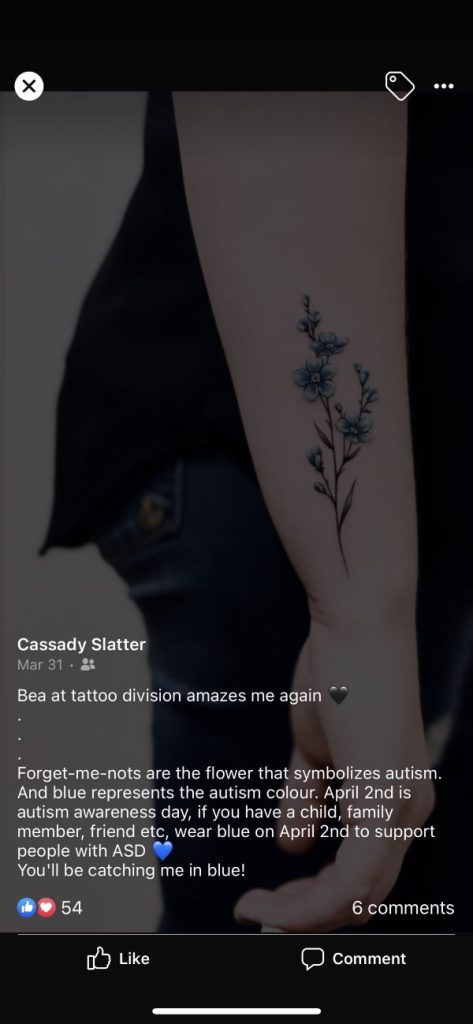
For the month of April, the colour blue, butterflies, a puzzle piece, and forget-me-nots are being used as symbols of support for the 70 million people worldwide who are diagnosed with autism.
With April being World Autism Awareness Month, Miscio believes that now that there is awareness for Autism, people need to shift into a learning, understanding, and accepting mindset.
Don’t miss out on Doppler!
Sign up here to receive our email digest with links to our most recent stories.
Local news in your inbox so you don’t miss anything!
Click here to support local news
Cassady,
I am so pleased to read that you were able to advocate for your son and receive an Autism diagnosis so you are able start working on getting to understand your son better. I have been exactly where you are and it can be overwhelming navigating a new diagnosis and knowing where to look. My mindset has had a big shift in 2 years and would be happy to provide some resources that have been helpful. The one piece of advice that I have received that now guides my choices is to make sure my resources are coming from the Autistic Community.
I have recently written a paper to the school board advocating for them to take some training and make some changes to their system to become a more Neurodiversity Affirming facility.
If you are interested these are some of the resources that helped me make a shift and change my lens. It is overwhelming the amount of information and it takes time to process through it all. I am available and happy to share more of my learning if that is helpful to you.
NeuroWild
https://www.instagram.com/neurowild_/
https://www.facebook.com/profile.php?id=100087870753308
Reframing Autism
https://reframingautism.org.au/
(They have a great free course they have just released)
Ausome Training
https://ausometraining.com/
Two Sides of the Spectrum Podcasts
https://learnplaythrive.com/podcast/
CBC Neurodiversity and the Myth of Normal – 2 Part Series
https://www.cbc.ca/player/play/2028061763982
https://www.cbc.ca/player/play/2031299139610
I Will Die on This Hill
https://www.amazon.ca/Will-Die-This-Hill-Autistic/dp/1839971681
All the best to you as you navigate through this information and learn to understand how your son interacts, processes and sees the world!