
Photos: Ian McTavish
A team of students at Huntsville High School is putting their technical skills to the test for an upcoming competition – the North Bay FIRST Robotics regionals. They have begun the design and build of a robot that will go head-to-head against those of almost 40 other regional teams. The goal: navigate a complex playing field and complete a variety of tasks better than its robot competitors to come out on top and earn a berth at the World Championships in St. Louis. More than 3000 high school teams compete annually in FIRST Robotics worldwide regional competitions.
Robots must be able to complete some of its tasks autonomously while the rest can be guided by the hands of a human controller. In their design, teams have to anticipate what attributes will be most beneficial for their robot.
“With a competition that is this complicated, it’s very difficult to make a robot that does everything. Choosing what you’re going to focus on and your strategy, I find that very exciting,” said grade 12 student Alec Gibson, part of the coding team which programs the autonomous mode of the robot.
For this competition, teams are allowed to access help from mentors. The team is also entering an Ontario Technological Skills Competition in May in which students must do all of the robot design and build themselves.
“The robotics team is mainly composed of theoretical guys – there aren’t many shop kids. Most of our help comes from a few tech teachers who help with cutting pieces and we have a few kids whose parents are engineers or work in that field. We are looking forward to (their help for this competition),” said Gibson.
-

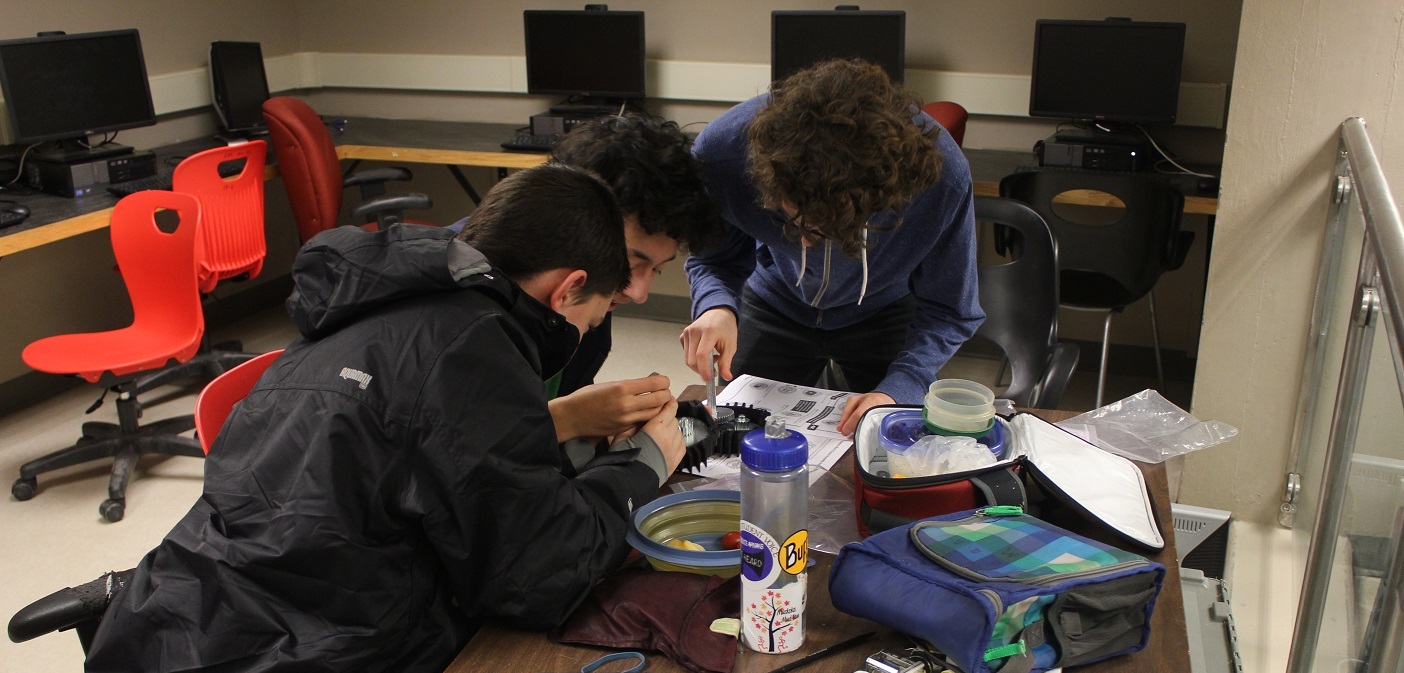
- Scott Chapeskie and Sam Topps review the robot’s design
-
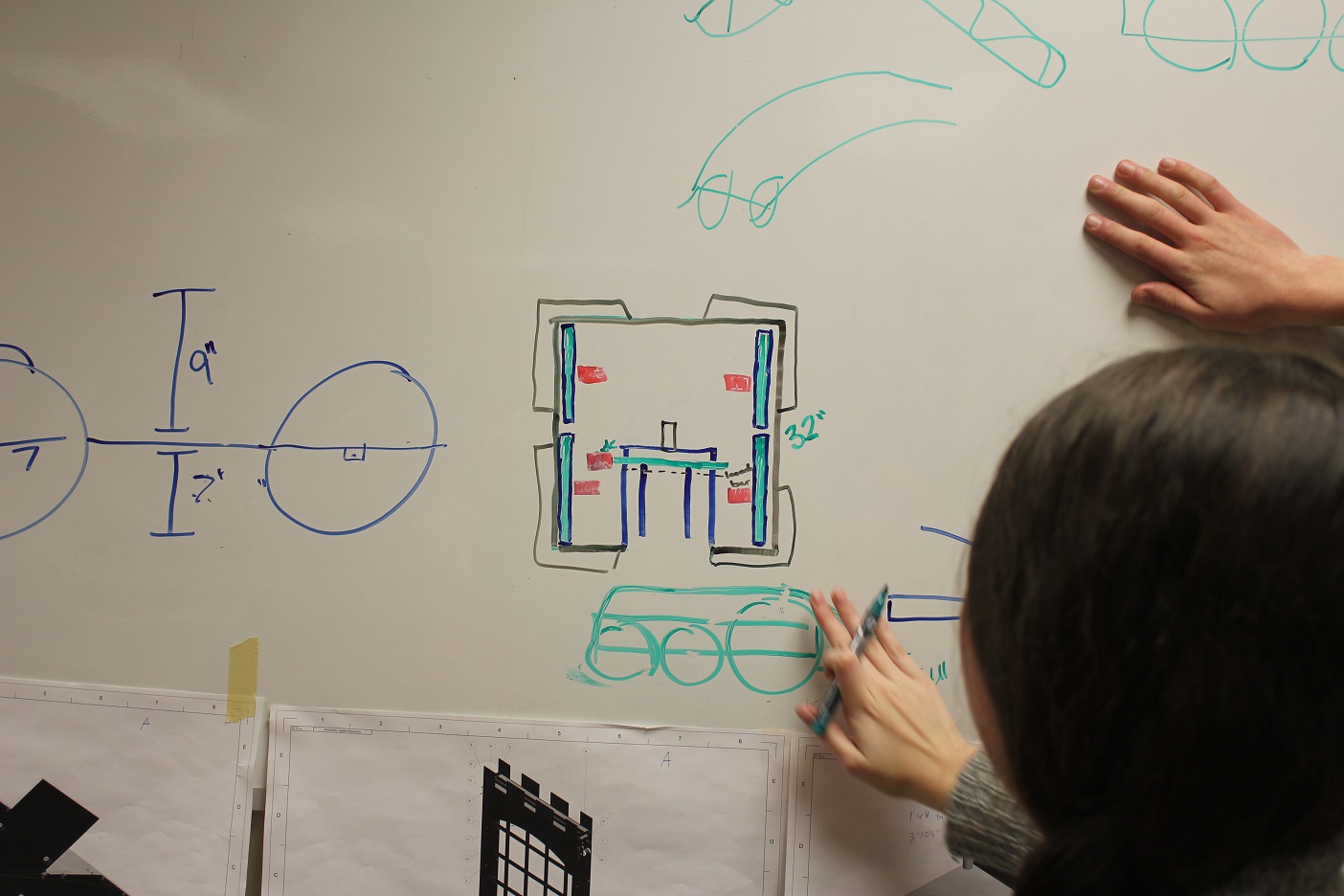
- Team member Alysha Smith helps with the build when she’s not working on sponsorships or outreach
FIRST Robotics provides each team with basic kit to get them started. They are expected to find or make the remaining materials themselves. “Pretty much everything we build we come up with on our own,” said Gibson. “In the kit they send us a few pieces – like a battery and a couple of motors and maybe a couple of wheels. Other than that everything we make is our own design.”
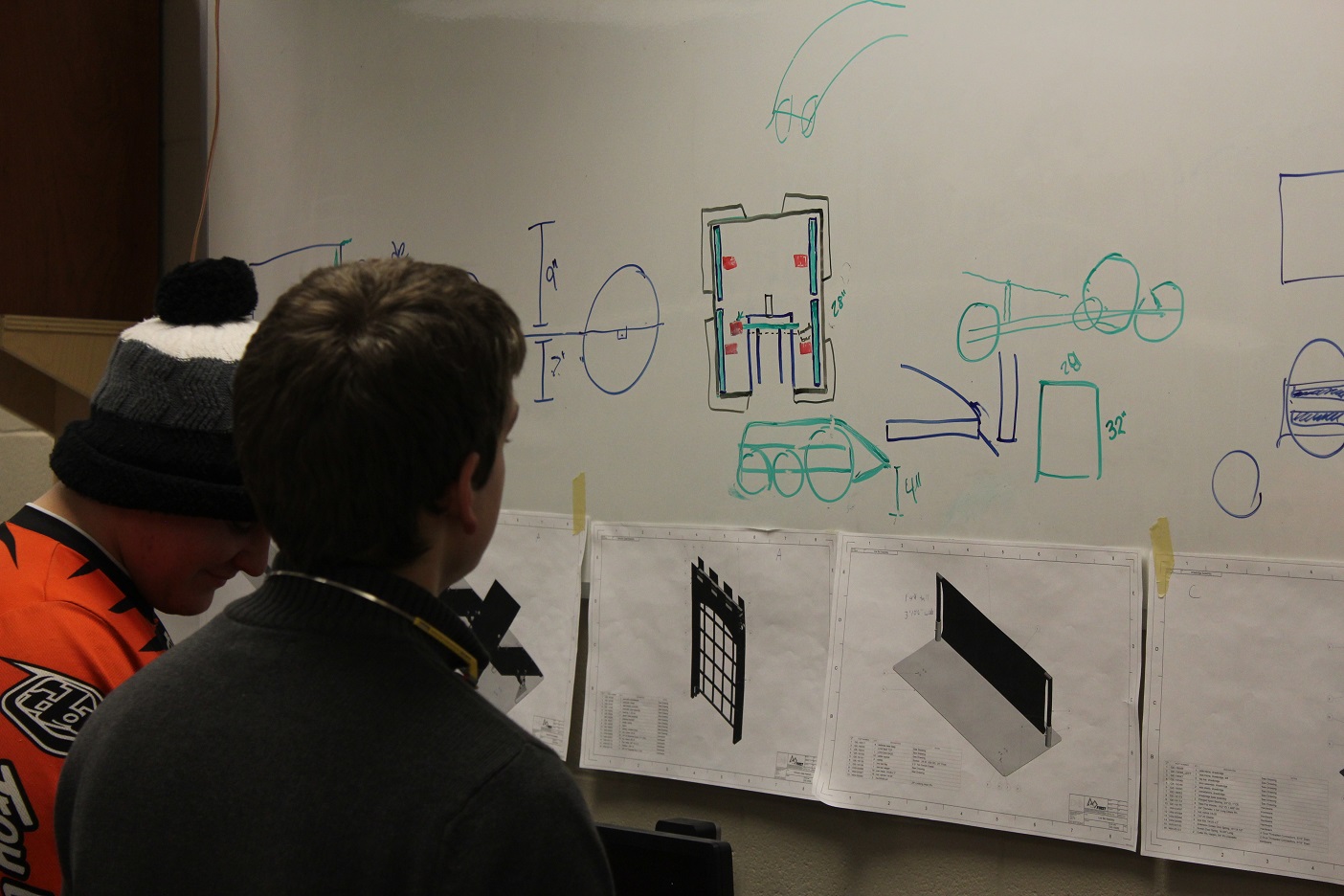
The six-week build has just begun but the team has already decided on the drive train and will use eight-inch pneumatic wheels if they can find more of them. “We’ve seen other robots with pneumatic wheels that have been able to launch themselves into the air to get over obstacles,” said team co-captain Scott Chapeskie. “Our next task will be designing the lifting mechanism and throwing mechanism.”
-
- Jim Fraser works on the robot’s electronics
-
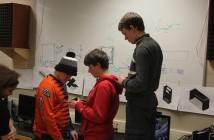
- From left, Hoyas Robotics team members Alora Hunnighan, Scott Chapeskie, Andrew Johnson, and Sam Topps
-
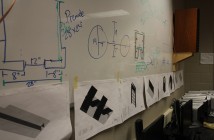
- A complex challenge requires a complex design
This is Chapeskie’s third year on the team. He and co-captain Doug Nadrofsky guide the team when they run into issues and represent the team on-field at competitions. He said this year’s FIRST Robotics competition is more challenging than in past years. “It’s more a combination of the past year’s challenges. In 2014, we had to be able to pick up ball and throw it into one of two nets and last year we had to be able to pick things up and drive over obstacles with a bit of slope,” he said. “This year we have to be able to pick up a ball and throw it into a high net or a low net and will have to breach more extreme defences. There’s a lot more to do compared to other years.”
But it’s not all about the competition. Teams can also earn a spot in the World Championships by demonstrating their commitment to community. “A team could win a Chairman’s Award by creating a video and doing a presentation about what your team does outside of competitions to get people interested in robotics and to work with charities,” said Chapeskie.
Coordinating that type of outreach is the role of team member Alysha Smith. “I mainly do outreach and sponsorship finding. I’m not a huge part of the build team but because it’s build season I get pushed where I’m needed and I try to learn all the new skills I can to support the team.” Outreach includes the team’s Technogirls program which teaches local grade seven and eight girls how to create cell phone apps, and taking robots to schools and local events to spark interest in the STEM (science, technology, engineering and mathematics) disciplines.
For sponsorships, Smith contacts businesses to explain what the team does and why sponsoring them is a good thing. Mainly they need funding, she said, but there are those pneumatic wheels to find, too. “Any materials you could think of that could be used to build a robot would help us. We have a huge amount of local support – from Armstrong Dodge, Canadian Tire, Home Depot, and some independent business owners. And Kimberly-Clark is our namesake.”
Teacher Ian McTavish has been involved with the team for five years and often encourages students in his Computer Science classes to get involved.
Their reasons for joining vary. Chapeskie switched from St. Dominic’s to Huntsville High because his former school didn’t have a robotics team. Both Gibson and Smith had their interest piqued by McTavish. “I joined to see what it’s like,” said Smith. “I love it. It’s become a huge part of my life. I’ve made a lot of friends through it and it has really changed my outlook.”
Follow the team’s progress on Twitter @HHS4152.
The North Bay competition runs from March 24 to 26 at Nipissing University. Check out the team’s challenge here:
Excellent work by these creative students & good luck @ the North Bay regionals. A.I. & machines will be such a massive part of our future & good to see the local sponsorship + interest.