
It was April 7, 2004, when Kofi Annan, the then Secretary General of the United Nations first used the word “genocide” in a description of what was taking place in the Darfur region of Sudan. There had been many other harsh statements about what was happening there, but this was the first time someone in a position of authority had used the word genocide. I know, I was there. I was one of a very few humanitarians permitted by the Government of Sudan to be working in the Darfur states. The government was denying what was taking place and thus refused to concede the need for humanitarian assistance.
When we heard the news of Kofi Annan’s statement we cringed. This was not the music to our ears that one might imagine. Oh, make no mistake, this was genocide we were witnessing. So who was smiling at the use of this word? The orchestrators of the genocide were. Yes, you read that right. We were there because international pressure had been growing to allow humanitarians into the region. We were still being blocked or delayed at every turn and our movements were closely monitored and controlled but we were there. Even in those circumstances, the limited evidence we could report on was causing that international pressure to grow. Now, the orchestrators at the highest level of government would have a reprieve from that pressure and be able to restrict our access even more. Why you ask? Because Sudan could now redirect world focus from the atrocities on the ground to arguments over the definition of a word: genocide.
Don’t take me wrong, we greatly admired Kofi Annan for stating the difficult truth. But we also knew that history was bound to repeat itself. Sudan and other totalitarian states would succeed in drawing the world into arguments over the use of the word genocide and those arguments would shift much of the focus and allow for the continuation and even escalation of the atrocities in the Darfurs.
How could this possibly compare to “The Holocaust” or the “Rwandan Genocide”? The world had said never again so surely it couldn’t be happening again. But wait, no one believed what was happening during The Holocaust or when General Romeo Dallaire desperately tried to get the world to pay attention to the Rwandan Genocide either.
I can remember saying that the only one’s who seem to learn from previous genocides are the perpetrators. The perpetrators in Sudan had learned plenty from watching others. We often called the Darfur crisis a genocide in slow motion. They did not kill everyone. Rather, they “saved” (enslaved) many of the women. Women who became work slaves, sex slaves; women who were raped and impregnated as the perpetrators gradually changed the face of and slowly erased the tribes of these women.
Today, years later, there are very few who would disagree with Kofi Annan’s use of the word genocide in those early days.
So, do all genocides look alike? No. Do I believe the use of the term genocide in the National Inquiry into Missing and Murdered Indigenous Women and Girls (MMIWG) Final Report is the proper use of the word? Yes.
Historical events should never be compared in order to validate whether or not something falls under the definition of genocide. The use of the word genocide by the Commission does not in any way diminish other historical events that have been deemed genocides.
The term genocide was first coined in 1944 and was categorized as an independent crime in the Convention on the Prevention and Punishment of the Crime of Genocide in 1948. Canada became a signatory in 1949. The definition is broad and includes terms like “in whole or in part” and the convention explains that “Genocide can also be committed against only a part of the group, as long as that part is identifiable and “substantial””. In 2000, Canada passed its Crimes Against Humanity and War Crimes Act which broadened the definition of genocide beyond acts of commission to include acts of omission.
Genocide can be slow moving; it can happen over centuries and need not be led by a single “totalitarian mastermind” (term used in the MMIWG report). Arguing over the use of the word genocide will always detract from the imperative of focus on the real issues.
There have been times when I have read the word “genocide” in an article and wondered if the author had used it to catch our attention and/or sensationalize a situation. Had they taken the time to research the use of the word and ensure its applicability? Sadly, that type of use can serve to undermine our empathy for what might actually be a serious situation.
The Commissioners who conducted the Inquiry into MMIWG are highly qualified individuals who took the time to gather and review stories and evidence related to their inquiry. I do not doubt that the esteemed members of the commission debated long and hard over the use of the word genocide. They did not just toss it into the report to catch attention. They used it with full understanding of the definition, the applicability and the risk of using it in the report.
I am a proud Canadian. In part because the Commission and our government have not shied away from using the appropriate language to describe what has happened and is happening in our country.
On June 9, 2019, I read Hugh Mackenzie’s article Listen Up! If there is such a thing as a dirty word, genocide tops the list. In referring to our Prime Minister accepting the use of the word genocide in the Commission’s report on the Inquiry into the MMIWG, Hugh Mackenzie stated, “… it congers [sic] up visions of the Holocaust in Nazi Germany, the ethnic cleansing that is currently taking place in Rwanda and the mass killings of Muslims in Bosnia.” He goes on to say that the Prime Minister is not speaking for him or, as he believes, the vast majority of Canadians.
In his article, Mackenzie seems to fixate on the consequences of the “admission” of genocide and focuses on those consequences over the consequences of the actual acts that led an educated body to research, debate and ultimately use the word genocide.
Mackenzie wrote, “Our reputation world-wide will be sullied…” Seriously? Our global reputation was far less than stellar only a few years ago. The current global reputation of our country is now second only to that of New Zealand.
Let me respond to a few of statements in Mackenzie’s column:
- The Rwandan genocide or genocide against the Tutsi took place between 7 April and 15 July 1994. Through acknowledging the genocide and taking action to move forward, 25 years later, Rwanda is emerging as a model for truth and reconciliation.
- Perhaps we all like to think that our views represent the “vast majority of Canadians” but whether we agree or not, our Prime Minister speaks on behalf of Canada. It just so happens, that on this occasion, I think he is spot on.
- As for the reputation of our country being sullied by the use of the word genocide; bollocks. There are many countries that have denied what has happened within their borders. Their reputations are and deserve to be sullied on the international stage. Countries who acknowledge what has or is taking place within their borders and move forward with respect and informed actions to change the situation, ultimately shine brighter.
- Genocide is a complicated concept and is not defined by The Holocaust, the genocide in Rwanda or any other historical event previously described as a genocide. Rather these events fall under the much broader definition of genocide.
I implore all of us to stop focusing on a single descriptor and begin to recognize and accept the reasons that the Commission found it appropriate and even necessary to use the word genocide to define the gravity of what has and is happening in our country. Now is the time to focus on the Commission’s findings, recommendations and our own path to truth and reconciliation.
Don’t miss out on Doppler! Sign up for our free newsletter here.
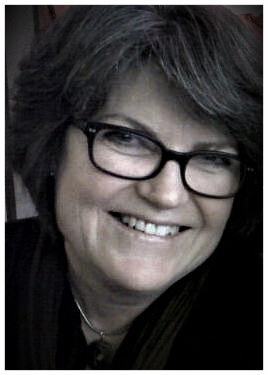 Nancy Osborne has seen some terrible things throughout her military career and during her time with the United Nations as a security specialist. Serving in the Security Branch of the Canadian military, Osborne enlisted as a Private and retired as a Major 21 years later. She was honoured with a CD (the post-nominal letters for the Canadian Forces Decoration) and is recipient of the Commemorative Medal for the 125th Anniversary of Canadian Confederation in recognition of a significant contribution to Canada as well as a Commander’s Commendation. Following retirement, Nancy was recruited in 2002 by the United Nations as one of the first women ever deployed as a security risk adviser in the support of UN humanitarian operations in high threat environments. In 2010, Nancy was appointed as a security manager at UNICEF Headquarters in New York. From there she managed global emergencies affecting UNICEF staff and provided extended surge support in places like Afghanistan, Pakistan, Haiti and South Sudan. When Nancy retired she thought that it would be a shame not to use all of that training so she launched a not-for-profit called I Got This as a platform for workshops called Unlocking Your Instincts for women.
Karen, wait till reconciliation hits you economically or personally or socially. You might feel different. Here in BC, the Provincial Government has engaged with two First Nations in the South Peace to the exclusion of the rest of the residents and business community on the issue of Caribou recovery. As a result, nobody except those First Nations have had a say in how restrictions to industrial activity and back country recreation will play out. There is now a moratorium on these activities in a large swath of Northeast BC. Forestry mills have announced closures and oil and gas development has been restricted. Back country recreational restrictions are pending. This has all been done under the blunt instrument of Reconciliation. You can imagine how several thousand people feel about job losses, declines in their property value (by orders of magnitude in half) and the absence of a voice in the process.
On another note, the Feds are considering offers for the TransMountain pipeline from several First Nation groups and labelling it as “Reconciliation”. Really? I think we collectively have no idea what that means and we will take any opportunity to put that label on anything to do with a First Nations where it suits us.
“Reconciliation” offputting to the average citizen of both cultures?
.
I’m an average citizen of one of those cultures, and I’m not put off at all by that word.
.
I know something very, very wrong happened, and that that hurts all of us until peace is made.
Hugh, thank you for taking the time to respond. It is helpful to understand a bit more of the context behind your article.
Although we are at odds over the use of the word Genocide, it would seem there is common ground in the reasoning behind our differing views. Whether one feels the use of the term is distraction from the real issue or one feels that the distraction is the lengthy discussion around the word itself, the bottom line is that the focus should remain on the missing and murdered indigenous women and girls.
It is not insignificant that you confuse “cultural genocide” (or assimilation) with actual genocide. If shock tactics were the point of the Commission’s work instead of opening a much needed dialogue between average indigenous and non indigenous citizens then they achieved their goal. But rather the divide grows wider. I am sure the average Ontarian feels no party to the policies of assimilation (especially the Residential Schools). So this is where words matter….words like genocide….words like reconciliation are off putting to the average citizen of both cultures. In my mind you, the Commission and the politicos are simply delaying the day when there can a full understanding of each other’s culture
Nancy: I seldom if ever, comment on other people’s columns, but since you quote me so liberally, at times out of context, I feel obliged to do so. I respect your opinion and some, but not all’ of what you have to say. I look at if from a different perspective and I also stand by what I wrote. It is important to note that I was writing in my column, specifically about the Commission’s clear mandate into missing and murdered Indigenous women and girls in more recent years and their finding, which the Prime Minister accepted, that this, in itself, was genocide. I simply disagree. I think it was, for the most part, rape and murder. While, I have my own opinion, we can debate at another time, whether Canada’s treatment of indigenous people over the past two centuries, amounts to genocide, but that is not what I was writing about.
Why do I make this distinction? Partly because I do not think this specific atrocity fits the definition of genocide but more importantly, because it dehumanizes the missing and murdered indigenous women and girls and lumps them into a larger debate of which at best, they are only a small part. These are real people, with real lives, real families and shattered futures. What are we doing specifically, to find out what happened to them? What steps have actually been taken to bring justice to these particular Indigenous women and girls? They have been murdered, raped or sexually abused. What real steps have been taken to find the actual perpetrators, let people see who they are, take them to court and put them in jail where they belong? Why does no one talk about it? Are we afraid to do so, because it interrupts the wider narrative? These missing and murdered Indigenous women and girls deserve much better than that. They deserve the same individual justice that any of us would demand.
Finally Nancy, I did not write my column out of ignorance as some of your readers may infer. I wrote about it from decades of personal and sometimes heart-wrenching experience, with both the “white” and Indigenous communities when it comes to relations with our first Nation citizens. Some of it is too personal and too tragic for me to talk about. But to simply lump these murders and rapes into a case for Canadian genocide completely misses the point and is just wrong and extremely unfair to the victims who were the subject of this investigation. I have seen it for myself. I do know what I am talking about.
Nancy offers incredible insight here as someone who has the rare (for a non-Indigenous Canadian) experience of having witnessed genocide. I so appreciate the bigger picture offered here, especially the remark that those who deny the atrocities committed by their countries are the ones who should be shamed on the world stage – less so those who identify and work toward truth and reconciliation. Shining the light never made anything darker. Thank you for writing this.