
“Stupid is as stupid does.” – Forrest Gump
Actually, I have no idea if we will have a federal election in Canada this Spring, but it will surprise no one that I do have an opinion about whether or not we should.
Jaime Watt is a friend and former colleague of mine. He is also a renowned national political strategist, often, but not always, with a conservative bent. In a recent article, headlined, ‘What to watch for in Canadian politics for 2026,’ he wrote the following:
“In Canadian politics, 2025 will be remembered as the year of Trump. In 2026, I regret to predict very little will change. In my last column, I argued that the U.S. midterms – and President Donald Trump’s rhetoric in the leadup – will turn Canada into an increasingly convenient target, spelling trouble for our economy and particularly for the looming CUSMA (free trade) renegotiations. This is a seismic risk. But it is far from the only political story we should be watching in the year ahead.”
Jaime Watt goes on to state that one of those stories we need to follow closely this year is the threat of separation referendums in both Quebec and Alberta. With that issue in particular, I could not agree more.
I can think of no greater risk to Canada’s sovereignty than these two debates and subsequent referendums taking place during an unprecedented period where Canada’s very existence as a nation is under serious threat from external sources.
We fool ourselves if we do not believe this threat is real. Canadian journalist Martin Regg-Cohn this week wrote, “American imperialists, Quebec sovereigntists and Alberta separatists are each in their own way, calling for the break-up of the country as we know it.”
Another Canadian journalist, Susan Delacourt, echoed the same concern. “The big difference between the 2026 threat to Canadian unity is that it’s coming not just from one province but three places – Quebec, Alberta and disturbingly, [an understatement if I have ever heard one] the United States.”
There is little that U.S. President Donald Trump enjoys more than exploiting the perceived weakness of others. He has made no secret of his ambitions related to Canada, and those who do not take him seriously have their heads buried deeply in the sand.
As former Alberta Premier Jason Kenney said in Calgary this weekend, “You cannot deal with the reality of the Trump threat by pretending it is not there.”
There are credible reports that leaders of the separation movement in Alberta have been meeting with senior officials in the Trump Administration. There can be little doubt that the President of the United States is not aware of this.
British Columbia Premier David Eby painted this action by some Alberta separatists as “treason.” A bit over the edge, perhaps, but frankly, under current circumstances, not that far off the mark.
Prime Minister Mark Carney’s response to these meetings is that he expects the Trump Administration to respect Canada’s sovereignty. That may be the nice and even the politically correct thing to say, but it is not nearly enough, especially when it cannot be clearer that President Trump does not respect Canada’s sovereignty. In fact, he opposes it.
I was born in Alberta and have experienced the loyalty to Canada as well as the frustration with the way that province has often been treated by the federal government, by generational members of my extended family in that province, three of whom have received the Order of Canada.
But to think that most Albertans would prefer a land- locked so-called independent jurisdiction tied to the apron strings of the United States, smacks of jumping from the frying pan into the fire, a concept that to me at least, is beyond comprehension.
As for Quebec separatists, they have been lobbying for independence from Canada for decades, and there are real signs that this concept is raising its ugly head again.
In her recent article, Susan Delacourt also wrote, “Carney is not the first prime minister to have the threat of separation hang over him – Pierre Trudeau, Brian Mulroney and Jean Chretien all had to deal with that reality. But he’s (Carney) the first one that is forced to juggle domestic separatism with a White House that is flirting with the advantages of having a non-united Canada.”
What boggles the mind is that these separation discussions in Canada are taking place, and are being allowed to take place, during a time when Canada’s sovereignty is at its most vulnerable. I cannot think of a greater or more self-defeating gift for Canada to give to Donald Trump.
It is this concept that brought to mind for me that short but pithy statement by Forrest Gump, “Stupid is as stupid does.”
I now come to the question of whether we should have yet another federal election in the very near future. Two things come to mind.
First, if Canada is going to survive in its present form, it needs tough leadership right now, and that leadership needs to get its own house in order if it has any hope of dealing effectively with the Trump Administration in the United States.
It means a carrot and stick approach to any provinces, organizations, or individuals who promote dissension, separatism, or divisiveness that provides fodder to those who disrespect and undermine Canada’s sovereignty. If that means new and tougher laws, so be it.
Canada needs to demonstrate that it has built a house of stone that cannot be blown down by the big bad wolf, and it needs to do it now. If that doesn’t sound very Canadian, too bad. The wolf is at the door.
Second, the ability for a federal government to achieve what needs to be done with the consequences that may follow, and with the risks that must be taken, requires a very strong mandate from Canadian voters.
The current Liberal government does not have that. The voter is always right, and Canadians voted for a minority government in the last federal election, albeit a large one. They know the difference between a majority mandate elected by the people and one that is manufactured by those who are in power. Voters were willing to give Mark Carney a chance, but he was not given carte blanche.
While current polls show that the federal Liberals and Conservatives are relatively close, Mark Carney is well ahead of Pierre Poilievre as the preferred prime minister. That could change after Poilievre’s performance in Calgary this weekend has been widely acclaimed and not just by conservatives.
On the other hand, Mark Carney can be judged on his stewardship as Prime Minister during the last year, some of which has been very impressive.
Canada’s federal government will, during at least the next few years, face some of its greatest challenges since at least the Second World War. Yes, it will require cooperation from provincial leaders, but overall, it will need discipline, strength, ingenuity and toughness from the government of Canada.
Some will believe we already have that. Others will disagree. We need to figure that out. Canadians need to give an overwhelming majority to the government of their choice. That is why we need a general election sooner rather than later. It is that strength of purpose by Canadians that will help us survive.
The Trump Administration backs down to strength. Canadians need to demonstrate that we have that strength, resolve and unity and that we have a government in power with the mandate and the confidence of their citizens to achieve that.
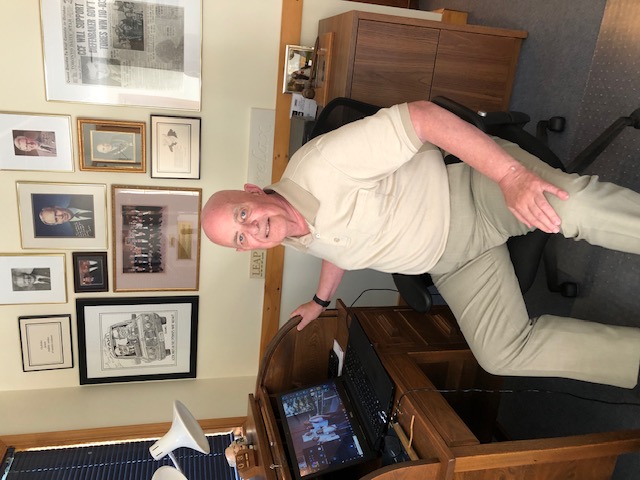
Hugh Mackenzie has held elected office as a trustee on the Muskoka Board of Education, a Huntsville councillor, a District councillor, and mayor of Huntsville. He has also served as chairman of the District of Muskoka and as chief of staff to former premier of Ontario, Frank Miller.
Hugh has also served on a number of provincial, federal and local boards, including chair of the Ontario Health Disciplines Board, vice-chair of the Ontario Family Health Network, vice-chair of the Ontario Election Finance Commission, and board member of Roy Thomson Hall, the National Theatre School of Canada, and the Anglican Church of Canada. Locally, he has served as president of the Huntsville Rotary Club, chair of Huntsville District Memorial Hospital, chair of the Huntsville Hospital Foundation, president of Huntsville Festival of the Arts, and board member of Community Living Huntsville.
In business, Hugh Mackenzie has a background in radio and newspaper publishing. He was also a founding partner and CEO of Enterprise Canada, a national public affairs and strategic communications firm established in 1986.
Currently, Hugh is president of C3 Digital Media Inc., the parent company of Doppler Online, and he enjoys writing commentary for Huntsville Doppler.
Don’t miss out on Doppler!
Sign up here to receive our email digest with links to our most recent stories.
Local news in your inbox so you don’t miss anything!
Click here to support local news
I agree with Lisa Brooks. A federal election this year when there are already sovereignty debates in Alberta and Quebec will not unite the country but only increase aggressive energies focussed on political differences- not generating the practical solutions we need now. People have enough trouble listening and talking to each other without the added noise of a federal election this year. There has been overwhelming support for Pierre Poilievre and entrenchment of his “base” with their denial of measures for equity and diversity at the recent Conservative policy review. Also unattractive, the Conservatives just voted to eliminate the CBC – at the cost to our Canadian cultural industry and of course eliminating what they see as questions to any of their own political beliefs no matter how unfounded. So you see, a federal election this year will only disturb any unity with these debates when we should be providing more non-market housing alternatives and job support for those who have lost jobs and those who face barriers to employment in jobs that will support their families. We need to build our communities to be resonant with members needs, not sloganeering and more talk again from politicians.
Trudeau called an election during covid to try and get a majority nothing changed much except it cost us money for the election. Carney doesn’t need a majority to do what we need done in Canada there will be enough opposition members to support any motions that make sense. An early election probably wouldn’t change things much. As far as Trump is concerned, I think he will self destruct soon enough. I think when push comes to shove all our parties will stand united.
Why does everyone blame Trump for Canada’s state of affairs? Is there that many ignorant people in Canada not notice Canada went for a dive, increase homelessness and the inability to afford groceries and other bills. IT WAS TRUDEAU FOR 10 YEARS PUTTING US INTO A HUGH DEBT AND KILLING CANADIANS HOPES TO BE ABLE TO LIVE IN CANADA. TRUMP DIDNT PUT US INTO DEBT. TRUMP DIDNT MAKE CANADA HAVE MORE HOMELESS AND THE NEED FOR MORE FOODBANKS. THAT WAS THE LIBERALS. AND ALBERTA HAS BEEN ROBBED BY GOVERNMENT FOR YEARS. PAYING OUR GOVERNMENT TONS AND GET LITTLE BACK. THEY WOULD BE BETTER OFF ON THEIR OWN. CARNEY IS JUST AS BAD AS TRUDEAU.
A recent internet article from a US source said Canadians trust their systems (Elections, public schools, health care, pensions, justice, and courts) at a much higher rate than Americans trust their systems. So, why would Canadians want to jump from the frying pan into the fire?
last weeks severe winter storms that wrecked havoc over a 2000-mile swath of the US and killed 42 Americans was a direct result of climate change that works year-round, not just in warm months. The Arctic is warming at 3 times the rate of the planet overall. The hotter air pushes the polar vortex of cold air further south. And that will get worse quickly.
The entire Alberta separation thing is because most Canada’s federal governments have tried to mitigate our emissions, that on a per capita basis are among the highest in the world due to the way we extract the oil sands. While the US leader denies the very existence of climate change, Carney has a better idea. He will build an oil pipeline to the west coast provided Alberta makes some effort to reduce their heavy emissions. He is leaving the industrial carbon tax in place to make sure they reduce their emissions by using their abundant clean geothermal heat to melt bitumen instead of burning natural gas.
Canada can then ship cleaner oil and grain to Asia in return for cooperation to offset Trump’s efforts to shut down our auto industry. Hopefully the Alberta separatist folks can understand that fair deal.
When Americans finally wake up to what is really going on, they will not welcome Alberta climate separatists. Besides, Alberta would have only 1.4% of the votes in a US congress, but they have 12% of the votes in Canada’s parliament. Hopefully an election will make them think.
Last election many Canadians were not that familiar with Carney but they knew they didn’t like Poilievre. That part is still true.
“Canada’s Conservative leader is in serious trouble, polls reveal”
Because most Canadians dislike him.
Most Canadians appreciate Carney’s efforts.
After Davos if there was an election now Carney would win in a landslide.
Carney is out there making trade deals with countries other than the US. As Trump restricts trade with Canada.
Yet Conservatives re-elected Poilievre leader even after he was ahead 20+ points and still lost and didn’t even win his own seat.
“Stupid is as stupid does.”
Indeed.
Liberals are ecstatic PP was re-elected.
Carney will win in a landslide next election.
The country needs a strong majority right now. It makes me fume that Alberta separatists aligning with the U.S. are driving that necessity. (I’m discounting Quebec separatists as they’ve been slapped down often enough that I just can’t take them seriously anymore.) And even if there are a few more floor-crossers. it won’t be significant enough to create a meaningful majority.
If Mr. Carney ends up with a strong mandate from Canadians, it will come one of two ways: either an election or Conservatives deciding that stability matters more than grievance and quietly, staunchly supporting the government at this critical point in our history.
I hate the idea of an election – especially with the fate of the CUSMA negotiations on the horizon – but I’m likely dreaming that enough Conservatives will support the government. I think that our leadership already has discipline, strength, ingenuity and toughness that Hugh identifies as needed, but might enough voters think that Mr. Poilievre better exemplifies those traits?
Reluctantly, I’m beginning to think that an election may be the only way to proceed.
Hugh Mackenzie is right about the seriousness of the moment and the risks Canada is facing — externally and internally. Where I hesitate is on the assumption that another election is the clearest or only path to strength. A mandate isn’t just a function of seat count; it’s also about coherence, steadiness, and demonstrated readiness to govern through uncertainty without adding volatility.
Elections can clarify direction, but they can also distract and divide at precisely the moment continuity matters most. Parliamentary systems also evolve: confidence, cooperation, and even caucus alignment can shift without forcing the country back to the polls. If greater clarity or stability emerges through those mechanisms, it may answer the mandate question sooner — and with less disruption — than an early election would. Ultimately, the test for any leader is whether they are prepared to govern responsibly in a high-risk environment, regardless of when the next vote is held.