
By Peter Rhead
Splinter Bid Example
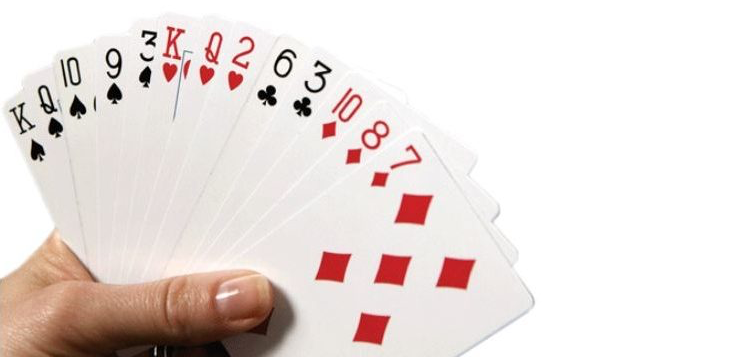
Consider that you have been dealt this hand:
Spades J1098
Hearts 9
Diamonds AKQ42
Clubs Q72
Partner opens One Spade. You know that partner will like your hand. It has thirteen points with the length point and good support for Spades. A game is pretty much guaranteed. What about a slam? Your singleton Heart could be very valuable against the right distribution in opener’s hand. How do you show partner this additional asset? The answer is a Splinter Bid.
Last week you may recall when opener bids a major suit and you show a Splinter Bid, it tells opener that you, the responder, has four-card or better support for the major suit plus an opening hand point count plus one additional valuable piece of information. Responder also shows a suit with a singleton or void that could be useful for a slam investigation.
To show a Splinter Bid after opener’s major bid, in this case One Spade, responder does a double jump to the suit he has that has a singleton or void. The Splinter Bid is always a double jump. So after partner’s One Spade opening, the following three bids are the possible Splinter Bids: Four Clubs, Four Diamonds and Four Hearts. There are no other Splinter Bids than these three responses to the One Spade opening.
In this example, you would Splinter Bid Four Hearts. Now, because the Splinter Bid uses up so much bidding space, you must use it also to limit your hand. Therefore you should employ the Splinter Bid only with a minimum opening hand (13-15 points). With more points, you would respond normally (Two Diamonds which is forcing). By responding Two Diamonds, opener recognizes your hand is an unlimited hand. It is greater than nine points and might be greater than fifteen points.
Following the Splinter Bid limiting response, opener is now the Captain. Opener has the information needed to stop at Four Spades for the probable game score or pursue a slam (perhaps now bid Blackwood 4NT).
You do not Splinter Bid into a suit with a singleton Ace or King. Such honours in the singleton are wasted values because there is good trumping capability. Opener expects to find such honours elsewhere in responder’s hand where they will be of better use.
Note that Splinter Bid responses apply only to a major suit opening. And a warning! Remember, your jump to a Four Hearts singleton might be mistaken by a forgetful opener as wanting to play Hearts. The forgetful opener passes and your partnership has a disaster!
For additional information, read Splinter Bids in Barbara Seagram’s 25 Bridge Conventions You Should Know, page 89.
Next Week: Weak-Two Bids
Remember, as we all fight COVID-19 with social isolation, if you want your Bridge fix, online competition is available for all skill levels. From the ACBL Bridge website, you can hook up either to play live people or to play robots. Either way you test or consolidate various Bridge skills. At ACBL.org just click on “Play Bridge” and follow the prompts for various choices.
If you wish to promote an activity in your Bridge group or ask a Bridge question, send the information to [email protected] and I will try to include it in this column.
Looking for more bridge tips? You’ll find them here.
Don’t miss out on Doppler!
Sign up here to receive our email digest with links to our most recent stories.
Local news in your inbox three times per week!
0 Comments