
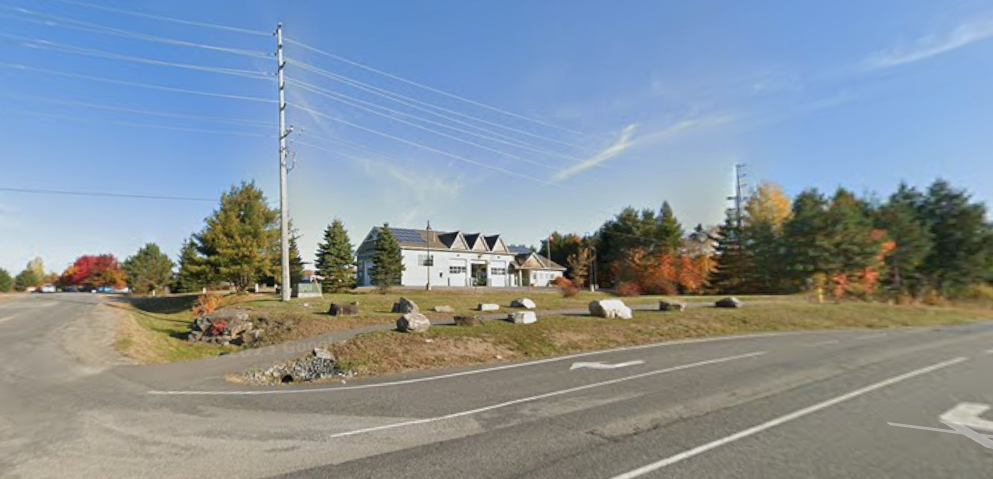
The District of Muskoka is pursuing additional provincial funding to significantly expand a planned transitional housing development in Huntsville aimed at supporting residents experiencing or at risk of homelessness.
Staff are preparing a business case application to the Province of Ontario for up to $1.4 million in Canada–Ontario Community Housing Initiative (COCHI) residual funding, which could increase the project from five to as many as 12 housing units. The funding opportunity was announced in a letter received from the Ministry of Municipal Affairs and Housing (MMAH) on December 23, 2025, with a submission deadline of January 24, 2026.
The proposed development is planned for a District-owned property in Huntsville that currently houses a Muskoka Paramedic station and water infrastructure. The project is intended to provide self-contained transitional housing units for individuals and families facing homelessness, with a secondary focus on people experiencing mental health and addiction challenges.
The initiative aligns with Muskoka’s Affordable and Attainable Housing Investment Framework, which commits the District to leading the development of deeply affordable housing for residents with the highest needs. Under the framework, Council has identified a need for up to 45 supportive and transitional housing units as part of a broader commitment to housing 184 vulnerable households.
District Council previously approved $800,000 in combined Ontario Priorities Housing Initiative (OPHI) and COCHI funding to support the construction of a minimum of five transitional housing units at the site. The additional COCHI funding, if approved, would allow the District to expand the scope of the project without altering its original intent.
While the current proposal is for transitional housing, District staff are also seeking separate operational funding from the Province through the Ministry of Health, the Ministry of Children, Community and Social Services, and MMAH. If operational funding is secured, the development could function as supportive housing, offering on-site or coordinated services to help residents stabilize their health and housing situations.
To meet tight provincial timelines, staff are exploring modular construction options to reduce costs and accelerate delivery. Projects approved under the residual funding program must be construction-ready, municipally or non-profit owned, and able to begin construction within 120 days of signing a funding agreement.
There are no immediate financial implications associated with the funding application. If additional funding is not approved, the District will proceed with the original five-unit transitional housing project, with occupancy anticipated after 2026.
Don’t miss out on Doppler!
Sign up here to receive our email digest with links to our most recent stories.
Local news in your inbox so you don’t miss anything!
Click here to support local news
Will there be an equal number of units for seniors as younger adults/families?
Do the projects as Co-op . Help people help themselves and others through having a purpose care & support.
We the citizens are the ones to make the ripple we desire. Give people new ways to live