
By Hugh Holland
For 45 years, Canada’s energy debate has been haunted by the ghost of the 1980 National Energy Program — a moment when Ottawa’s attempt to impose more federal control on natural resources fractured trust between regions and left a legacy of division.
Today, Mark Carney has brokered the first real breakthrough in 45 years: Alberta’s agreement to an industrial carbon price, tied to urgent emission reduction by carbon capture and storage, in exchange for federal support for a pipeline to British Columbia’s Northwest Coast with strict tanker safety measures—a compromise that balances climate responsibility with economic opportunity, and provides a more independent future for the world’s fifth largest oil reserves, signaling that Canada can once again move beyond regional politics toward cooperative nation-building.
Building the new oil pipeline to the west coast would require “targeted adjustments” to the 2019 oil tanker ban on ecologically sensitive waters on the coast of BC. However, it is not unusual to adjust laws when justified by new circumstances. The tax code is a law that is frequently changed according to circumstances.
Trump’s 50% tariff effectively closes the US market to Canadian steel and imposes high costs and supply disruptions on manufacturing and construction projects across Canada, where we conveniently traded steel across the 8.800 km border. Does that not justify countermeasures to make our oil and gas industry less dependent on pipelines to the US?
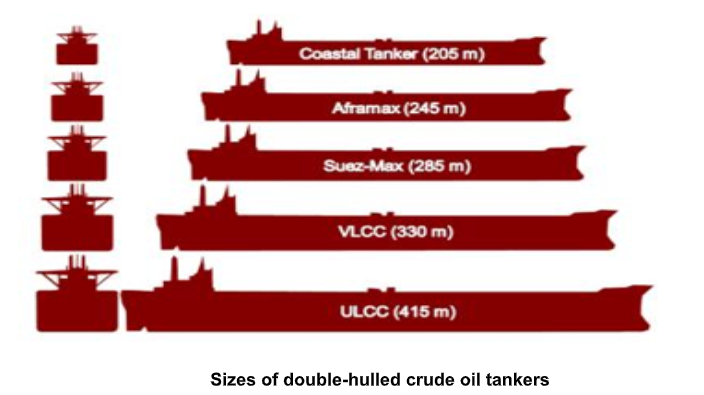
The new pipeline will use steel from our steel industry. It will help both our oil and steel industries, and all their downstream clients, cope, provided the oil can be shipped safely. There is still work to do to assure people living along the BC coast that insurance companies will insist only right-sized, double-hulled crude oil tankers will be used in specified zones, with today’s space-age navigation systems and escort tugs to prevent grounding in the highly unlikely case of a tanker engine failure.
However, given the volume of coastal traffic that could materialize with shipping both LNG from the second new BC Coastal Gas Link and crude oil from a new Alberta pipeline, it could be better to split the roles, with Kitimat shipping LNG, and with a targeted adjustment to the tanker ban to allow the larger and more open Port of Prince Rupert to ship the crude oil. That seems like a reasonable compromise that would benefit the entire country and avoid an emotionally charged political football that jeopardizes both projects.
Canada has always advanced through bold compromises between regions — from the railways that link East to West, to the pipelines and hydro projects that power our homes and industries, to the social programs that define our shared citizenship. Carney’s agreement is another example: a climate-era bargain that marries emission responsibility with economic opportunity, and coastal safety with national prosperity. It reminds us that Canada’s strength lies in choosing responsibility and cooperation. This breakthrough shows that we can once again rise above regional differences and choose a proactive path toward unity, climate resilience, and prosperity.

Hugh Holland is a retired engineering and manufacturing executive now living in Huntsville, Ontario.
Don’t miss out on Doppler!
Sign up here to receive our email digest with links to our most recent stories.
Local news in your inbox so you don’t miss anything!
Click here to support local news
Lisa Brooks and Hugh Holland: Thank you both for fact based and easy to understand explanations of one of our “nation building” projects. Nothing worthwhile is easy or fast but it is exciting to see movement toward cooperative planning for present work and future prosperity.
I
AFN’s decision is not “political theatre” to be waived away. I had hoped for more respect for First Nations’ treaty rights, sovereignty and prior informed consent and consultation. Even the BC government was not involved as signatory to the MOU with Alberta- which would have been more meaningful if coastal First Nations and the BC government had together signed off on it. There needs to be more detailed information here and from Ottawa and Alberta, about how any amendments will protect the Nations territories and regulate tanker traffic. How can more traffic, larger tankers not increase risks of damage from collisions and spills- and more impact on marine life with disturbance and noise- even if the Hecate Strait is avoided. Without effectively dealing with the problems of bitumen transport by tanker and pipeline, any Alberta pipeline will be catastrophic. Especially if First Nations’ rights for seven generations are disrespected.
Oh wow the very thing Conservatives have been trying to get for years and liberals would not budge. Maybe they will hire the Canadians who lost their jobs when carney moved two plants to the states. Im sure with carney involved he is sure to make money for himself.
I often wonder why first nations don’t want pipelines but they use “ICE” vehicles that burn petroleum products. I also wonder if we will ever see a pipeline, or a lot of Carney’s promises/plans ever be fulfilled.
I’m honestly glad Hugh put this into plain language, because it’s easy to lose the plot when the loudest voices want everything to be a crisis instead of a conversation.
On the timing questions: Nobody — not Hugh, not Ottawa, not Alberta, not the AFN — is pretending a project of this scale snaps into place overnight. What matters is that for the first time in 45 years, Alberta, the feds, and Indigenous nations are in the room shaping the same solution instead of fighting separate battles and calling it “principle.” The NEP ghost has finally been buried. That’s the story here.
Will there be political theatre? Of course. There always is. But the actual work — environmental assessment, rights-based consultation, engineering, coastal safety conditions, market analysis — is happening right now because the framework is finally stable. That is what investors, insurers, and Indigenous governments all said they needed before taking the next step.
On Indigenous leadership: Let’s stop pretending “the chiefs voted it down” means what some people think it means. Indigenous nations aren’t a monolith. Some are ready today. Some want stronger environmental guarantees. Some are negotiating ownership stakes. That is literally what self-government looks like. The good news? There is more unity among nations on this file than we’ve seen in decades — and they’re negotiating from strength, not desperation. That’s progress.
On coastal safety and the tanker ban: “Targeted adjustment” doesn’t mean “open season on BC waters.” It means modernizing a law written before double-hulled tankers, satellite navigation, and escort tug protocols were standard worldwide. And the simple truth is: Prince Rupert, not Kitimat, is the safer deep-water port for crude. That’s not ideology — that’s geography and physics.
On the US/Trump question: Here’s the irony: the same people furious about “Canadian energy being blocked in Canada” seem very comfortable with our exports being controlled by whoever is sitting in the Oval Office. Trump’s 50% tariff slammed the door on steel and created chaos across our supply chain. Carney’s goal — and this bargain — is literally about not leaving our economy at the mercy of America’s election cycles. That’s sovereignty, not partisanship.
And on whether Carney will still be prime minister? Only one leader in this country is actually working across regions, across industries, and across nations to deliver a grown-up energy strategy for the 21st century. I’ll put my money on the guy solving problems, not the ones shouting from the sidelines.
At the end of the day, Canada moves forward when we build things together — railways, hydro, pipelines, healthcare, trade routes. Every major step we’ve taken as a country came from compromise, not culture-war theatrics.
This new framework is another one of those moments — and whether people admit it today or three years from now, it’s going to be remembered as the moment Canada stopped fighting yesterday’s battles and started planning tomorrow’s prosperity.
Mr Holland would you care to give us a reasonable date for when the first tanker load of Alberta crude oil will leave the West Coast of British Columbia? Will Trump still be the President of the USA? Will Carney still be the Prime Minister of Canada? Will the new Hospital be up and running in Huntsville? Thanks asking for a Friend
The Alberta and Federal governments will both get something from the “grand bargain” AFN leaders feel they need to get something too. They will get hundreds of good jobs and ownership opportunities for their people at both ends of the pipeline, in return for some reasonable flexibility on the tanker ban. But it may take a few weeks for the political theatre to play out.
As always. A.well thought out take on how we can get oil to market.
But do we not have one huge stumbling block ?
Indigenous buy in. The chiefs voted this down this week in Ottawa. What now.
Maybe offering them a monetary stake in the project would help ?
I know we wronged them. And we have been compensating them for quite some time. If that is to continue, they need to help. It would go a long way to gain respect.
Unfortunately, some big American controlled companies are involved in significant oil and gas projects that the MOU will supposedly support. Currently, I have read that there is a limited business case for these oil and gas expansions. The end of the tanker ban needs to be supported by science and technology to guarantee to protect the west coast waters, livelihoods and health of all coastal people and to effectively clean up any spills- results could be catastrophic. Without all this there is not going to be full Indigenous support. All of these conditions including effective carbon capture, and carbon credit markets, the lack of strong clean electricity regulation or promotion etc – are barriers to developers and to managing our climate change contributions. Danielle Smith’s party was right to boo her faith in the MOU. I would boo too. Maybe another oops and boo hoo about the current direction of the Carney led government.
Well said Hugh. Finally Alberta now has a chance to participate in the national economy from its landlocked under industrialized location. The plan is to develop the province into an energy producer via nuclear and solar as the demand for oil and gas declines over the coming decades.
Excellent narrative Hugh, it was surprising to me that a substantial amount of oil and gas used in eastern Canada is imported from the U.S. Seems ridiculous that this has been happening and a realignment needs to be in the offing.
Thanks for your commentary – well balanced and as always informative.