
Wayback Wednesday, sponsored by Jamie Lockwood, broker/owner of Sutton Group Muskoka Realty, with family roots of more than 100 years in Huntsville

By Ted Johnson
The founder of Port Sydney died almost 100 years ago.
Almost one hundred years ago, on October 2, 1925, the residents of Port Sydney learned that Albert Sydney-Smith had passed away at the age of 79. Bill Clarke, who would go on to own the renowned Pine Lodge, was fifteen at the time and told subsequent generations that the church bells rang out the unfortunate news that day, and a pall of sadness fell over the community.
So who was this man whose name is attached to the village and who inspired such affection?
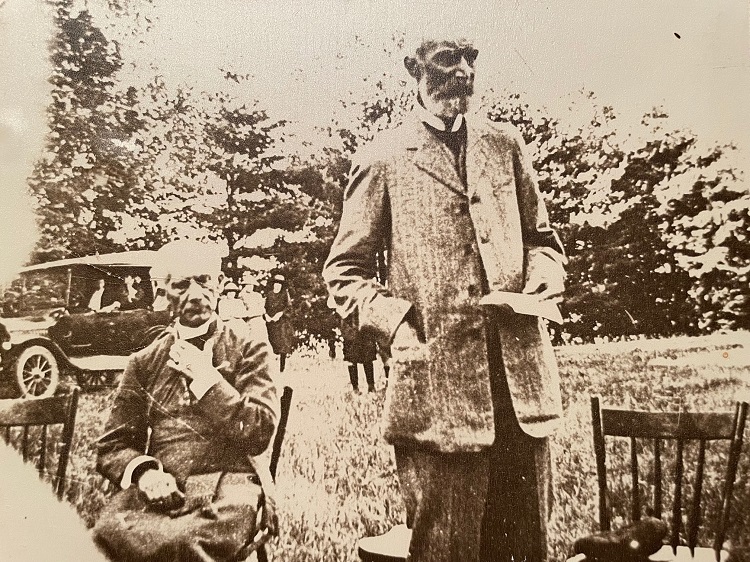
He was born in Hayesville, near the present-day Kitchener, Ontario, in 1846. In 1858, his father sold his business in that village and moved to a new home in Stratford, where he lived with his three sons and three daughters until his death in June 1867, just a few days before the birth of Canada.
Albert was twenty years old when his father died and with an inheritance and an abiding interest in the economic potential of this young and growing country, he headed north. It was 1871. In a letter to his hometown paper, the Stratford Beacon, he described how Muskoka’s bald rock can be off-putting but added that the area offered some inducements “as not a single settler I have spoken to is displeased with it or had any desire to leave.”
He, too, chose to stay. And by the time of his passing, 54 years later, Albert Sydney-Smith had made his mark as an entrepreneur in lumbering, land development, and transportation, and—equally importantly to him—as a pillar of his community. On that last point, it was the people of the community and not Albert himself who chose to give their village his name.
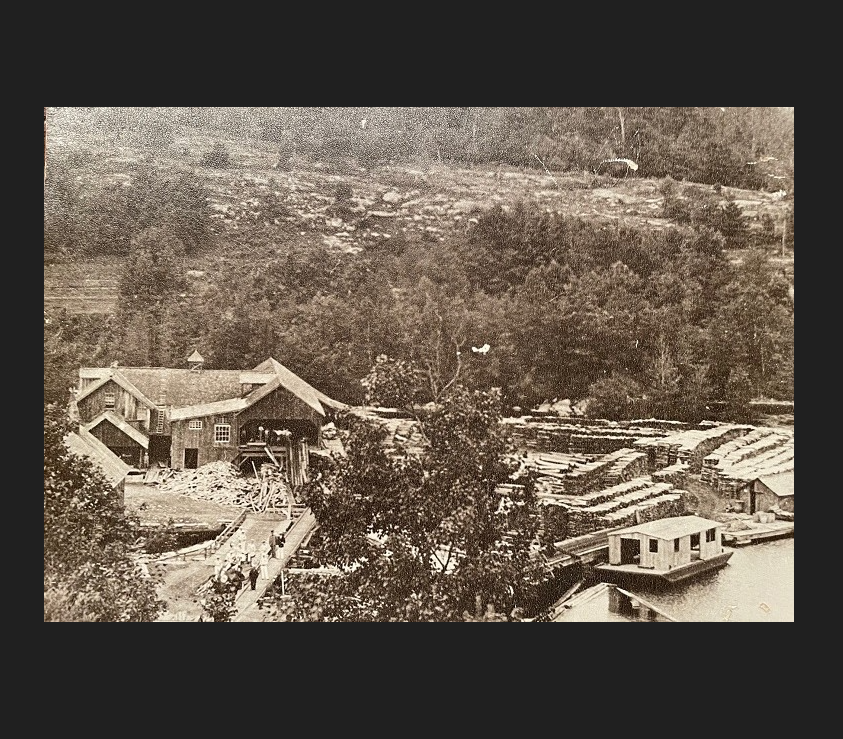
As a lumberman, he developed a sawmill and grist mill at the falls on the Muskoka River just below Mary Lake. It drew logs from the surrounding forests, cut mainly in winter, and floated to the millpond above the falls following spring breakup. The mill would open when the ice went out and would close in late fall before freeze-up. It ran six days a week, and the whine of the saw could be heard over most of the village. At its peak, it could produce ten thousand board feet of lumber a day.
In the 1860s and ’70s, Ontario was very much the poor cousin of Quebec. To stimulate growth, its government was offering inducements to settlers and so in addition to capitalizing the mill Albert paid $56 to the Crown for a substantial surrounding property, in all assembling some two hundred acres which he subdivided and which would become the heart of what we know today as Port Sydney, running essentially from the present-day bridge, along the river and lake shore up to the Town Dock. Much of this he subdivided to produce the housing lots we know today, as well as several streets named for prominent founding citizens.
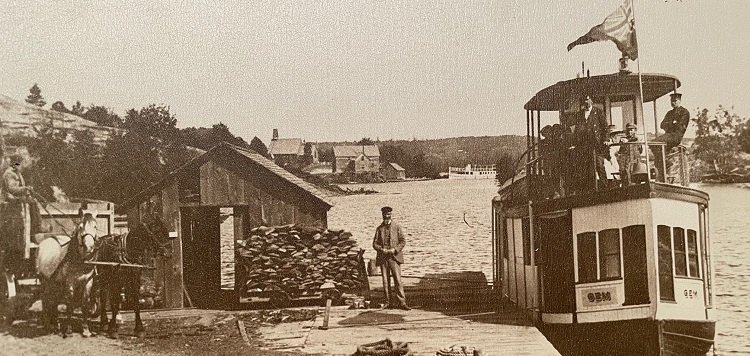
With very few and very challenging roads and no railways, water was the preferred mode of transportation in the mid-1800s. Following the construction of the Huntsville Locks in the ‘70s, several steamboats plied our waters. Using earnings from the mill, Albert acquired a small steamer and then launched his flagship “The Gem” in 1897. It provided regular passenger and freight service from Port Sydney to Huntsville and back, while farmers along the route could raise a flag, and the Gem would stop to pick up milk for delivery to Port Sydney’s co-op cheese factory at the Cheese Dock, well known to boaters even today.
But the Gem was not Albert’s only foray into transportation. During the railroad building era of the 1880s, he strove to convince the builders of the Canadian Northern and Pacific Railway (now CN) to run their line through Port Sydney. This might have made the village the head of navigation for North Muskoka and a boomtown. To his disappointment, a route was chosen through Huntsville. Had he succeeded, Port Sydney would not be the picturesque village it is today.
Over the decades Albert, or “Mr Smith” as he was affectionately known, was deeply involved in the community. Notably, he donated to the Anglican Diocese of Algoma the finest lot in the village as well as much of the lumber for a church, built with pride and in intricate detail by local craftsmen led by William Morgan after whom Morgan Street was named.
Similarly, in 1921, Albert gifted land for a new Community Hall for the village. Others donated money and labour, and on July 1, 1925, Mr. Albert Sydney-Smith and Mrs. James Jenner proudly led the grand march through Port Sydney to open the new Hall. (It stands today, and its centennial was celebrated at a 1920s-themed costume party a short while ago by an enthusiastic crowd.)
Sadly, the parade was Albert Sydney-Smith’s last formal appearance. Three months later, on October 2, he passed away. At his request he was laid to rest in the family plot in the Avondale Cemetery in Stratford. And a village mourned.
Do you have interesting photos to share of days gone by? We’d love to see them! Email: [email protected]
See more Wayback Wednesday photos HERE.
Don’t miss out on Doppler!
Sign up here to receive our email digest with links to our most recent stories.
Local news in your inbox three times per week!
Click here to support local news
Fine story and photos. What is the “Johnson collection”? We’re lucky to have these; they are evocative and helpful.
Port Sydney was quite a bustling place. Good point about the railway.
Thank you for this very interesting account of the formation of Port Sydney, such a beautiful community today due to Mr Smith’s foresight.