
BY LISA SIMON
Much like commercial tobacco and cannabis, alcohol is not a harmless consumer product. It is a regulated substance, with laws governing where it can be sold, who can buy it, how it can be advertised and where it can be consumed. Likewise, drinking and driving laws exist because even small amounts of alcohol can impair a person’s ability to drive, increasing the risk of injury and death.
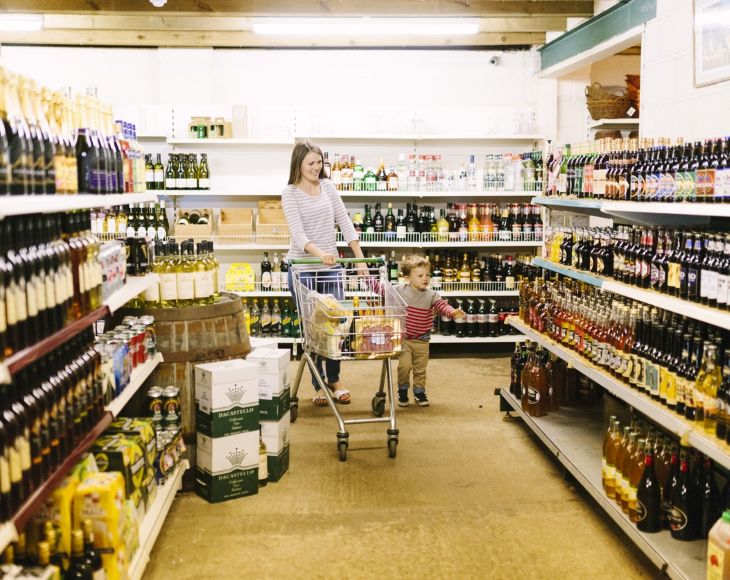
In recent years, alcohol availability in Ontario has grown considerably. The expansion in sales locations that began in grocery stores has since extended to convenience stores and highway service centres, alongside new bring‑your‑own rules. These shifts have implications for public health, community safety and long‑term costs.
What’s often missing from the conversation is how increased availability normalizes alcohol, especially among young people. Seeing alcohol openly stocked in gas stations and convenience stores suggests it is an ordinary, risk‑free product. Similarly, allowing open consumption in parks or at festivals under bring‑your‑own rules will often mean that drinking is more visible. As alcohol becomes more present in daily life, it becomes more accepted, influencing people’s decisions and dulling awareness of the risks.
The impacts of alcohol have long been visible in Simcoe Muskoka. Each year, alcohol use is responsible for approximately 7,665 emergency department visits, 840 hospitalizations and 275 deaths. That means one in every 20 deaths in the region is caused by alcohol. About half of these deaths are linked to cancer or heart disease, and alcohol also plays a major role in injuries, contributing to one in five deaths from intentional injuries to oneself or others and one in seven accidental deaths.
Research consistently shows that when alcohol becomes easier to access, overall consumption increases, along with related physical health, mental health, and social harms. These impacts are not limited to the individual and the family. Increased alcohol use also places added community pressure on policing, paramedic services, bylaw enforcement, park operations and liability risks, all of which are considerations for local governments.
Canada’s Guidance on Alcohol and Health states that health risks increase when people consume more than two drinks per week. At the same time, emerging evidence suggests that warning labels on alcohol products could help improve public awareness of alcohol’s links to cancer and chronic disease, supporting more informed decision-making.
With all health issues, we must ask if some community members face increased risk due to social factors outside their control, and what can be done to limit those health inequities. In this case, individuals living on lower incomes already experience disproportionately high rates of alcohol-related harm, and policies that increase availability or access can unintentionally widen these disparities.
The Simcoe Muskoka District Health Unit continues to support municipalities by providing health data and guidance on bylaws and alcohol‑free spaces. Recently, the health unit shared updated data and considerations regarding the health impacts and financial costs associated with alcohol use in the region.
As alcohol availability increases and drinking becomes more common in public spaces, social norms, especially for young people and new users, are reshaped in ways that can place growing strain on individuals, families, communities, and the health- and social‑care systems. With Ontario’s alcohol landscape changing, policy decisions should be guided by evidence and a shared responsibility to protect public health and support safer, healthier communities.
For more information about alcohol and its effects on individuals and our communities, visit smdhu.org/alcohol.
Dr. Lisa Simon is the medical officer of health and chief executive officer at the Simcoe Muskoka District Health Unit. She provides public health medical leadership to protect and promote population health and oversees the strategic direction and operations of public health programs and services in the region.
Don’t miss out on Doppler!
Sign up here to receive our email digest with links to our most recent stories.
Local news in your inbox so you don’t miss anything!
Click here to support local news
Thank you Dr. Simon, Mr. Markle, and Mr. Gilley; Our current Premier has consistently had a blind spot concerning alcohol, alcoholism, and treatment. His family of origin did nothing to increase his awareness or self-awareness of this public health concern. Instead of rolling up his sleeves and digging into the complexity, he merely “went with his gut”, hosted the BBQ parties in his own backyard, and increased access. I will never forget his line (paraphrased here): – you don’t want to separate Ontarians from their beer!
It is my personal opinion that he could have done more and differently to honour the death of his brother Rob Ford by courageously grappling with the challenges within his own family of origin, seeing the public health implications, studied how other countries have dealt with alcohol addiction. But, so goes the Doug Ford lack of insight- sadly, not new.
2 alcoholic drinks a week, or you are risking your health. Thanks for repeating this advice. Also emphasizing need for broader evidence informed policies, rather than politically or purely “economic” generated legislation. General public well being, health and safety needs vs “wants” by some.
I fear that most are missing the specific point of this article. What has been absolutely known for at least 50 years (in my memory) is that the easier the access to an addictive substance (mostly notably alcohol) is, the greater the consumption of that addictive substance becomes. This is a known and empirically determined fact.
This added consumption kills often in Ontario…in Huntsville …in your neighbourhood.
So when you read about DUI rates, or someone’s alcohol related death or lose a loved one, don’t blame the justice system….blame your “good ole boy” government. “Buck a beer” is not a cute policy slogan. Putting alcohol in every corner store does not enhance citizen freedom (was getting alcohol difficult before this expansion?). No these were predictable killers of your family and friends.
Going forward please see through these silly promises and don’t dismiss them as trivial. Instead realize how shallow, ignorant and superficially the policy proponent is. This will ultimately save lives and grief in your community.
Well thanks to our Trump like Premier and his enabling bobble head mpps we have more driving under the influence, more hit and run car accidents more litter of alcohol cans all of which costs taxpayers a pile of money. Not to mention the hundreds of millions of dollars to prematurely break the contract with the beer stores
How much longer are our mute mpps going to support this train wreck of a government or should I say dictatorship
Government has put alcohol in every nook and cranny. And judgement against those who have little regard for their fellow citizens is hard to come by. Hard for me to see much ‘justice’ in a lot of these judicial findings. It might be that judges and adjudicators figure the government made the problem, so, maybe they should clean it up. No sign of that happening. ‘Though a bottle did get poured out.
Bad person!!! Not too harsh a sentence. Just take a time out. Maybe a week or to two at home to ponder on your poor judgement. Like a person with DUI intellect can really recognise poor judgement.
If as a citizen you are in need of a hospital, get in line. Might only have to wait a few hours. In no way do I find fault with doctors or nurses or the people who struggle to make a broken, underfunded system work. But, should the perpetrator of highway carnage and the victim(s) arrive at the hospital together, the innocent may just have to wait in line behind the intoxicated. Maybe just 3 or 4 hours.
That is what we call justice?
Very good article. Alcohol is a very big problem for a significant number of people>
Alternatives to drugs, alcohol & pills needs to be in the mainstream
Add pop & energy drinks to the list as well
The cost savings alone can bring changes to people’s life
You want to see a society become completely transformed start offering the alternate
– helping others
– time for quiet
– activities that use your brain & body
– water
– walk in nature