
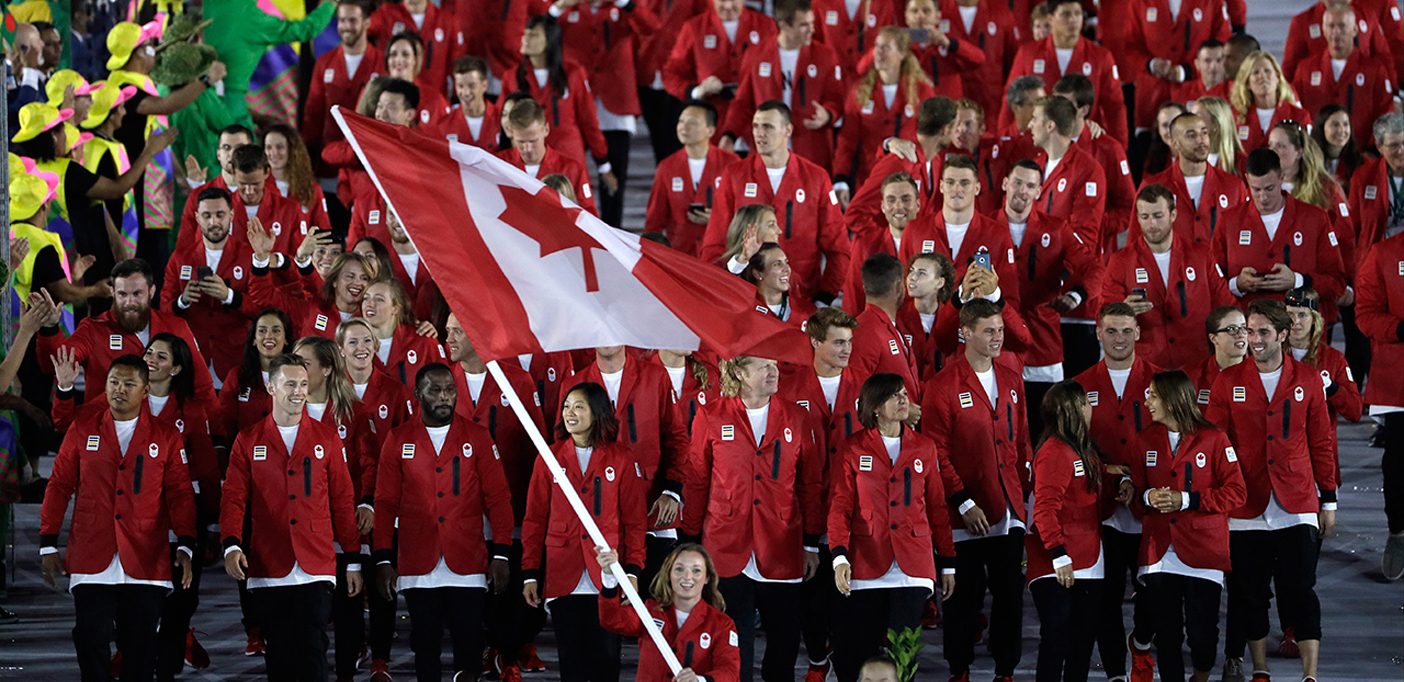
After 17 glorious days, we have reached the end of the 2016 Olympic Games, and as expected there has been no shortage of incredible storylines to come out of Rio. Like any Olympics, there were also a handful of cringe-worthy moments along the way, and yes, this year even a few Canadians became embroiled in the controversy.
As the Games officially ended with the closing ceremonies last night, and Canada is plunged into a post-Olympic hangover (at least until the Paralympics begin early next month), here is the first of a two-part series discussing the Good, the Bad and the Ugly from the 2016 Olympic Games.
The Good
In Canada, the real storyline this year has been the sensational performances of our female athletes. The women brought home the vast majority of our country’s medals (16 of 22 to be exact), several of which came in spectacular fashion.
The emergence of swimming phenomenon Penny Oleksiak, who became the first Canadian to win four medals in the same Summer Games and the country’s youngest-ever Olympic gold medallist, gives Canada a legitimate medal threat in the pool for years to come. Penny also became the first athlete in the world born after January 1, 2000 to win an individual Olympic gold, putting in perspective just how otherworldly her performance has been over the last two weeks, and earned the honour of bearing the Canadian flag at the closing ceremonies in Rio.

The iconic photo of Penny Oleksiak looking up to the scoreboard for the first time as an Olympic champion (Photo courtesy of Mark Blinch / Canadian Olympic Committee)
Rosie MacLennan, Canada’s opening ceremonies flagbearer and only gold medalist from the 2012 Games, defended her trampoline title and became the nation’s first athlete to win consecutive individual golds in a Summer Olympics. The CBC did an excellent long-form feature on Rosie, you can read it here.
The Canadian women’s rugby sevens team also made the podium by capturing bronze in the sport’s Olympic debut, inspiring a whole generation of Canadian rugby players just four years after the women’s soccer team accomplished the same feat in London. And speaking of which, yes, the 10th ranked women’s soccer team were nothing short of spectacular themselves, despite being in the midst of a major rebuild. The women defeated host Brazil for a repeat bronze medal in a tournament that saw the Canadians dispatch the second, (Germany), third (France) and fifth (Australia) seeded teams in the preliminary round.

The fastest man in the world, Usain Bolt, embraces the next great Canadian sprinter Andre De Grasse at the finish line of the men’s 100m final (Photo courtesy of Canadian Olympic Files)
Of course, there’s also the feel-good story of sprinter Andre De Grasse, who captured bronze in his first-ever Olympic event running beside the legendary Usain Bolt in the 100m (and finishing a mere tenth of a second behind the fastest man in the world). The feeling that the proverbial torch was being passed from one generation of sprinters to another was readily apparent as the young Canadian hugged his Jamaican role model at the finish line. De Grasse went on to win silver in the 200m, becoming Canada’s first double-sprint medallist since 1928, in addition to a bronze in the 4x100m relay.
These are just a handful of headlines from only a select few of the Canadian medal-winners, and the stories from those just outside the spotlight are no less spectacular. Nicole Sifuentes’ interview after failing to qualify for the women’s 1500m final no less heart-wrenching than watching Adam van Koeverden ending his storied Olympic career with a win in the B Division finals, and Nate Brannen making the men’s 1500m track final in his third and final Olympics.
Once again, our compatriots have shown their dedication, class and composure in front of the best athletes in the world, and have made Canada proud on sport’s biggest stage.
The Bad
As remarkable as the athletic performances have been, finding what you want to watch, when you want to watch, hasn’t been easy on television.
These Olympics have made it abundantly clear that we are truly in the ‘digital age’ of media, where the online viewing experience has trumped that of watching on TV.
TSN has five networks, but has consistently shown just two different Olympic feeds throughout the Games (TSN 1, TSN 3, and TSN 4 all have the same content, while TSN 2 provides an alternate, and TSN 5 has shown SportsCentre or a mirror of TSN 1).
SportsNet operates in a similar fashion, with the network’s Ontario, East, Pacific and West channels all showing the same feed, while specialty channel SportsNet 1 broadcasts a different event. The network’s other channel, SN 360 has been reserved for regular programming.
Including CBC, that leaves us with just five total Olympic feeds across 12 Canadian channels, which can be reduced even further during prime time hours to honour previously existing agreements, such as the CFL on TSN and Blue Jays Baseball on SportsNet. Making viewership even more frustrating is the fact that these TV segments are grouped together in huge time blocks, with vague descriptions only occasionally aligning with the corresponding coverage.

A screen shot of the Olympics homepage on cbc.ca, complete with links to live and pre-recorded events, schedules, updated medal counts and in-depth features on athletes
Compare that to the CBC website, which offered over 30 uninterrupted live streams that allowed users to pause, fast forward, rewind, change camera angles, and re-watch at their leisure. They also developed their own app allowing people to watch on any number of devices, including phones, tablets and personal computers, theoretically making the games accessible to anyone, anywhere in the world.
For those with high-speed internet connections and massive data plans, the new features and capabilities are fantastic and the online experience has become the preferred way to watch. But for those without these luxuries – including a more elderly population, lower income or isolated communities, and those who watch in public spaces like restaurants and bars – they are at the whim of the television networks determining what content receives airtime. As a result, these groups receive a fraction of the total coverage available, with much of it being based around sports that are considered to be of ‘high interest’, and not necessarily focused on Canadian athletes.
So while the CBC as Canada’s Olympic Broadcaster is trending towards a ‘digital first’ experience (and that’s before getting into the virtual reality component they are also offering through their app), I can’t help but feel that an opportunity has been missed by failing to provide comprehensive TV coverage – especially when you consider the fact that TSN and SportsNet each own their own perfectly-suited media platforms complete with multiple channels able to deliver a more inclusive viewing experience.
Check back on Doppler tomorrow for The Ugly at Rio 2016.
Don’t miss out on Doppler! Sign up for our free, twice-weekly newsletter here.
0 Comments