
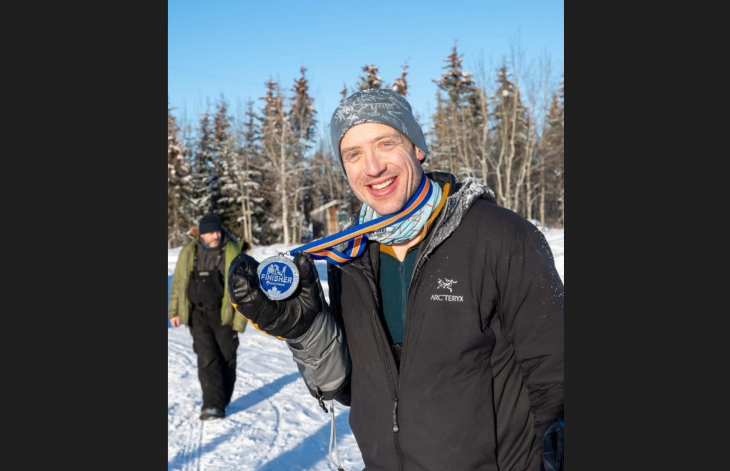
The Yukon Arctic Ultra—one hundred miles on foot across the frozen arctic tundra in the middle of winter is not for the faint of heart, but for those with the stamina and mental fortitude to see it through, it’s often a more rewarding experience than they ever imagined.
Earlier this month, Chad Barber, co-owner of Reactivite Muskoka in Huntsville, outlasted competitors from around the globe to win the 100-mile distance race from Whitehorse to Braeburn in a time of 26 hours and 15 minutes. For Barber, the key to victory was the mental preparation required for such a test of will.
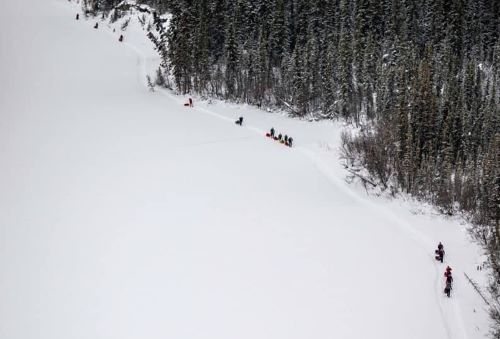
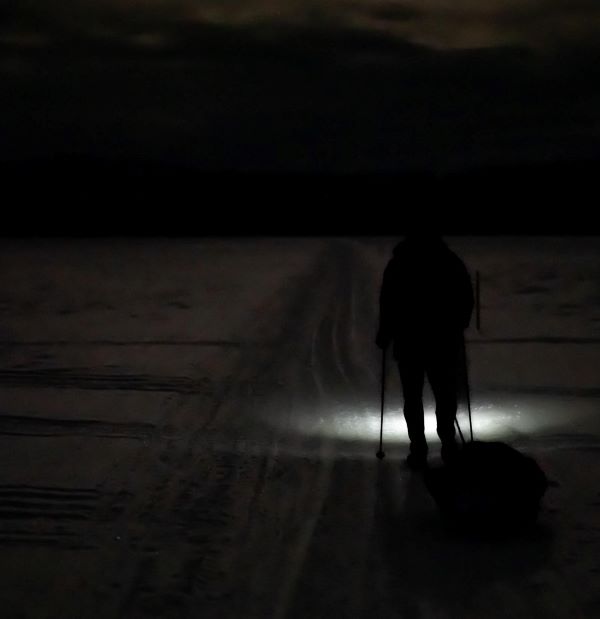
“Once you leave Whitehorse on the race course, you move further and further from any access points and often the race competitors get so spread out that you can go for six to eight hours without seeing another person,” says Barber. “The fatigue and the isolation combined with the potential extreme conditions and knowing it can take over 12 hours for a rescue to happen can play tricks on your mind and make a minor situation seem more extreme than it really is.”
The marathon features a number of different distances, including 300 miles and 430 miles. Competitors can travel on foot, by bike, or using XC-skis, but Barber travelled on foot.
“Because of its difficulty level, it’s typically a race that people sign up ‘just to try to finish’ and not a race that you are trying to compete to win,” explains Barber.
He says he had no strategy to try and win the race. The competition was secondary to his ability to push himself to the limits of his capability.
“I knew what place I was in the whole time because I started the race in the lead group. Most of them pushed further ahead so I couldn’t see them anymore and did not know how far behind I was,” he says. “Luckily, with my race strategy, I slowly caught up and then I knew I was in second place because I only had one set of footprints to follow in the snow.”
He caught up with the leader roughly 52 km into the race but wasn’t able to pass for another 65 km.
“With about 40 km remaining, I passed him on the trail and that was the last time I would see him or anybody else on the trail until the finish line. I ended up outpacing him and winning by over 2 hours,” says Barber.
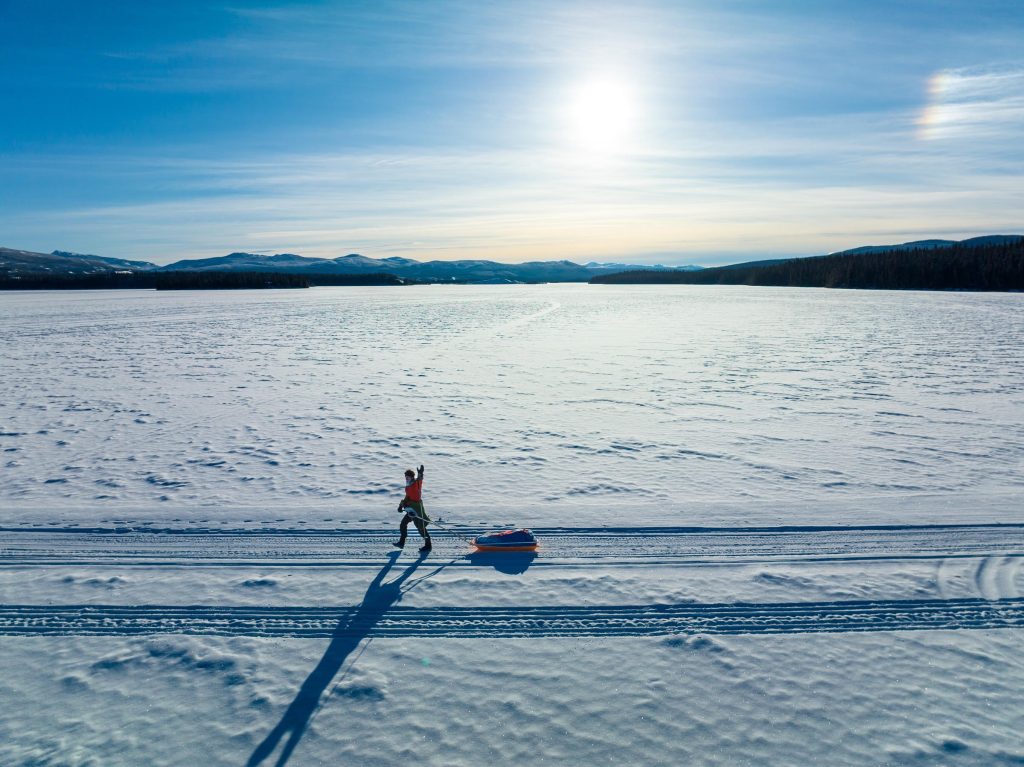
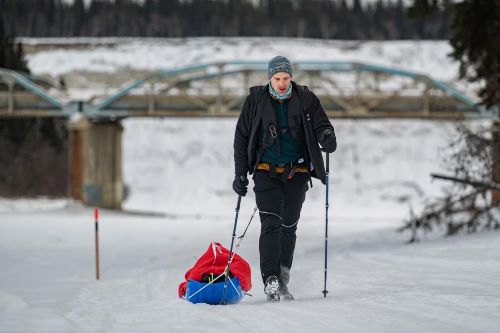
One thing which separates the Yukon Ultra from other races is that participants must be entirely self-supported. As the course is so remote and isolated, the rules require athletes to take significant amounts of gear so they have the ability to look after themselves in extreme weather conditions or emergency situations. For Barber, that included a tent, sleeping bag rated to -45C, sleeping pad, expedition coat, and mitts, a stove, and fuel, as well as food and a minimum of three liters of water in double-walled thermos to prevent the water from freezing. Athletes carried those items in a pulk (sleigh) attached to a harness.
“To train for this race, I began with general fitness training (running and weight training) until the end of November, then I started to incorporate tire dragging sessions usually on hills in the area. By Christmas, when we had enough snow, I would switch my training to exclusively hiking our local trails while pulling a sleigh that I added about 85 lbs to,” he says. “During the sessions, I would figure out which clothing layers worked for different temperatures, and which food items I could eat quickly but also be able to eat when the item is frozen since all our food would freeze during the race. I would also practice stopping and setting up my sleep system or my stove as quickly as possible to make sure I could do this efficiently in an urgent situation.”
Barber is no stranger to cold temperatures, having grown up in Timmins before moving to Bracebridge with his wife in 2010. He says part of the appeal of moving to Muskoka was the abundance of outdoor activities available.
Barber says he started with short runs and triathlons shortly after moving to the area but he found endurance races were his true calling.
“The appeal is to push myself and try to find my limits. I think you grow as a person and discover more about yourself when you really challenge yourself, whether you succeed or fail,” he says. “It’s not about choosing only events I know I can finish, it’s about choosing events that make me wonder if it’s possible.”
Barber says he’s grateful for the support he’s received from friends and family, but especially from his wife and three children.
“My wife is the one who pushed me to sign up for this race and knew I could finish it,” he says. “Showing my kids that you can set your goals high, but you must work hard to achieve them is very important. After every race I’ve ever done the first thing my kids ask me is ‘did you win?’ and now I can finally tell them yes, I did.”
Don’t miss out on Doppler!
Sign up here to receive our email digest with links to our most recent stories.
Local news in your inbox so you don’t miss anything!
Click here to support local news
Wow! What a feat! Congratulations! The hard work and passion to achieve this goal is truly inspirational.
Well done!
Madrie
Chad, that is brilliant, amazing adjustment from last time.
Cheers,
Rick
Congratulations Chad on a job well done!
Wow, Chad;
You are my hero. What a great lesson for your kids to learn about hard work and what you can achieve in the process. I wouldn’t be surprised to see one of them on the podium in 20 years!
Congrats!
Brenda Duncan
Well done, Chad! 👏🏻
Congrats Chad! You are an inspiration to us all!
Congratulations Chad what an amazing achievement. 👍
Outstanding!
Congratulations on such a mental and physical achievement.
Refreshing to hear good news!
Congratulations Chad. I knew you finished when I saw you yesterday but did not know you had won. So happy for you and your family.
Wow! Congratulation Chad. You are an inspiration to us all.
Congrats this is a very positive piece of news , in the days we have had lately.