

From the Township of Lake of Bays
The Township of Lake of Bays is proud to participate in the earthday.ca Mobilizing Municipalities initiative and we want to showcase native plant species that play a crucial role in sustaining pollinator populations while promoting biodiversity in Lake of Bays.
Planting native plants in an area can provide a host of benefits as they are adapted to local weather and require less water, fertilizer, and pesticides. They also provide food and shelter for wildlife and boost biodiversity.
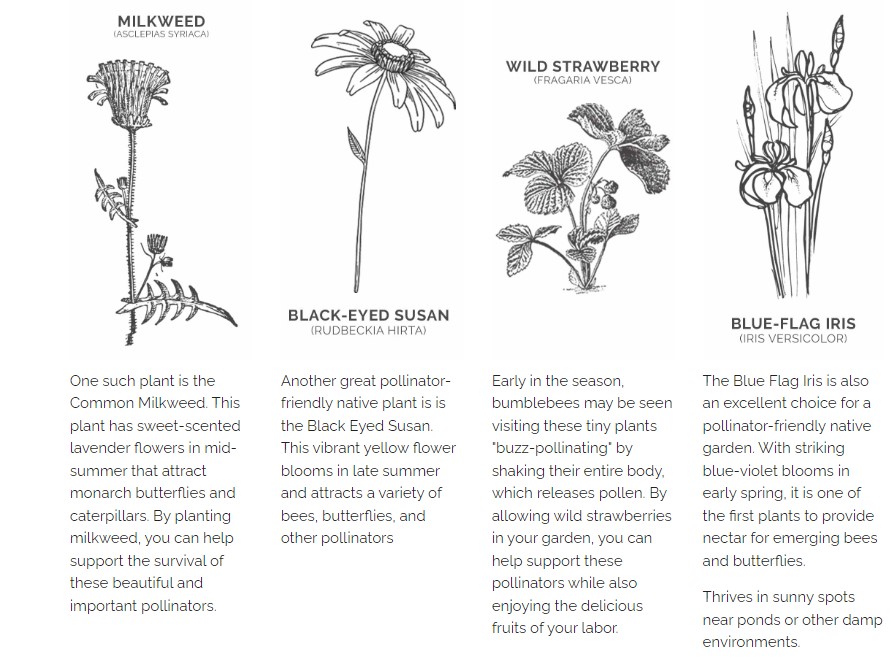
One such plant is the Common Milkweed. This plant has sweet-scented lavender flowers in mid-summer that attract monarch butterflies and caterpillars. By planting milkweed, you can help support the survival of these beautiful and important pollinators.
Another great pollinator-friendly native plant is the Black Eyed Susan. This vibrant yellow flower blooms in late summer and attracts a variety of bees, butterflies, and other pollinators.
Early in the season, bumblebees may be seen visiting these tiny plants “buzz-pollinating” by shaking their entire body, which releases pollen. By allowing wild strawberries in your garden, you can help support these pollinators while also enjoying the delicious fruits of your labor.
The Blue Flag Iris is also an excellent choice for a pollinator-friendly native garden. With striking blue-violet blooms in early spring, it is one of the first plants to provide nectar for emerging bees and butterflies and thrives in sunny spots near ponds or other damp environments.
By incorporating native pollinator-friendly plants into your garden, you are not only creating a beautiful and vibrant landscape but also providing essential resources for the local ecosystem. Native plant species have co-evolved with local pollinators and provide them with the necessary nectar, pollen, and habitat for survival. By planting these species, you are helping to create a more resilient and biodiverse ecosystem that benefits not only pollinators but also other wildlife such as birds, butterflies, and beneficial insects. You can incorporate these and other pollinator plants in your garden by visiting local nurseries like the Lake of Bays Garden Centre, or the Muskoka Conservancy webpage.
Don’t miss out on Doppler!
Sign up here to receive our email digest with links to our most recent stories.
Local news in your inbox so you don’t miss anything!
Click here to support local news
0 Comments