
By Danielle McPherson
As society returns to a semblance of life before the pandemic, April 15th celebrates World Art Day. This year’s theme of “art is good for the health” is reminding people to take time to create art or enjoy the art that surrounds them.
Connor MacPherson, a registered member of The Canadian Art Therapy Association since 2019 has been a practising art therapist for two years in Huntsville Ont. She says she is happy seeing people accepting art as a coping method and reaping the benefits of simply creating.
MacPherson says she has seen an increased interest and acknowledgment of art therapy since the COVID-19 lockdowns. “During COVID, there was a lot more recognition for the art therapy profession because people were trying different things and noticing that art was benefitting them during such a difficult time.” The rise in interest has also prompted the expansion of art therapy into different forms of art. People looking into therapy either as a way to cope or as a career have never had as many choices as they do now, says MacPherson.
“There are all kinds of different types of therapy, people can do music therapy, drama therapy, there is even poetry therapy. All different creative professions are getting noticed.” MacPherson added that these new approaches to mental health are needed, especially after the pandemic.
She said that art therapy is open to anyone and everyone. “I think there’s this idea that art therapy is for kids which you know makes sense because there is a lot of play involved, but I work with a lot of adults and even seniors.”
In honour of World Art Day, MacPherson shared four of her favourite art therapy activities that people can try on their own, bilateral drawing, collaging, altered books, and body mapping.
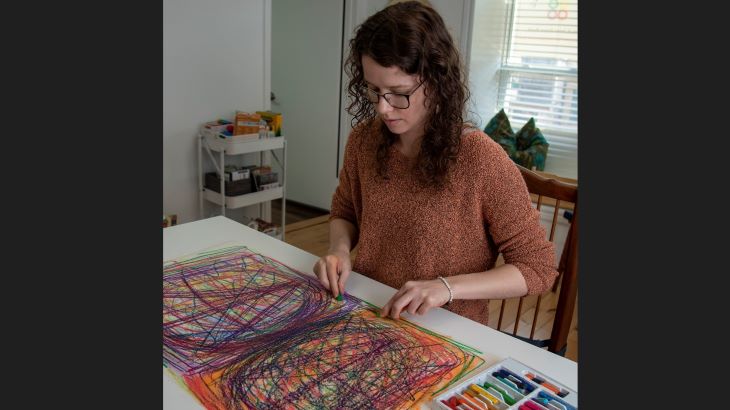
Across MacPherson’s Tik Tok and Instagram, she shares videos explaining as well as showing what bilateral drawing is. In its most basic form, the artist or client is drawing with both hands at the same time.
Although in most cases this exercise leaves the paper covered in scribbles, it also regulates both the mind and body, while grounding the person connecting both the left and right sides of the brain.
Collaging, MacPherson explained is one of her personal favourites explaining how she enjoys making something completely random, which helps with creativity and relaxation.
Branching off from collages there is alter book art where people turn an old book into a mixed media art piece. Using cutouts like someone would for collaging, markers and pencils to draw, or even using other book pages, the artist gives the book a new life.
Body mapping, MacPherson explains, although this exercise can be very beneficial it is one of the harder ones to complete.
Body mapping requires two people at the start and a large piece of paper where someone’s entire body can be outlined. “…address the different parts of the body and its strengths, maybe some places of trauma come up and you fill in this whole body which is a really amazing activity,” said MacPherson. When she does this activity with clients it usually happens over a few days due to how big of a project it can be.
During her time at the Kutenai Art Institute in BC, it was one of the projects she remembers most.
MacPherson encourages people who are curious or want to learn more about art therapy to reach out to her via e-mail at [email protected] with their questions or for more tutorials watch her Tik Toks at birchwoodarttherapy.
Whether it be making art or enjoying someone else’s art, on April 15 take some time to enjoy art and its health benefits.
Don’t miss out on Doppler!
Sign up here to receive our email digest with links to our most recent stories.
Local news in your inbox so you don’t miss anything!
Click here to support local news
0 Comments