
By Hugh Holland
A year-end report on global energy
As 2017 draws to a close, six things are becoming increasingly clear:
1. Adequate supplies of energy are essential to any kind of a decent life on a planet that will reach 11 billion people by 2100. Energy is essential for the basics of warm shelter, good food and safe water.
2. Accumulation of carbon emissions and other gases is acting like a greenhouse over the planet. They trap heat. Since 70 per cent of the earth’s surface is water, most of the trapped heat is stored in the oceans, resulting in rising sea levels, increased evaporation leading to increased precipitation causing flooding and erosion, and more extreme weather events. Fifty-seven per cent of greenhouse gases come from burning fossil fuels, 17 per cent from deforestation, and 17 per cent from food production and waste management. We must address these sources quickly to avoid the worst impacts of global warming.
3. Global energy demand will increase by about 50 per cent between now and 2100, assuming that conservation in developed countries can offset the need for more energy per person in developing countries.
4. The world’s proven reserves of oil and gas will be depleted in 50 to 60 years. One can debate the exact timing, but the fact of ultimate depletion of these finite resources cannot be debated. Official International Energy Agency (IEA) data indicates 49 per cent of global oil consumption comes from the USA, the EU, and China and that their domestic reserves would last for only 4.2 years. New reserves of shale oil and gas will be found, but every one poses increased cost and environmental risk. For short-term gain, some politicians and industry executives tend to overpromise the accessibility of shale oil and shale gas reserves. That will cause long-term pain.
The world needs Canada’s oil because Canada is one of only five countries, and the only stable democracy, that can produce oil at planned rates for 100 years.
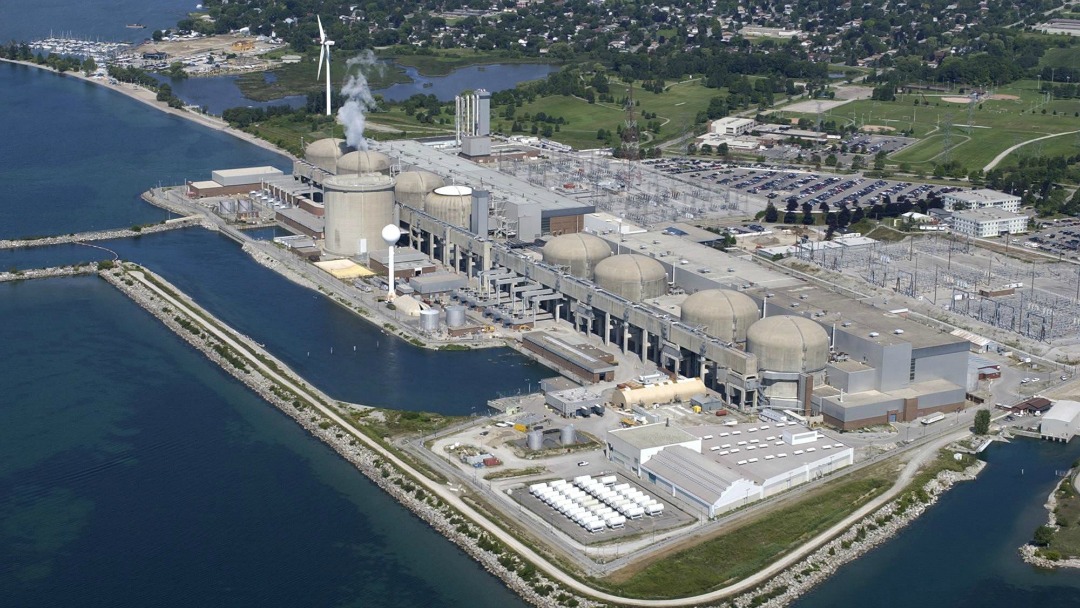
5. Fossil fuels currently comprise 80 per cent of the world’s energy supply. Renewable energy sources — solar, wind, hydro, bio, and geothermal — can make a big contribution, but cannot possibly by themselves meet a 50 per cent increase in global demand while at the same time replacing 80 per cent of the current supply (coal for electricity generation, oil for transportation, and natural gas for heating buildings and food). This has been amply demonstrated by Germany’s valiant attempt over the past 15 years. Increased nuclear energy is the only hope for filling the gap. Some 50 companies worldwide including companies in Canada, Norway, China, the United Kingdom and the United Srates are making good progress in developing new types of nuclear reactors that are safer, more affordable and do not leave behind piles of radioactive waste.
6. These challenges can be met if we all work together. The new mayor of Montreal says, “We do better when we work together”. That is true in Montreal; it is true across Canada; and it is true around the world. To reduce extreme poverty and resulting conflict and mass migration, the recent trends toward extremism and isolationism must be quickly stopped and reversed. Perhaps 0.1 per cent of our grandchildren will be able to escape to another planet (caution: it may not be as good as this one), but the other 99.9 per cent will have to live on this one.
Hugh Holland, Huntsville
Don’t miss out on Doppler! Sign up for our free, twice-weekly newsletter here.
When I was in school I was introduced to the classic “fruit flies in a bottle” experiment. Of course they reproduced until they ended up literally exterminating themselves by virtue of their use of resources and production of waste. At the time I was pretty sure that humans, yes even my teacher, were smarter than that. Also, living in Canada, Huntsville, the concept of overcrowding was so far away from normal daily life in the 50’s and 60’s as to be undetectable.
Well this is no longer the case and we have plenty of proof now. As has been pointed out the only real question is one of timing.
The elephant in the room is the population of the Earth. If we all ascribe to the notion that we want to and actually can exist like we do now in the developed world, especially the USA as a prime example then some discussion of world population needs to take place. Just because some couple can produce many children, (with multiple wives in some countries it is actually “many many” children) does not mean that they should. If you do the math you will rapidly come to the conclusion that unrestrained population growth is not sustainable in a fixed size (read Earth) ecosystem. The details don’t matter, it can’t be done over the long term.
We are trying to solve the symptoms of a problem without actually confronting the problem itself. This won’t work well.
We can and will use our technology to try to feed and look after all the world’s people but we can see the effects showing up in the form of more or less constant wars, climate changes and social issues associated with overcrowding. These will only get worse.
We can gradually reduce our population with no pain to anyone, no mass marches to gas chambers like Hitler tried or anything like this. All we need to do is exercise a little bit of self restraint. To their credit many countries, including much of Europe and Canada too have done a remarkable job of this over the last two decades. The Middle East, Africa, China and India have not done so well and their quality of life shows this.
Like I said, this issue needs some serious discussion to put everything into context.
Meanwhile, as Hugh notes, regardless of if we can find adequate fossil fuels, we simply cannot keep burning them as we do now. There is actually plenty of energy direct from the sum but it is hard to utilize as we tend to need it most when we can’t see the sun.
Hugh notes that nuclear may be a viable resource and indeed it is about the only source of energy that we currently have that can produce the large base load demand on a continuous basis. We sadly don’t have the choice here. We either use nuclear or mess up our climate really badly for a long time.
Being practical I’d make a simple suggestion here. For those of you raised on Jane Fonda and the movie China Syndrome, get yourself the following book.
ATOMIC ACCIDENTS by a fellow called Jim Mahaffey (It is about $10 from Amazon on Kindle) and invest a few hours reading it. It is easy to read and filled with true and accurate facts, the kind of data you do not get from reading the papers or watching the TV news bites where pretty reporters condense issues to 10 second clips. No, you can like it or not but you will learn something from this guys book. There are almost as many footnotes as there is book so if you really want to get technical you can do this too. The author has the ability to make complex science understandable to anyone with a high school education and he has a sense of humor too! The point? Even with things like Chernobyl, Three mile island and Fukushima (admittedly bad accidents) this industry has done less damage to our world than burning oil, at least from many viewpoints. Sure it is dangerous and improvements can be made but it offers us the potential energy lifeline to maintain our energy supply during the change over to a more natural and renewable based system. Virtually nothing else does this. And as for the cost comment made by Andrew Hogg, I have it on somewhat good authority that the Canadian Nuclear generation plants can provide energy for less the 5 cents per kwh, and vast quantities of it! How the cost at my door gets to somewhere near 30 cents per kwh? well we could ask our Provincial governments who have been meddling incompetently in this field for the last 30 years or so. They should have some answers.
If you don’t believe the government is incompetent, try installing some solar panels to reduce your demand, to try to approach zero use via “net metering” and you will rapidly find so many obstacles and red tape that essentially this option, which could be being exercised right now by many individuals and businesses is not a viable option. It is instead a mess of illogical rules, money grabs by government bodies who have no right to be grabbing and the whole process smells really badly of what the stock market would call “insider trading”. How else do you explain vast solar and wind farms covering Ontario and pumping out energy at times when we don’t need it, at very high rates and sending the profits out of the country to foreign owners, one of whom is actually a subsidiary of Exon Mobile I am told.
Read the book I recommend, make your own nuclear decision, think about how our government has wasted their chance for a positive change and watch for any signs of planned parenthood in the more crowded parts of the world. It is going to be an interesting next century……………
Thanks for that additional information Hugh. Staggering numbers. And thanks for correcting my misunderstanding on the new Mayor vs the previous one. I had no idea there was a change. I’m unsure how much other social or political disagreement there still is for that east/west line but maybe there’s some hope for it after all.
A final observation on a possible dual purpose traffic/pipeline bridge over the Ottawa river. I have little familiarity with aerial pipeline crossings but I do know that subsurface pipeline bores below streams and rivers are widely used in the world I work in. The pipeline segment is installed in natural consolidated ground deep below the water, is made of a heavy wall pipe, and is run inside a casing – a pipe within a pipe – which daylights above ground at both sides of the crossing. Valves are then installed at the above ground risers on each side which can stop the flow in the pipeline both automatically and manually. The valves have overpressure and under pressure protection measures. This system provides triple and quadruple redundancy in the very low likelihood of failure of the pipe segment.
Peter
Peter
The article refers to the NEW mayor of Montreal, Valery Plante. The former mayor Dennis Codere was notoriously provincial in his views. Hopefully the NEW mayor will extend her more enlightened view to the much needed Energy East pipeline that would eliminate outflows of $31 million PER Day to buy imported oil for eastern Canada, eliminate US oil price discounting of $37 million PER Day, and facilitate new sales of $23 million PER DAY to the EU and others that have no oil reserves. A well-designed dual-purpose traffic and pipeline bridge over the Ottawa river could eliminate risk of an oil spill entering Montreal’s water supply (Codere’s concern). Also it should be mentioned that equivalent of 100% of the federal transfer payments that provide equality in education and health care across Canada come from Alberta oil. And most of these transfer dollars go to Quebec year after year.
Thank you for this insightful and interesting article on global energy.
Although I work in the oil and gas industry in Northeast BC, I have ties to Huntsville (…my parents purchased a lakefront lot at one of the Crown land auctions held in Huntsville in 1967. Although the property was eventually developed into a year round residence, it was sold perhaps a decade ago, but they still reside in Huntsville), so the article is of particular interest to me.
I’m not intending to dispute any of the points made by Mr Holland, but rather add to the discussion (okay, maybe I’ll dispute just a little).
Despite the global nature of the article I wanted to point out that Canada contributes only around 1.6% of total global GHG emissions (“Global greenhouse gas emissions”, Canada.ca). I think it’s important to provide this context. Out West (and perhaps nationally) we are spending so much political, social, First Nation, NGO effort rallying against the evils of the oil and gas industry while promoting “green” energy like wind and solar with little thought to the big picture.
For example, what is the full cycle energy cost for having a windmill farm installed on a mountain ridge or a solar farm installed in a field? We have indeed used energy to have those structures and their transmission lines in place. Have we considered the energy costs for mining, milling, smelting, transportation, and fabrication of the steel in these structures? The aluminum? The plastic and fiberglass? The concrete foundations? The migratory bird mortalities from windmills (yes, it does happen)?
My point here is that everything we do causes harm to a greater or lesser degree, and it’s wise for us to have a full understanding of the issues and how to mitigate harm before charging ahead on a certain path and advocating for a certain thing.
My other point of interest is around Mr Hollands’ mention of the Mayor of Montreal in his closing paragraph. It’s not explicitly said in the article, but the reference is related to the Mayors’ strong political opposition and subsequent withdrawal of the Energy East pipeline by the Proponent. I can’t agree with Mr Holland that the Mayor of Montreal was correct when he stated “We do better when we work together”. The fact is, 1) pipelines in Canada are constructed, operated and maintained to the highest standard in the world, 2) there is not an oil pipeline owner in the world that wants the bad press and cleanup costs of a leak from an oil pipeline, and 3) not having the Energy East pipeline isn’t reducing Canadian GHG emissions as the users of the oil that was to flow through it are getting their oil from other (foreign) sources. However, the net cost to Canada is a long term loss of economic opportunity all the way from the Fort McMurray oilsands to the Irving refinery in St John, and the pipeline operating jobs in between.
In this case, its hard to see that we are working together.
Thanks,
Peter
Another view: Solar Power Can Accelerate to Meet Half the World’s Energy Needs in 20 Years, Say Scientists
https://www.dailykos.com/stories/2017/12/27/1727934/-Solar-Power-Can-Accelerate-to-Meet-Half-the-World-s-Energy-Needs-in-20-Years-Say-Scientists.
Note, the graph is not projecting, but depicting existing growth from 2006 to 2016. Sources are solid: _Science_, MIT. This achievement would require working together to retool infrastructure also, as the article indicates.
Oh dear, where to begin… The most egregious faults are in point 4, 5 and 6. No we are not “running out of oil”. We have massive reserves that are found but not yet labeled Proven, especially in the Canadian oil sands. Utilizing the technology available in 1975 it was predicted we would have no reserves currently. Instead we have increased reserves by a factor or 10 and are producing more than three times the amount of oil.
Yes, we need to lower our use of oil, but don’t focus on a lack of reserves as the reason. We will find the reserves, the question is at what cost, both in dollars and environmental.
Nuclear is “an option” but it is very expensive. Ask the Ontario tax payer! We also have no solution for the waste. When nuclear began we were assured that the problem would be “solved soon”. Whereas the Canadian oil and gas industry has lowered emissions dramatically and has the strictest regulation in the world, the nuclear industry has not at all solved their most pressing problem – what to do with their highly toxic waste.
Yes we need to “work together”. Let’s build some pipelines so that well regulated, non conflict, Canadian oil can reach the world. But sadly, Quebec has chosen to import oil instead from some of the worst regimes and most ecologically destructive overseas producers. I heartedly support Canada working together on Canadian projects that benefit the entire country.