
The Huntsville/Lake of Bays Fire Department responded to a carbon monoxide (CO) alarm activation on Madeline St. yesterday morning (December 20) shortly before 10:00 a.m.
Upon arrival, fire crews from Huntsville Station One encountered readings of over 200 parts per million (ppm) in the home. The lone occupant in the home was checked and released by Muskoka Paramedic Services. Fire crews ventilated the home while continuing to look for the cause.
An investigation revealed that the deadly gas had made its way into the home from the woodstove which had some hot coals and ashes remaining from a fire the night before. A down-draft in the chimney pushed the gases back into the home.
“I truly believe that a working CO alarm saved this resident’s life,” said Deputy Fire Chief Gary Monahan. “Without this life-saving device, the circumstances could have been deadly.”
If your home has a fuel-burning appliance or an attached garage, you must have a working CO alarm outside all sleeping areas of the home. Fuel-burning appliances can include furnaces, hot water heaters, gas or wood fireplaces, portable fuel-burning heaters and generators, barbeques, stoves and vehicles.
What is CO?
- CO is known as the silent killer because it is an invisible, tasteless and odourless gas that can be deadly.
- CO is produced when fuels such as propane, gasoline, natural gas, heating oil or wood do not burn completely in fuel-burning appliances
Prevent CO in your home:
- Ensure all fuel-burning appliances in your home are inspected annually.
- Check that all outside appliance vents are not blocked.
- Never use a portable fuel-burning appliance inside (i.e. barbeques, portable heaters and generators).
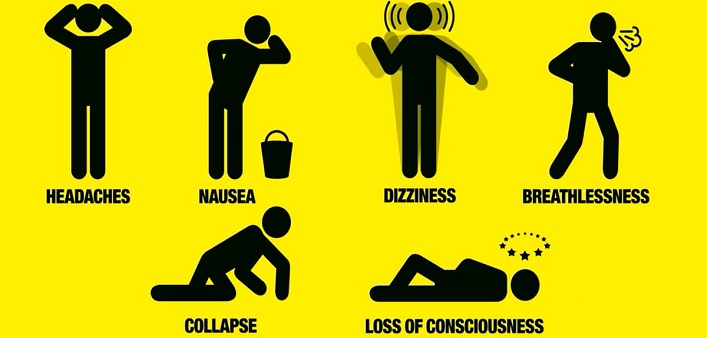
Know the symptoms of CO:
- Exposure to CO can cause flu-like symptoms such as headaches, nausea, dizziness, as well as confusion, drowsiness, loss of consciousness and death.
- If your CO alarm sounds and you or other occupants suffer from symptoms of CO poisoning, get everyone out of the home immediately. Then call 9-1-1 from outside the building.
- If your CO alarm sounds and no one is suffering from symptoms of CO poisoning, check to see if the battery needs replacing, or the alarm has reached its “end-of-life” before calling 9-1-1.
Know the sound of your CO alarm:
- Your CO alarm sounds different than your smoke alarm. Test both alarms monthly and make sure everyone in your home knows the difference between the two alarm sounds.
- Don’t be confused by the sound of your CO alarm’s low-battery warning. Follow your CO alarm manufacturer’s instructions so you know the difference between the lowbattery warning, the “end-of-life” warning, and the alarm alerting you to the presence of CO in your home.
Don’t miss out on Doppler! Sign up for our free, twice-weekly newsletter here.
0 Comments