
By Hugh Holland
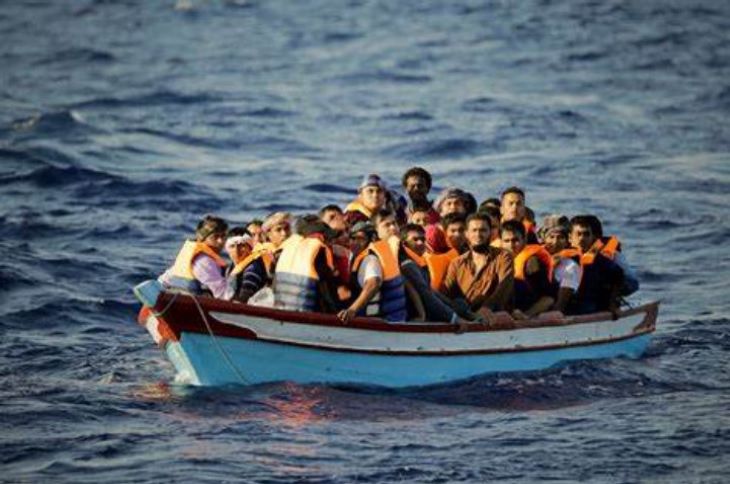
There are currently 100 million refugees from conflicts in Afghanistan, Syria, Africa, Myanmar, Venezuela, Central America, Ukraine, etc. and the UN estimates there could be as many as 1.2 billion climate refugees by 2050. As usual, most of these people would be good citizens, eternally grateful for a chance to live in a safe and decent place.
On the other hand, Canada has one of the world’s oldest populations, with nearly 18 per cent of our population being aged 65 and over. It also has one of the world’s lowest birth rates at 1.47 births per woman. As such, Canada will face challenges in growing its economy and supporting government spending in the future. Europe, Japan, South Korea, and China all have shrinking birth rates but are much more densely populated. In 2016, the federal government’s Advisory Panel on Economic Growth recommended that to attain a more independent and sustainable economy, Canada should pursue a strategy to reach a population of 100 million people by 2100, mainly through a modest and gradual increase in immigration. The recommendation was supported by both Liberals and Conservatives.
In his 2018 book called Maximum Canada, Globe and Mail International Affairs Columnist Doug Saunders explored the background, rationale, and pros and cons of essentially tripling Canada’s population over the next 80 years. “With the world’s second-largest land mass and the ability to be fully self-sufficient in food and energy, Canada clearly has the capacity to grow. 100 million provides an ambitious planning benchmark, and yet in this vast land it is not so big a change that Canada’s character and population density would be substantially different from today. With 100 million people, our population density would still be the lowest in the world.”
Eighty per cent of Canada’s population will continue to live in existing urban areas, so with good planning, most of our natural and agricultural spaces can remain untouched or sparsely populated. Even the most densely populated countries have sparsely populated natural areas.
Our relatively small population has many implications. A recent look at data from the UN Office of Intellectual Property shows that 91.6% of patent applications in 2021 came from 10 countries. The leader in terms of patent applications per million population is South Korea. Canada was number 6 of the top ten. Australia was number 4 with a smaller but more remote and independent economy. Many innovations are born here but when they need capital to grow, they get bought out by our close neighbor with deeper pockets. The list of examples is endless. Patent applications originating in branch plants in Canada will generally be filed by the parent US company. A larger population would mean more independent Canadian companies.
Some pundits say that immigration is driving regressive populist politics in many countries. But Canada has been a nation of immigrants (including the first indigenous immigrants) from the very beginning and CANADA CONTINUES TO RANK AS ONE OF THE TOP 3 OF 195 COUNTRIES IN WHICH TO LIVE. Canada is recognized as having one of the world’s best systems of merit-based immigration. And Canada still ranks as having BY FAR THE LOWEST RATIO OF NET DEBT TO GDP IN THE G7 ECONOMIES. All of this means we can maintain whatever level of immigration is needed to offset the negative economic and fiscal impacts of an aging population and low birth rate.
In 2022, Immigration, Refugees and Citizenship Canada (IRCC) reached its target of 431,645 new permanent residents which represents the largest number of people ever welcomed in a year, in Canadian history. Canada aims to welcome from 410,000 to 505,000 new permanent residents in 2023, from 430,000 to 542,000 in 2024, and from 442,500 to 550,000 in 2025. These plans will help drive economic growth and resiliency, reunite families, and protect democratic and human rights. Our Express Entry System expedites applications from skilled workers with work experience in managerial, professional, trades, and technical occupations.
The relentless pursuit of economic growth at any cost to the environment is one of the root causes of the destructive climate change the world is facing. So, the challenge is to plan and provide adequate housing, health care, and transportation for a growing population based on zero-emission energy and that is now entirely possible.
If we are looking for ideas for further improvement, we need to look no further than the Scandinavian countries and Switzerland. They have similar climates to Canada, but their carbon emissions per capita are less than half of Canada’s. They have a higher GDP per capita than the USA. They have similar low ratios of Net Debt to GDP as Canada and the same AAA credit rating. Along with Canada, all rate at the top of the 2023 United Nations HAPPINESS SURVEY.
None of us will be untouched by these unfolding realities. To ensure sustainable growth and spreading the benefits of immigration across the country, these numbers require the understanding, flexibility, and cooperation of citizens across the provinces, territories, and municipalities, including small towns, indigenous, and rural communities. As always, a positive vision and a positive attitude will yield the best results.

Hugh Holland is a retired engineering and manufacturing executive now living in Huntsville, Ontario.
Don’t miss out on Doppler!
Sign up here to receive our email digest with links to our most recent stories.
Local news in your inbox so you don’t miss anything!
Click here to support local news
There are lots of houses in Canada. Unfortunately many of them are secondary homes and unoccupied for most of the year. So much of our resources go into benefiting the wealthy …. why bother with affordable homes. If you are a business person, then you will follow the money.
The problem is the total lack of coordination, planning and investment to manage such a large and growing number of new people. It pushes up housing costs, and further stretches our struggling health care system.Trudeau has made a complete mess of it, and Canadians are now paying the price.
Great article Hugh. The big missing piece to achieving this goal is quality political leadership at all levels. Please keep sharing your thoughts.
Well done Hugh. Another literary masterpiece.
Canadian business requires cheap labour so to increase dividends to stock holders. People to replace the baby boomers
who have one foot in the grave and the other on a banana peel.
We need controlled immigration so our over burdened health care system and non existent affordable housing, apartment rentals
can recover. We have Canadians on 10 year waiting lists for housing right now ask any service agency.
If you really want to know about mass open door immigration ask friends/relatives living in England, Greece, Italy, Germany what it has done to their country.
Canada cannot look after the worlds surplus population (I wished we could) Canada cannot properly look after the people she has now.
Help, yes, but lets not create unnecessary additional problems with mass open door immigration. Has Trudeau not learned anything from other countries facing the same problem or
is he just creating a major problem for the next government to handle? (Ontario, Quebec, BC)
We should do everything possible to help our neighbors, but our own family should come first!
Without Prejudice.
There is no farm land on the “green belt”. If you would bother to look at a map of it, it is simply just a no-build zone surrounding the GTA, therefore land locking the GTA against lake Ontario. This has caused GTA real estate to sky rocket, which was mostly contained to the GTA until a few years ago when it spilled over to the rest of the province. That GREED belt, needs to go, yesterday.
You do realize if you bring in a hundred million people millions of acres of land will be turned into concrete jungles and millions of animals will be destroyed so the most destructive animal of all time can keep.breeding like rabbits
“The relentless pursuit of economic growth at any cost to the environment is one of the root causes of the destructive climate change the world is facing. So, the challenge is to plan and provide adequate housing, health care, and transportation for a growing population based on zero-emission energy and that is now entirely possible.”
Where is the Dofo/PP climate plan? How about the farmland loss from the Provincial Conservative’s sale of Ontario Greenbelt land on Ford’s development spree?
Thank you, Mr. Holland, I continue to read and learn from your articles.
Excellent & timely article as usual Hugh.
Our southern neighbour is an example how immigrants can build a powerhouse nation.