
By Dave Wilkin
The past three years have been difficult, leaving many Canadians hurting and concerned about their future as we face a slowing economy and uncertainty around inflation, interest rates, and markets.
NDP Leader Jagmeet Singh criticizes PM Trudeau for deflecting accountability, pointing out “it’s the PM’s job to make Canada better”. Conservative Leader Pierre Poilievre goes further, stating that after seven years under Trudeau, “everything feels broken“, pointing to the healthcare crisis, high inflation, violent crime (up 30 per cent), opioid deaths (up 250 per cent), and half a trillion dollars in new federal government debt.
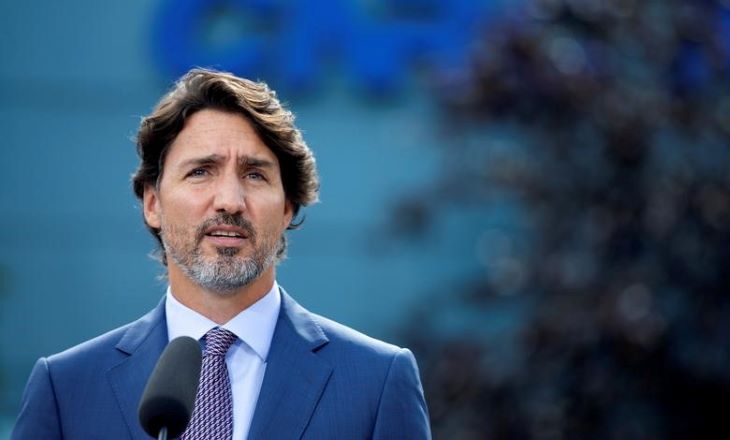
In response, Trudeau calls Poilievre “irresponsible for exploiting the anger for political gain“ while lacking in future vision. Trudeau says his vision includes an improved healthcare system, a more inclusive/green-powered economy, Indigenous reconciliation, unwavering Ukraine support, and a Canada that is “there for the Global South”. He wraps it all up with a new slogan, “meet this moment”, adding to previous ones like “choose forward” and “build back better”.
So what do Canadians think? A recent Nanos poll indicates more Canadians believe the country is heading in the wrong direction and a Leger poll found that 67 per cent of Canadians agree with Poilievre’s statement that everything feels broken. Multiple polls now show the Conservative Party of Canada pulling ahead of the Liberals. So is this just a blip, or is there a larger shift underway? A closer look at Canadians’ top issues—healthcare, affordability, and the economy—yields some insight.
On healthcare, the much-anticipated meeting between Trudeau and the 13 premiers was mostly political theatre, a carefully choreographed presentation of Trudeau’s plan to appear as though his government was stepping up in a big way. They focused on the $196 billion over 10 years, all but ignoring that just $46 billion is actual new funding. That amount is $4.6 billion annually, a minuscule 1.4 percent of the $331 billion total annual healthcare spend. In 10 years, it’s likely just 1 per cent. It raises the federal government’s share by 2 per cent, to 24 per cent of the total public sector spend (which is 70 per cent of the $331 billion), about one-sixth of the provincial ask. The federal share has fallen for decades.
No doubt fixing the healthcare crisis will take fundamental system changes, most have been well documented, especially significantly growing the frontline service providers. However, big changes take time, and an aging population and high immigration levels accelerate the urgency. The provinces’ fiscal limitations cap the spending increases they can provide. Trudeau avoided action in the past, but public outcry forced him to pivot. However, his high deficit spending ways and many unfulfilled promises (Centre for Public Policy Analysis,) boxed him in. He didn’t ‘meet this moment’, he mostly played politics.
At least there’s some new money, which the premiers grabbed, and a beginning to broader discussions/actions on long overdue nationwide sharing and collaboration.
The fall economic update boldly claimed, ‘no country is better placed than Canada to weather the coming global economic slowdown and thrive in the years ahead’. Are Canadians buying it? Unlikely. We trail most developed countries on debt servicing, productivity gains, and real growth per capita while recovering job growth masks other concerning trends, including much of it being concentrated in lower-skill occupations, a 20-year slide in the labor force participation rate and a faster growing public sector (a 50 percent higher rate than in the private sector).
The economic update forecast for a $36.4 billion federal deficit is outdated, given a slowing economy, rising costs & recent spending announcements. The federal debt servicing cost is on track to double within a few years and former Bank Of Canada chair David Dodge warns about excessive federal deficit spending. It all means little new spending room is left.
Then there’s government waste. The PBO flagged multiple financial transparency problems and blasts the Canada Revenue Agency for saying it’s ‘not worth the effort’ to recover some $15B in COVID wage subsidies. Additionally, Canada’s Auditor General documented poorly targeted COVID spending. More recently we learned of escalating federal government contract spending, reaching $22.2 billion in 2022, up 16 percent in just three years. Over seven years, the Federal Public Service population ballooned 31% to 336,000. That’s triple Canada’s population growth rate and 1.7 times that of the non-federal government public sector growth rate. Now looming, the Public Service Alliance of Canada union’s outrageous 47 per cent 3-year pay increase ask.
On competence generally, the federal government’s missteps continue in the form of Delay of the controversial MAID legislation, withdrawal of the gun control amendment, C75 bail reform tragic consequences, bill C-13 official languages controversy, the anti-Islamophobia debacle and incoherent foreign policy (especially regarding China).
So going into year eight, the federal government looks tired. Trudeau’s personal brand, tightly bound to the Liberal party brand, now drags on it, as his continuing reliance on catchy slogans, photo-ops, tokenism, wedge politics, and deflection wears thin. Even former finance minister Bill Morneau writes about this in his new book, Where To From Here, A Path to Canadian Prosperity. He adds to past criticisms in books from former Liberal MP Celina Caesar-Chavanne , Can You Hear Me Now? and from former Liberal justice minister Jody Wilson-Raybould’s ‘Indian’ in the Cabinet’.
As parliament heats up and a pivotal spring budget approaches, I sense a tipping point has arrived. Will Jagmeet Singh or Trudeau himself pull the plug, triggering an early election? Will Trudeau be pushed by powerful Liberal forces to take his ‘walk in the snow’, opening the door for new leadership? As political writer Aaron Wherry eloquently puts it, Trudeau’s “put-up-or-shut-up moment” has arrived.
I remain hopeful, as Canada has so many advantages compared to most countries and Canadians are well-educated, hardworking, and resilient. More voters are now seeing the national leadership failures and are calling for serious actions and real results on their top issues, not visions and promises.
In a future article, I will share the changes I am looking for. Please watch for it!

Dave Wilkin is a Professional Engineer, with a master’s degree in Electrical Engineering from the University of Toronto. His career spans over 40 years in Information Technology, banking, and energy. He is currently a co-owner in a small energy consulting company and lives in Huntsville, Ontario.
Don’t miss out on Doppler!
Sign up here to receive our email digest with links to our most recent stories.
Local news in your inbox so you don’t miss anything!
Click here to support local news
Accountability is the Cornerstone of Democracy
What if the legislatures in our nation both federal and provincial were run like courtrooms. How can you have meaningful dialogue when nobody gives a straight answer. Is this any way to run the affairs of a nation by resorting to theatrics? Then you have the droves of redacted files and the significant cost of blocking transparency and limiting the governments ability to monitor its own actions in every legislature in the country. What if perjury and obstruction of justice or any other illegal activity was no longer tolerated. Guilty parties could face fines and imprisonment for breaking the law. Accountability is the cornerstone of any successful democracy without that sadly the results speak for themselves. If we as a nation insisted on higher standards for all elected officials would that not be a good start. These people have the responsibility to oversee the nations affairs and are paid handsomely for it. Should they not be held to higher standards when so much is at stake like the health of our nation? And if we continue to allow this travesty to continue the future will not be kind to any of us. The mainstream parties have taken are democratic institutions and turned them into something similar to a kangaroo court. Is it any wonder that things are such a mess.
We have the power to make our country work better if we all agree on a path forward.
Once again the Liberal/Conservative debate, as to which party will do the better job. For me, a resounding NYAHH!!
The debaters pick specific items to point up the failings, or supposed failings of the other side.
The Prime Minister opining that those demonstrators in the Ottawa streets were a fringe group, might have been a brain fart. Politicians do have ’em. Any legitimate, Canadian flag toting protester might have reason to take offence. But then, they themselves are mixed with another group carrying a Swastika; not one from ancient times, but from a recent period of our world at war. Another few were displaying the Confederate ‘Stars and Bars’. Why wouldn’t he, the PM, or I feel that the people waving those banners be described as fringe? And what faith will I put in a person who would casually associate with the fliers of those defeated banners. Just to make some sort of point.
Our Canadian flag is so out of place when displayed with those two standards. Even today, when I see someone showing the Maple Leaf from a window, or bumper, or such. I still pause, and wonder.
We need politicians with integrity and foresight, who feel that they have something to offer Canada. The writer of the the Commentary seems to feel that there is a ‘light at the end of this tunnel’ (Conservative?) and one reply claims to ‘have seen the light’ (Liberal).
They are talking of opposing parties and in the end, it all seems to highlight the fact that our Canadian politics has become much like religion. Both , government and religion, might be out there somewhere working; you have to have faith.
I would appreciate a politician I could have a little faith in. I think the religion part is already covered.
In my opinion.
Great article Dave, with facts. Thanks for taking the time to outline the performance of the current federal government. Our taxes have increased significantly over these past 8 years as has the federal debt and Canada has much lower performance of services today for our communities (health care wait times for multiple services, finding a doctor, getting a passport etc) versus a decade ago. The actions and behaviour of our Prime Minister is not focused on our people but his ego and ability to retain power.
The fact he is able to make that last comment shows us why we are exactly in this terrible position as a country….Dave!
Bring in Pierre!!!!
Yes Hugh, indeed it’s politics as usual. Far too often it gets in the way of doing what is best for the country and our future, and yes, what is most important now is what comes next. As I stated, I think we are at a tipping point, in a number of ways. If Canada is to continue to prosper, and get better in the decades ahead, significant changes are needed. Most Canadians seem to agree with that. What that looks like is less clear.
As mentioned, I will share my thoughts on the changes I am looking for at some point in a future article.
Well Dave, its politics as usual. The fact is every country has faced similar challenges over the past 3 years. No country has escaped the escalating ravages of climate change, the global pandemic that resulted in accelerated retirements of health care workers in particular, and another war in Europe that has driven inflationary pressures on energy, food, real estate and almost everything else. Of course, opposition parties always do their best to ensure that the government of the day wears the consequences. But the fact is Canada has weathered these multiple storms better than most and emerged as one of only 7 of 195 countries that still has a stable AAA credit rating.
But the past is past. The important question is what are the biggest challenges for the coming decades, and which party and leader is most likely to provide effective solutions? These challenges demand open minds and bold thinking. We must all try to avoid being bound by traditional ideology and past thinking. I voted Conservative for most of life, but the reality is the traditional Conservative values of small government, minimum regulation, and always seeking to cut taxes on the already relatively wealthy are still important but simply cannot meet today’s needs. Today’s unprecedented global challenges demand bold and progressive thinking. Every day, humans prove that the only thing worse than too much regulation is too little regulation. Sadly, conservatives everywhere are still clinging to the old and increasingly destructive sources of energy that have kept the world in turmoil for over 100 years, and are exploiting misinformation to support their case. Look what happened to Erin O’Toole when he tried to get Canada’s Alberta-centric Conservatives to just acknowledge climate change exists. And the new Conservative regime is no better even though the world is moving on and leaving them behind.
Canada including Alberta has all the expertise and money needed to thrive in the era of producing and using zero-emission energy. So, in the interest of our grandchildren and yours, I will vote for the party that is most likely to lead us in that direction and right now that is clearly the Liberals.